
In summary:
- Touching soil can naturally boost serotonin due to a specific microbe, creating a direct link between gardening and mood.
- Start with “indestructible” plants like mint and succulents to build confidence and avoid initial frustration.
- Over-watering is the biggest killer; learning to practice “scheduled neglect” is a key skill for success.
- Even a tiny balcony can become a productive food source using no-drill vertical gardening techniques.
- The journey from soil to harvest to fermentation completes a therapeutic cycle, directly impacting your gut microbiome and overall well-being.
For many apartment dwellers, the concrete landscape can feel isolating, creating a deep-seated disconnect from the natural world. You might feel a pang of what’s been called ‘nature deficit disorder,’ a sense that something vital is missing. The common advice is to “get a houseplant,” but this often leads to more anxiety—Is it getting enough light? Am I watering it too much or too little? When a plant wilts, it can feel like a personal failure, compounding feelings of inadequacy rather than relieving them.
But what if the true antidote to this urban disconnection isn’t just owning a plant, but participating in a living system? The key to unlocking the mental health benefits of gardening lies not in the passive ownership of greenery, but in the active, tangible process of cultivation. It’s a journey that starts with the microscopic life in the soil and ends with the nourishing food on your plate, all cultivated within the compact space of your own balcony.
This guide moves beyond generic advice to reveal the specific mechanisms that make balcony gardening a powerful therapeutic practice. We’ll explore the science connecting soil to serotonin, identify truly resilient plants to ensure your success, and demystify the common pitfalls that discourage beginners. Ultimately, you’ll learn how to transform five square feet of outdoor space into a complete, restorative ecosystem that nurtures both your mind and body.
This article will guide you through the complete, therapeutic cycle of creating your own micro-homestead. Below is a summary of the key stages we will explore to reconnect with nature, right from your balcony.
Summary: From Soil to Self, a Balcony Gardener’s Journey
- Why Does Touching Soil Boost Serotonin Levels Naturally?
- How To Choose ‘Indestructible’ Plants If You Have A Black Thumb
- Seeds Vs Nursery Starts: Which Method Is Less Frustrating For Newbies?
- The Love Trap: Why Over-Watering Kills More Plants Than Drought
- How To Build A Vertical Herb Garden To Maximize A Tiny Balcony
- Fiber Vs Bacteria: Which Is More Important For A Happy Microbiome?
- How To Find ‘Wilderness’ In A Concrete Jungle Without Leaving Town?
- Lacto-Fermentation 101: How To Make Safe And Crunchy Pickles At Home?
Why Does Touching Soil Boost Serotonin Levels Naturally?
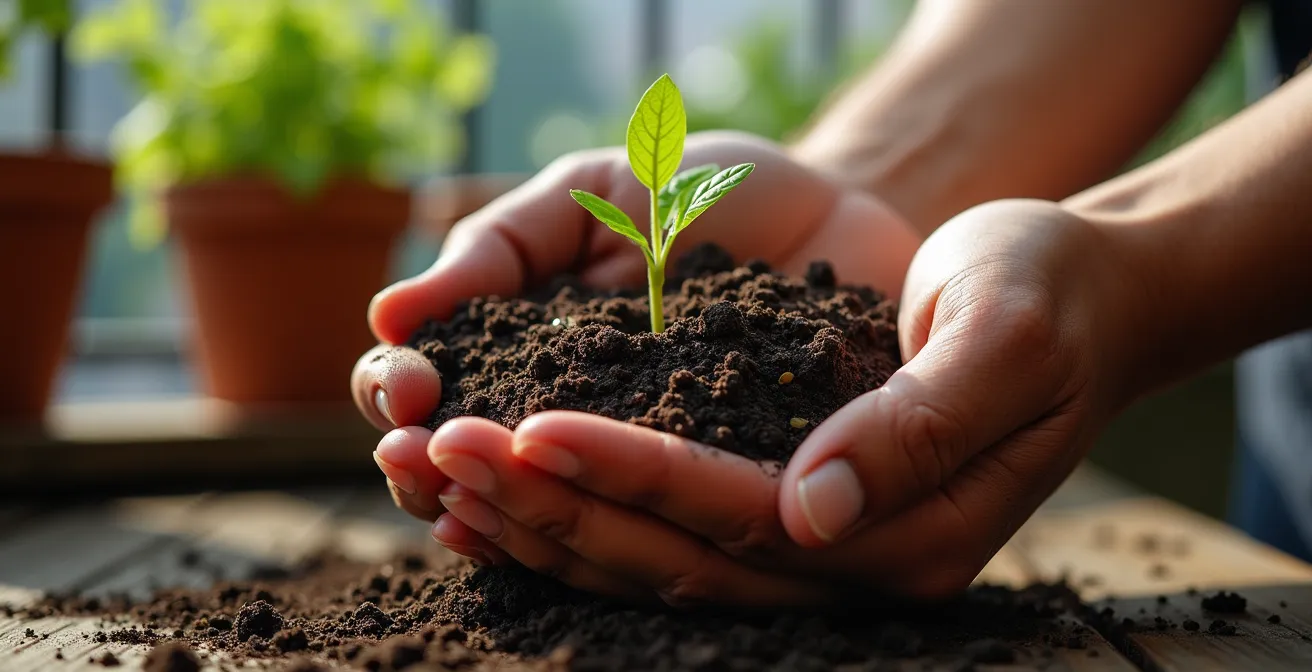
The gentle, calming effect of running your hands through soil isn’t just a placebo; it’s a biochemical event. The profound connection between gardening and mental wellness begins at a microscopic level, through what scientists call the soil-brain axis. The star of this connection is a common, harmless soil bacterium named Mycobacterium vaccae. When you touch soil, you are exposed to this microbe, which has been shown to have effects on the brain similar to those of antidepressant medications.
The mechanism is surprisingly direct. Research has demonstrated that exposure to M. vaccae prompts the brain to release more serotonin, the neurotransmitter responsible for regulating mood, anxiety, and happiness. A study conducted by researchers from Bristol University offered compelling proof. They found that mice treated with this bacterium showed altered behavior, navigating mazes with less anxiety. The researchers observed that the bacteria specifically activated neurons in the dorsal raphe nucleus, which is the brain’s primary center for serotonin production.
This means the simple, grounding act of potting a plant or weeding a container garden is a form of natural therapy. You are not just nurturing a plant; you are interacting with an ancient ecosystem that actively works to regulate your mood. This is the foundational principle of therapeutic horticulture: the connection is tangible, physical, and scientifically validated. The very earth you cultivate is cultivating your own sense of well-being in return.
How To Choose ‘Indestructible’ Plants If You Have A Black Thumb
The fear of killing a plant is a major barrier for aspiring gardeners. If you’ve ever felt the sting of this “failure,” you’re not alone. The key to building confidence is to rig the game in your favor by starting with plants that are famously resilient. These aren’t just “easy” plants; they are species that tolerate a wide range of conditions and often bounce back from neglect. According to recent houseplant statistics, over 70% of plant owners prefer low-maintenance plants that fit busy lifestyles, proving you’re in good company for wanting a forgiving start.
Instead of aiming for a perfect garden immediately, adopt a “Phoenix Plant Strategy”—focus on plants known for their ability to “rise from the ashes” of common beginner mistakes. This approach shifts the goal from flawless execution to learning and observation, which is far more rewarding. Below is a collection of hardy plants perfect for a minimalist balcony setup, demonstrating how even a small space can host a variety of life.
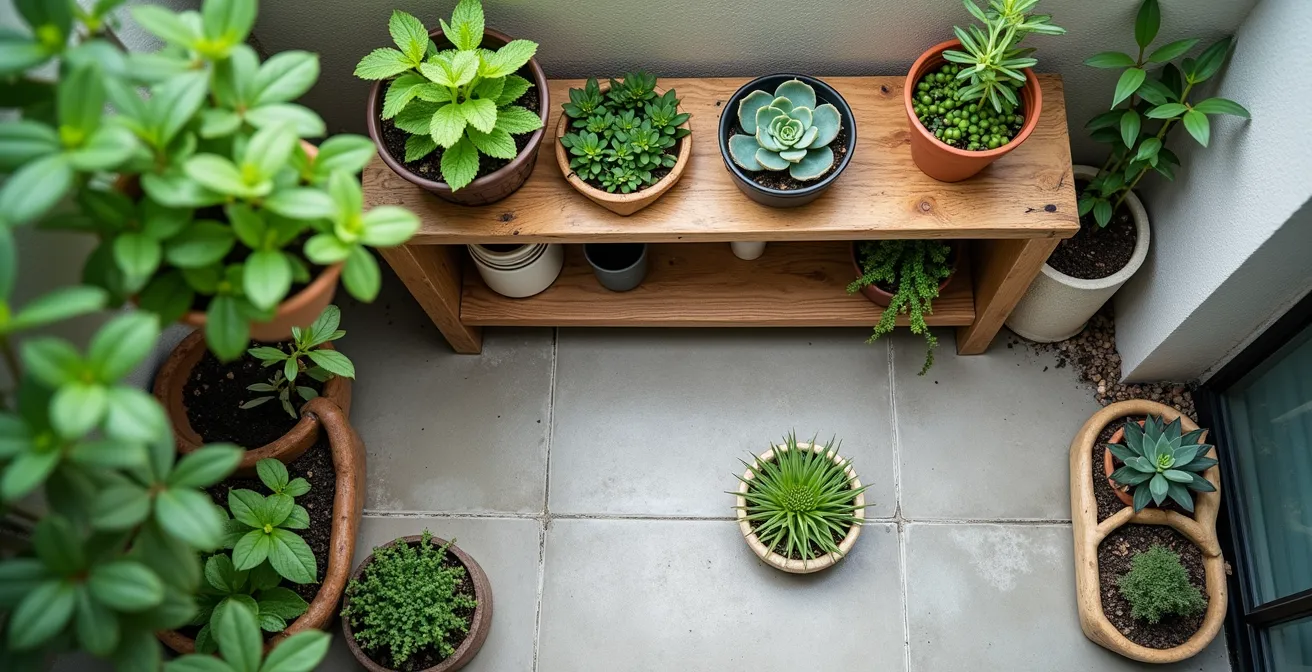
As the image shows, variety is possible even with tough plants. Consider these options to begin your journey:
- Mint or Lemon Balm: These herbs are notoriously vigorous. They can survive significant neglect and often “resurrect” with a good watering after a period of drought. Plus, they grow so fast you’ll feel successful quickly.
- Succulents: These are the champions of low-maintenance. Their ability to store water means they typically require watering only once a month, making them perfect for those who are busy or forgetful.
- Microgreens: For an almost-instant gratification harvest, microgreens are unbeatable. You can have a crop ready in under 30 days, providing a quick and tangible reward for your efforts.
- ‘Sacrificial’ Radishes: Plant a few radish seeds. They sprout quickly and don’t require much space. Think of them as practice—if they don’t make it, the investment was minimal, but the lesson is valuable.
Remember that learning involves trial and error. The average beginner goes through several plants before finding their rhythm. Embracing this as a normal part of the process is the first step to overcoming the “black thumb” myth.
Seeds Vs Nursery Starts: Which Method Is Less Frustrating For Newbies?
Once you’ve chosen what to grow, your next decision is how to start: with a packet of seeds or a young plant from a nursery (a “start”). This choice significantly impacts your experience, cost, and timeline. For a beginner, the goal is to minimize frustration and maximize the feeling of accomplishment. There’s no single “right” answer, as the best method depends on your personality and goals.
Starting from seed offers the profound experience of witnessing the entire life cycle. It’s incredibly rewarding to see a tiny seed sprout and grow into a food-producing plant. It is also far more economical. However, it requires more patience, attention to detail, and a higher tolerance for potential failure, as germination can be tricky. As the Garden Pals Research Team notes in their 2024 report, the mindset is key:
If you can follow a recipe to bake a cake, you can follow a recipe to grow from seed. The secret is patience and the right conditions.
– Garden Pals Research Team, Gardening Statistics Report 2024
Nursery starts, on the other hand, provide instant gratification. You bring home a small, healthy plant that’s already past the most fragile stage of its life. This significantly increases your chances of success and shortens the time to your first harvest. While the initial cost per plant is higher, it can be a worthwhile investment in your motivation and confidence. The following table breaks down the key differences to help you decide.
| Factor | Seeds | Nursery Starts |
|---|---|---|
| Initial Cost | $2.80 for 50 seeds | $5-15 per plant |
| Time to Harvest | 30-90 days | 15-60 days |
| Success Rate (Beginners) | 40-60% | 70-85% |
| Learning Value | High – full growth cycle | Medium – partial experience |
| Emotional Investment | High – patience required | Low – instant gratification |
For many apartment dwellers starting out, a hybrid approach works best. Try growing resilient herbs like mint from a nursery start for a quick win, while simultaneously experimenting with a packet of fast-growing radish or lettuce seeds on the side. This balances the joy of an immediate green space with the deep satisfaction of nurturing life from its very beginning.
The Love Trap: Why Over-Watering Kills More Plants Than Drought
For the new, enthusiastic gardener, the instinct is to nurture. You check on your plants daily, you give them a little extra water just to be safe. This well-intentioned care is often the very thing that kills them. It’s the “love trap,” and it’s the most common mistake in container gardening. In fact, research shows that overwatering accounts for 45% of plant failures. More plants die from excessive kindness than from neglect.
The reason is simple biology: roots need oxygen to survive. When soil is constantly saturated with water, the air pockets disappear, and the roots essentially drown. This leads to root rot, a fungal disease from which few container plants recover. The plant’s leaves may turn yellow and wilt, which a beginner often misinterprets as a sign of thirst, leading to even more watering and sealing the plant’s fate. The key to escaping this trap is to shift your mindset from a schedule of watering to a practice of checking. You only water when the plant actually needs it. A simple bamboo skewer can become your most important tool, allowing you to test the soil’s moisture level deep in the pot.
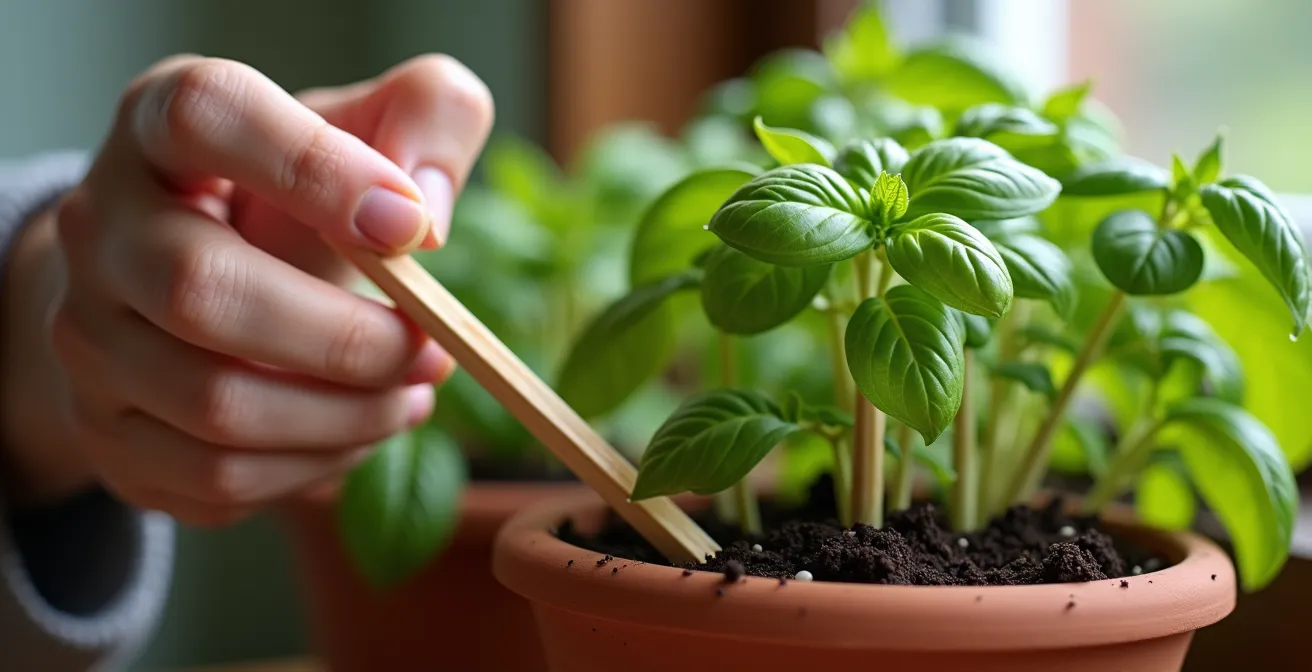
To break the habit of “loving your plants to death,” you need a new set of behaviors. Instead of defaulting to watering, practice what could be called “scheduled neglect.” This is a conscious, mindful approach to giving your plants the space they need to thrive. It builds trust in their natural resilience and your ability to read their signals accurately.
Action Plan: The Scheduled Neglect Method for Watering
- Use a Moisture Meter: Use a bamboo skewer or wooden chopstick as a DIY moisture meter. Insert it 2 inches deep into the soil. If it comes out clean and dry, it’s time to water. If it comes out with moist soil clinging to it, wait.
- Set “No-Water Days”: Put specific “No-Water Days” in your calendar. This actively prevents you from over-caring and helps you build trust in your plants’ ability to withstand a little dryness.
- Check Before You Water: Make it a rule to always check the soil moisture at a 2-inch depth before you even pick up the watering can. This breaks the automatic “it’s sunny, I should water” habit.
- Find Fidget Alternatives: If you feel the urge to do something for your plants, find a different task. Mist their leaves (for humidity-loving plants), gently wipe dust off larger leaves, or rotate the pot. This satisfies the need to nurture without drowning the roots.
- Remember Roots Need Air: Keep a mental image of roots needing to breathe. Think of overwatering not as giving a drink, but as holding your plant’s head underwater. This powerful visual can help you resist the temptation.
How To Build A Vertical Herb Garden To Maximize A Tiny Balcony
With only five square feet to work with, thinking horizontally is a luxury you can’t afford. The key to creating a productive balcony garden is to think vertically. By using the wall and railing space, you can multiply your growing area and create a lush, green oasis without cluttering your limited floor space. This approach is becoming increasingly popular; the use of vertical gardening systems has grown by 35% in residential homes over the last five years, as apartment dwellers seek innovative ways to connect with nature.
A vertical herb garden is the perfect project for a micro-homestead. Herbs are generally compact, don’t require deep soil, and many thrive in the partial sun common on balconies. The sensory experience of being surrounded by the scents of basil, rosemary, and mint is a therapeutic benefit in itself. Best of all, creating a vertical garden doesn’t have to involve drilling, which is a major concern for renters.
Modern gardening solutions offer a variety of clever, no-damage ways to build your vertical garden. From tension rods to over-the-railing boxes, you can create a stable and beautiful setup that can be easily removed when you move. This empowers you to invest in your space and well-being without risking your security deposit. Here are some effective, renter-friendly strategies:
- Tension Rod Planters: Use sturdy shower or closet tension rods installed between balcony posts or walls. You can hang lightweight pots from them using S-hooks.
- Over-the-Railing Planters: Look for planter boxes with adjustable brackets that can be securely fitted over your balcony railing. These are perfect for trailing plants and herbs.
- Macrame or Rope Hangers: If you have an overhang or ceiling, hanging planters are an elegant way to add greenery at different eye levels, creating a sense of immersion.
- Modular Stacking Towers: These freestanding systems consist of stackable pots that create a vertical tower of plants. They have a small footprint and can be placed in a corner.
- Leaning Ladder Gardens: A decorative ladder can be leaned against a wall to hold several small pots of herbs. It’s both functional and stylish, adding a rustic touch to your balcony.
By going vertical, you transform a limitation into an opportunity. Your small balcony is no longer just a balcony; it becomes a living wall, a source of fresh flavors, and a private sanctuary.
Fiber Vs Bacteria: Which Is More Important For A Happy Microbiome?
The benefits of your balcony garden extend far beyond your mental state; they reach deep into your physical health, specifically into your gut microbiome. As you begin to harvest your own fresh herbs and vegetables, you are creating an edible ecosystem that directly influences this internal world. The conversation around gut health often focuses on two key components: fiber (prebiotics) and beneficial bacteria (probiotics). Asking which is more important is like asking if an engine needs fuel or a spark. The answer is: it needs both, working in synergy.
Fiber, abundant in fresh vegetables and herbs, is the food for the beneficial bacteria already living in your gut. It’s the “prebiotic” part of the equation. Without sufficient fiber, these microbial allies starve, and less desirable microbes can take over. As USDA scientists in Davis, California found, a higher fiber intake from fruits and vegetables is associated with lower markers of gastrointestinal inflammation. The crunchy lettuce and fresh parsley from your balcony are not just adding flavor; they are providing the essential fuel for your gut to thrive.
Bacteria, the “probiotic” side, introduce new, beneficial strains into your system. While you can get these from supplements, one of the most effective and natural sources is through fermented foods. A study from the University of Minnesota highlighted this powerful synergy. Researchers found that people who regularly consumed lacto-fermented vegetables (like homemade pickles or sauerkraut) showed a greater diversity of beneficial gut metabolites. This demonstrates that consuming both the fiber from the vegetable and the bacteria from the fermentation process creates a powerful, combined effect for gut health. Your balcony garden provides the raw material for both sides of this crucial health equation.
How To Find ‘Wilderness’ In A Concrete Jungle Without Leaving Town?
Living in a city, the call of the wild can feel distant and inaccessible. But “wilderness” is not just about vast, untouched landscapes; it’s a state of mind and a sensory experience. You can cultivate a pocket of it right on your balcony by curating a space that engages all your senses and invites in a little bit of natural, untamed life. This practice of creating a micro-wilderness is a powerful tool for grounding yourself and finding peace in a chaotic urban environment.
The goal is to move beyond a purely ornamental garden and create a miniature, functioning ecosystem. As the Blue Zones Research Team highlights, the mental health benefits are readily accessible:
Just being outside in a green space is good for your mental health and can result in reduced stress.
– Blue Zones Research Team, Mental Health Benefits of Gardening Study
You can amplify this effect by making your green space a place for sensory foraging. This means actively engaging with your garden through touch, smell, and even taste. It’s about mindfully interacting with your plants, noticing the velvety texture of a sage leaf, inhaling the sharp scent of rosemary, or observing the bees visiting your lavender. This practice transforms your balcony from a simple view into an interactive experience. Here are a few ways to cultivate your own micro-wilderness:
- Plant for Pollinators: Grow native wildflowers like alyssum or calendula in a corner. Attracting beneficial insects like bees and ladybugs brings a dynamic, living element to your balcony.
- Practice Urban Foraging: Grow edible “weeds” like purslane or sorrel in containers. This provides a safe, controlled way to experience the thrill of foraging for your own food.
- Create Sensory Zones: Group plants by their scent. Place calming herbs like lavender and chamomile in one area for relaxation, and stimulating herbs like rosemary and mint in another for focus.
- Practice 5-Minute Wilderness Meditation: Sit on your balcony, close your eyes, and focus only on the sounds and smells around you: the rustle of leaves, the buzz of an insect, the fragrance of damp soil.
- Let a Corner Go “Wild”: Designate one pot or corner where you allow plants to self-seed and grow as they please. This element of controlled chaos mimics a natural landscape and can be beautiful to observe.
Key Takeaways
- The connection between soil and mood is scientific; microbes in dirt can actively boost serotonin.
- Successful balcony gardening for beginners hinges on choosing resilient plants and avoiding over-watering, the most common mistake.
- The ultimate therapeutic benefit comes from completing the full cycle: growing food, harvesting it, and using it to improve your gut health through practices like fermentation.
Lacto-Fermentation 101: How To Make Safe And Crunchy Pickles At Home?
You’ve touched the soil, nurtured the plant, and harvested your first crop of cucumbers or beans. The journey doesn’t have to end there. By learning the ancient art of lacto-fermentation, you can close the loop of your edible ecosystem, transforming your fresh produce into a gut-healthy probiotic powerhouse. This final step takes the tangible reward of your garden and turns it into a direct investment in your internal wellness. It’s the ultimate expression of the micro-homestead: not just growing food, but preserving it and enhancing its nutritional value.
Lacto-fermentation is a simple and safe process that uses salt, water, and naturally occurring bacteria (Lactobacillus) to preserve vegetables. Unlike canning, it requires no special equipment and doesn’t use vinegar. The process creates a tangy, complex flavor while keeping vegetables crisp and crunchy. More importantly, it populates your food with beneficial bacteria. A powerful study comparing regular consumers of lacto-fermented vegetables to non-consumers found a significant enrichment of beneficial microorganisms, demonstrating that this is a sustainable way to improve gut health through diet.
Making your first batch of fermented pickles from your own balcony-grown cucumbers is a deeply satisfying experience. The process feels alive—you can see bubbles forming as the bacteria do their work. Here is a basic, safe method to get you started:
- Create the Brine: Use a 2-3% salt brine solution. This is the magic ratio that encourages beneficial bacteria while inhibiting harmful ones. Simply dissolve 20-30 grams of non-iodized salt (like sea salt) per 1 liter (quart) of non-chlorinated water.
- Keep Everything Submerged: Place your clean vegetables (cucumbers, green beans, carrots) in a glass jar and pour the brine over them. The most critical rule for safety is to keep the vegetables fully submerged under the brine. Use a small weight (a fermentation weight, a small glass dish, or even a clean rock) to hold them down.
- Ferment at Room Temperature: Cover the jar with a loose lid (to allow gas to escape) and leave it at room temperature (ideally 18-22°C or 65-72°F) for 3-7 days, away from direct sunlight.
- Watch for Signs of Life: You’ll know it’s working when you see bubbling and the brine becomes cloudy. A pleasant, tangy smell is another good sign. Taste a pickle after 3 days to check the sourness.
- Refrigerate to Store: Once the pickles have reached a sourness you enjoy, tighten the lid and move the jar to the refrigerator. This will slow the fermentation process way down and keep them preserved and crunchy for months.
This final act of transformation brings the entire process full circle, connecting the health of your soil directly to the health of your gut.
By embracing this full cycle, from nurturing the soil’s microbiome to cultivating your own, you are doing more than just gardening. You are engaging in a radical act of self-care and reconnection in the heart of the city. Start with one pot, one seed, one microbe at a time, and watch your well-being grow.