

Chasing epic events like eclipses isn’t just a travel trend; it’s a direct intervention for mental health that reboots the brain’s self-obsession network.
- Awe-inspiring moments significantly reduce activity in the Default Mode Network (DMN), the part of the brain responsible for rumination and anxiety.
- This “cognitive shrinkage” of personal problems can be triggered by a spectrum of events, from grand migrations to the quality of light in your own home.
Recommendation: Integrate the benefits by using simple techniques like box breathing, and cultivate “Discovery Awe” in everyday life for sustained well-being.
In our hyper-connected world, the mind often feels like a radio stuck on one channel: the “me” station. It replays our worries, lists our shortcomings, and magnifies our anxieties in an endless loop. Many seek an escape through travel, hoping a change of scenery will quiet the noise. We’re told to “disconnect” or “live in the moment,” but these are often fleeting distractions. The internal monologue returns the moment we land back home. But what if the solution wasn’t merely a distraction, but a fundamental reset of the brain’s circuitry?
The answer lies in a powerful, often overlooked emotion: awe. This isn’t just about seeing something beautiful. It’s a complex psychological and neurological event that occurs when we encounter something vast—physically, conceptually, or socially—that our current mental frameworks cannot easily process. From the cosmic spectacle of a total solar eclipse to the ethereal dance of an aurora, these experiences do more than just create memories. They actively disrupt the brain’s self-referential chatter.
This article moves beyond the simple idea that “nature is good for you.” We will decode the science behind awe, exploring how it serves as a neurological reset button. We will examine how witnessing phenomena like eclipses physically alters brain activity to make our personal problems feel smaller. We’ll provide a practical guide to chasing these moments, understand the different types of awe—some beautiful, some threatening—and discover how to find and cultivate this essential emotion not just in once-in-a-lifetime trips, but within the walls of your own home.
To navigate this journey from grand cosmic events to everyday wonders, this guide explores the science and practice of awe. Here is a look at what we will cover.
Summary: The Awe-Seeker’s Guide to Neurological Well-Being
- Why Does Seeing A Total Eclipse Make Your Personal Problems Feel Smaller?
- How To Read Solar Wind Data To Predict An Aurora Borealis Display
- Blue Waves Vs Red Lava: Which Phenomenon Is Safer To Witness Close Up?
- The Superbloom Trap: Why Trampling Flowers For A Selfie Destroys The Ecosystem
- The 2-Week Window For Witnessing The Great Migration
- Why Does A 60-Second Breathing Box Drill Lower Blood Pressure Instantly?
- How To Use Window Light To Take Professional Portraits At Home
- Second City Tourism: Why Visiting Lyon Is Better Than Paris For Authenticity?
Why Does Seeing A Total Eclipse Make Your Personal Problems Feel Smaller?
During the brief, chilling moments of a total solar eclipse, as the sun’s corona blazes in a blackened sky, a profound shift occurs. Deadlines, anxieties, and personal dramas that consumed your thoughts just moments before suddenly seem insignificant. This phenomenon, often described as “cognitive shrinkage,” isn’t just a poetic feeling; it’s a measurable neurological event. The key lies in what happens to your brain’s Default Mode Network (DMN), the system responsible for self-referential thoughts, mind-wandering, and rumination.
When you’re worrying about the past or future, your DMN is highly active. Awe acts as a pattern interrupt. Neuroscience research reveals that awe-inducing experiences can trigger a significant change in brain activity. For example, some studies suggest that during these moments, there can be a dramatic reduction in DMN activity of up to 75%. By quieting this internal narrator, your brain is forced out of its self-focused loop. This creates mental space, allowing your problems to shrink in perceived importance relative to the vastness of the cosmos you are witnessing.
This neurological downshift is the very essence of feeling like a “small self.” As leading researchers on the subject have pointed out, this state is defined by a specific cognitive change. In the Human Brain Mapping Journal, Van Elk et al. noted:
Together these findings suggest that a key feature of the experience of awe is a reduced engagement in self-referential processing, in line with the subjective self-report measures.
– Van Elk et al., Human Brain Mapping Journal
This shift from self-focus to a broader awareness also triggers what sociologists call “collective effervescence.” You are not just an individual watching the sky; you become part of a crowd sharing a singular, profound experience. This shared vulnerability and wonder fosters a sense of connection and prosocial behavior, further pulling you out of your own head and into a collective human moment.
How To Read Solar Wind Data To Predict An Aurora Borealis Display
While an eclipse offers a predictable, scheduled dose of awe, the aurora borealis is a more elusive phenomenon. Chasing the Northern Lights requires moving from a passive observer to an active participant, one who understands the cosmic weather that paints the night sky. Predicting a display is less about luck and more about reading the data from the sun. The key is to monitor the solar wind, a stream of charged particles flowing from the sun, via publicly available space weather data.
Four primary parameters are crucial for a successful aurora hunt. The most important is the Bz component of the interplanetary magnetic field (IMF). When Bz is oriented southward (a negative value), it opens a gateway in Earth’s magnetosphere, allowing solar wind particles to pour in and interact with our atmosphere. A strong, sustained negative Bz is the number one indicator of an impending show. Second, solar wind speed dictates the intensity; higher speeds mean more energetic collisions and brighter, more dynamic auroras. Third, particle density tells you the volume of material hitting the magnetosphere. Finally, the Kp index is a global measure of geomagnetic activity on a scale of 0 to 9. A Kp of 5 can bring the aurora to the horizon in the northern United States and Europe, while a Kp of 7 or higher can create stunning overhead coronas and widespread displays visible at much lower latitudes.

By tracking these data points through websites and apps like the NOAA Space Weather Prediction Center, you transform the chase into an engaging scientific quest. The anticipation built while watching the data—seeing the Bz dip south, the wind speed spike—becomes part of the awe experience itself. It connects you directly to the invisible forces of the solar system, making the eventual light show a personal, hard-won reward. The feeling of seeing the first faint green arc appear, knowing you predicted its arrival based on solar physics, adds a layer of intellectual satisfaction to the profound visual wonder.
Your Action Plan: Forecasting the Aurora
- Monitor the Bz component: Look for sustained negative values, ideally below -5 nanoteslas (nT). This is the “on” switch for strong auroras.
- Track solar wind speed: Aim for speeds above 400 km/s. Higher speeds push the aurora to lower latitudes and increase its dynamism.
- Check proton density: Values above 10 protons per cubic centimeter (p/cm³) indicate a denser particle stream, fueling a more intense display.
- Watch the Kp index: A Kp of 5 or higher is your target for mid-latitude viewing. A Kp of 7+ suggests a major geomagnetic storm and a potentially unforgettable show.
- Time your viewing: After the solar wind data shows a hit, peak aurora activity typically occurs 2 to 3 hours later, so plan your viewing window accordingly.
Blue Waves Vs Red Lava: Which Phenomenon Is Safer To Witness Close Up?
The spectrum of awe is not limited to serene, beautiful experiences. It also encompasses moments that are powerful, overwhelming, and even threatening. This duality is critical to understanding its full impact on our psyche. Consider the contrast between witnessing bioluminescent “blue waves,” a gentle and magical display, and standing near a flow of molten red lava, a visceral encounter with the planet’s raw power. Both induce awe, but through different emotional pathways.
Bioluminescent waves, caused by dinoflagellates that light up when disturbed, fall squarely into the category of positive awe. It’s a beautiful, ethereal experience that evokes wonder and delight without a hint of danger. It calms the nervous system and fosters a sense of connection to the delicate mysteries of nature. Witnessing it is inherently safe; the biggest risk is getting your feet wet.
Conversely, watching a lava flow is an example of threat-based awe. The immense heat, the deep, guttural sound of the earth moving, and the undeniable destructive power trigger a more primal response. It’s a direct confrontation with a force far greater and more dangerous than yourself. This type of awe can be profoundly transformative, clarifying priorities and putting personal struggles into stark perspective. However, the danger is real and immediate. Volcanic environments are unstable, emit toxic gases (like sulfur dioxide), and can change without warning. Safety is paramount and is only possible from designated, distant viewing areas managed by geological authorities. Getting “close up” is never an option. As research shows, approximately 75% of awe experiences are predominantly positive, while 25% are imbued with threat. Recognizing this distinction helps us seek out these powerful moments responsibly.
From a safety standpoint, there is no comparison: bioluminescent waves are unequivocally safer to witness up close. Lava demands extreme respect and distance. Yet, from a psychological perspective, both are valid and powerful triggers for the DMN-quieting, perspective-shifting benefits of awe. The choice depends on the type of experience sought: the gentle wonder of life’s magic or the stark, life-affirming reminder of nature’s immense power.
The Superbloom Trap: Why Trampling Flowers For A Selfie Destroys The Ecosystem
In recent years, the “superbloom”—a rare desert event where an unusually high number of wildflowers blossom at once—has become a viral sensation. Drawn by images of vast landscapes painted in vibrant oranges, purples, and yellows, thousands flock to these remote areas, seeking their own moment of awe and the perfect photo to prove it. But this modern pilgrimage highlights a dark paradox: the very act of seeking awe can lead to the destruction of the thing that inspires it. This is the superbloom trap.
The problem isn’t the appreciation of beauty, but the behavior that often accompanies it. Fragile desert ecosystems, unaccustomed to heavy foot traffic, are being irrevocably damaged. When visitors stray from marked trails to get a selfie while sitting or lying in a field of flowers, they crush the plants and compact the soil. This not only destroys the current bloom but also prevents future growth, as compacted soil can’t absorb water and crushed flowers can’t produce seeds for the next season. The quest for a single, fleeting digital image erases decades of ecological potential.
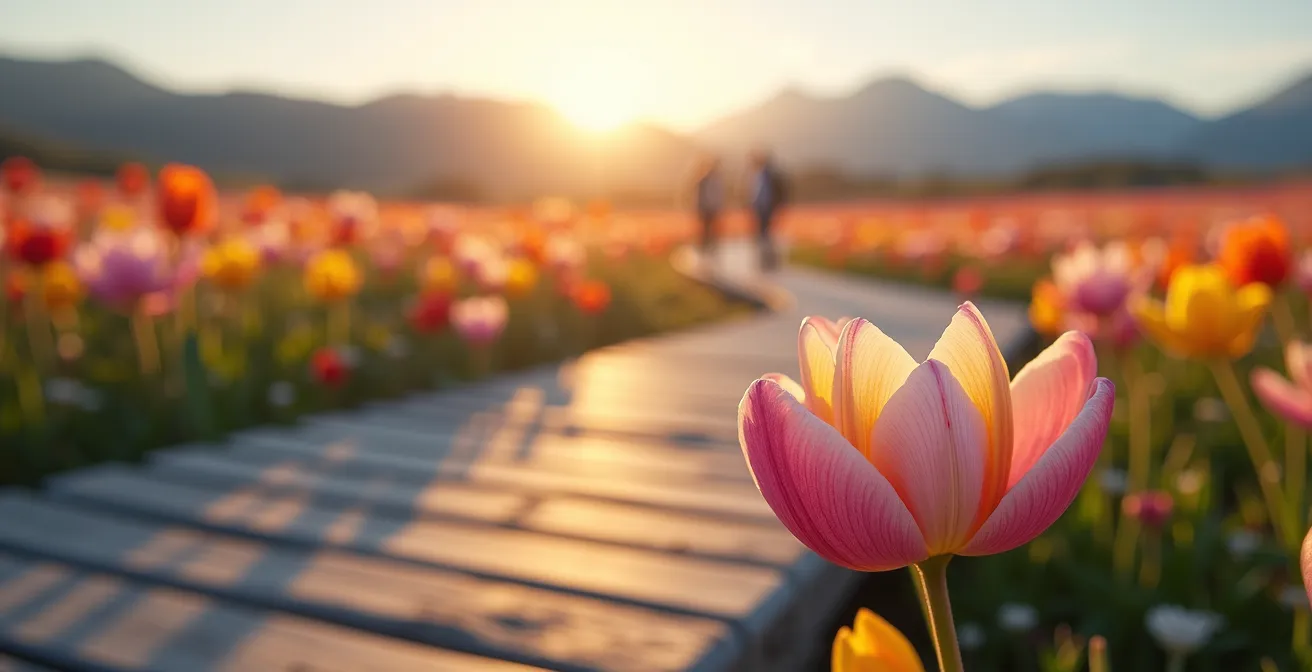
True awe fosters a sense of connection and a desire to protect, not possess. The behavior seen in superblooms often stems from a performative need for social validation rather than a genuine connection with nature. It treats the landscape as a backdrop or a prop, fundamentally misunderstanding the source of its power. The awe inspired by a superbloom comes not from a single flower, but from the overwhelming scale and unity of millions of individual lives working together to create a singular, breathtaking spectacle. To experience it authentically is to respect it as a living, fragile system.
This means staying on designated paths, using long-focus lenses to capture photos without entering the fields, and educating others on respectful viewing. The most profound experience comes from observing the whole, not from conquering a small part of it for a social media post. By shifting our mindset from extraction to stewardship, we can ensure these awe-inspiring events survive for future generations to experience.
The 2-Week Window For Witnessing The Great Migration
Few events on Earth embody overwhelming, life-affirming awe like the Great Migration. The spectacle of over 1.5 million wildebeest moving as one unified system across the Serengeti is a visceral encounter with the sheer scale and power of the natural world. But this awe is intensified by its fleeting nature. While the migration is a year-long cycle, the most dramatic moments, like the iconic river crossings, happen within an incredibly narrow and unpredictable two-week window in any given location.
This scarcity is a powerful psychological amplifier. Knowing that the experience is rare, temporary, and difficult to witness heightens its perceived value and deepens its emotional impact. It forces a state of complete presence; you cannot be distracted when you know the thunderous chaos of a river crossing could begin and end in minutes. This focused attention is a prerequisite for the awe-induced shutdown of the Default Mode Network. The raw, untamed struggle for survival playing out before you leaves no room for rumination on personal anxieties.
Furthermore, witnessing such a monumental event has been shown to have a profound impact on our social behavior. Studies on awe in natural settings, such as the one conducted by Baylor University researchers during the 2024 eclipse, demonstrate a significant increase in prosocial feelings and actions. Participants report a greater sense of connection to others and a stronger desire to help. Experiencing the Great Migration often has a similar effect, with tourists showing increased willingness to donate to conservation efforts after witnessing the spectacle. The event dissolves the ego, replacing self-interest with a sense of responsibility for the larger ecosystem of which we are all a part.
Timing a visit to coincide with this narrow window requires careful planning with knowledgeable local guides who understand the herds’ movements. But the reward is more than just a spectacular sight. It is a powerful psychological experience, amplified by scarcity, that fosters a lasting sense of connection and a renewed perspective on one’s place in the world.
Why Does A 60-Second Breathing Box Drill Lower Blood Pressure Instantly?
After an awe-inspiring event like an eclipse or migration, the feeling of clarity and peace can fade as daily stresses creep back in. The key to making the benefits of awe last is to anchor the experience in your nervous system. A simple yet profoundly effective tool for this is the 60-second box breathing drill. This technique doesn’t just calm you down; it physically integrates the “small self” state you experienced, helping to lower blood pressure and reduce stress markers.
Box breathing, which involves inhaling, holding, exhaling, and holding again for equal counts (typically four seconds each), works by directly stimulating the vagus nerve. This is the main nerve of your parasympathetic nervous system, the “rest and digest” system that counteracts your body’s “fight or flight” response. By slowing and controlling your respiration, you send a powerful signal to your brain that you are safe. This activation calms your heart rate and can lead to an immediate, measurable drop in blood pressure.
When you combine this physiological practice with a psychological one—recalling a moment of awe—the effects are amplified. While inhaling, you visualize the vastness of the eclipse. While holding, you feel your place within that vast system. While exhaling, you consciously release the self-focused thoughts that create tension. Neuro-immunology studies have even shown that awe experiences, particularly when paired with mindfulness practices like controlled breathing, can significantly lower markers of inflammation in the body, such as interleukin-6. You are essentially using your breath to teach your body how to access the state of awe on command.
This 60-second drill acts as a bridge between the extraordinary and the everyday. It’s a tool that allows you to tap into the neurological reset of awe long after the event has passed, providing a practical way to manage stress and maintain a broader perspective in your daily life.
Action Plan: Anchoring Awe with Box Breathing
- Inhale for 4 counts: Slowly breathe in through your nose while recalling the vastness and detail of your most recent awe experience.
- Hold for 4 counts: Hold your breath, feeling your physical presence and connection to the larger system you visualized.
- Exhale for 4 counts: Slowly breathe out through your mouth, consciously releasing self-focused thoughts, worries, and tension.
- Hold empty for 4 counts: Hold your breath with your lungs empty, embracing the quiet state of the “small self.”
- Repeat 4-8 cycles: Perform this cycle for at least 60 seconds to anchor the feeling of awe in your nervous system and calm your physiology.
How To Use Window Light To Take Professional Portraits At Home
The pursuit of awe doesn’t always require a passport and a plane ticket. It can be cultivated in our immediate environment by learning to see the ordinary in an extraordinary way. Photography, particularly portraiture using natural light, is a powerful practice for this. By understanding how to use something as simple as a window, you can not only create professional-looking images but also train your mind to perceive the profound beauty and emotional depth in everyday light.
The key is recognizing that “window light” isn’t one thing; it’s a dynamic source that changes based on the window’s direction, the time of day, and whether it’s diffused. Each type of light has a distinct emotional language. As the Professional Photography Institute notes in its guide, *The Emotional Language of Light*:
Soft, diffused light evokes feelings of calm and intimacy, while hard, direct light creates drama and intensity.
Learning to see and use these different qualities is a form of mindfulness. It forces you to pay close attention to the subtle shifts in your environment. A north-facing window provides soft, cool, consistent light all day, perfect for calm, contemplative portraits. A south-facing window delivers hard, direct light that creates high contrast and drama. An east or west-facing window offers warm, golden light at sunrise and sunset, evoking nostalgia and hope. By simply hanging a thin white curtain, you can diffuse any hard light into a soft, dreamy glow. The following table breaks down these qualities.
As this comparative analysis of light quality shows, your home is a studio of emotional potential.
| Window Direction | Light Quality | Emotional State Evoked | Best For |
|---|---|---|---|
| North-facing | Soft, even, cool | Calm, contemplative | Peaceful portraits |
| South-facing | Hard, directional | Dramatic, intense | High-contrast portraits |
| East/West | Golden, warm | Nostalgic, hopeful | Emotional warmth |
| Diffused (curtains) | Ultra-soft | Dreamy, ethereal | Beauty portraits |
The act of taking a portrait becomes a collaborative dance with light. You’re not just capturing a person; you’re capturing a mood, a feeling, an atmosphere. This practice trains you to find wonder in the mundane, transforming a simple room into a source of endless creative and emotional discovery.
Key Takeaways
- Awe is a neurological tool that works by reducing activity in the brain’s Default Mode Network (DMN), the source of self-referential thought and rumination.
- This “cognitive shrinkage” of problems can be triggered by a spectrum of experiences, from threat-based awe (lava) to positive awe (superblooms), but must be pursued responsibly.
- Awe can be found not just in grand, rare spectacles, but can be cultivated in everyday life by learning to perceive subtle phenomena like the quality of light.
Second City Tourism: Why Visiting Lyon Is Better Than Paris For Authenticity?
For many travelers, the quest for awe is synonymous with visiting world-famous landmarks: the Eiffel Tower, the Colosseum, the Pyramids. These sites are engineered for awe and reliably deliver a powerful experience. However, this form of awe can be predictable and often shared with massive crowds, which can dilute its personal impact. A more sustainable and often more profound path to well-being lies in seeking a different kind of awe—one found not in monumental icons, but in the subtle, unexpected moments of authentic discovery.
This is the core principle behind the rise of “second city” tourism, such as choosing Lyon over Paris. While Paris offers what experts call “Landmark Awe”—grand, expected, and monumental—Lyon provides the perfect environment for “Discovery Awe.” As Tourism Psychology Research published in the Journal of Travel & Tourism Marketing explains:
Landmark Awe is grand, expected, monumental while Discovery Awe is subtle, personal, unexpected – the latter is more powerful for long-term well-being.
– Tourism Psychology Research, Journal of Travel & Tourism Marketing
Discovery Awe is the feeling you get when you turn a corner in Lyon’s Old Town and stumble upon a hidden “traboule” passageway, or when you have a deeply personal interaction with a chef in a small “bouchon” restaurant. It’s the awe of personal connection, of uncovering a secret, of seeing a place’s true character unfold organically. It is less about being overwhelmed by scale and more about being enchanted by authenticity. Because it is unexpected and personal, it often leaves a more lasting impression on our psyche.
Crucially, this type of awe is not dependent on epic travel. As studies show, most people experience awe far more frequently in their daily lives than they realize. Research participants reported experiencing awe 2-3 times weekly in everyday settings, triggered by things like a kindness from a stranger, a piece of music, or the pattern of light through a window. The lesson from second-city tourism is that the most potent source of mental well-being isn’t chasing the biggest landmarks, but cultivating the sensitivity to find wonder anywhere.
By understanding that awe is a neurological process, not just a fleeting feeling, you can begin to actively integrate it as a vital tool for mental health. The next step is to consciously cultivate this skill, seeking out not only the grand spectacles that reset your perspective but also the small, daily wonders that sustain it.