
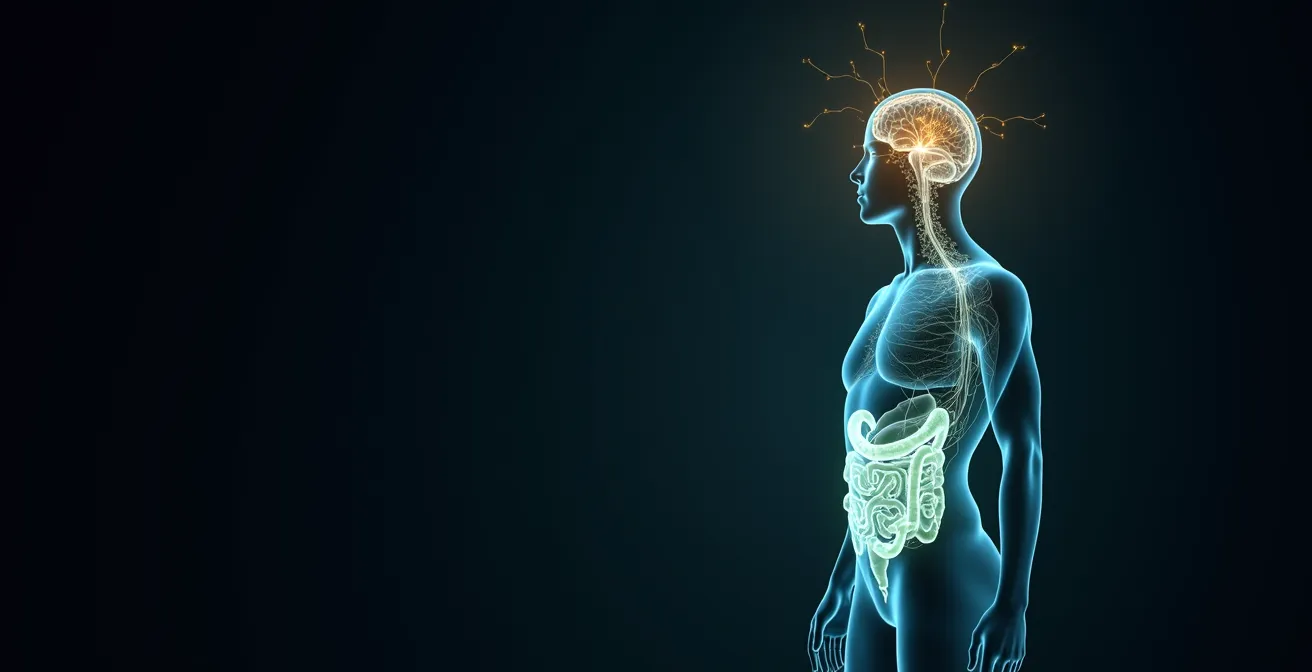
The persistent, unexplained anxiety you feel may not originate in your head, but in the complex biochemical factory of your gut microbiome.
- The “second brain” in your gut contains hundreds of millions of neurons and communicates directly with your brain, influencing emotions.
- Specific bacteria in your gut produce mood-regulating neurotransmitters, while others convert dietary fiber into compounds that reduce inflammation and stress.
Recommendation: To regain control over your mental state, shift your focus from generic “healthy eating” to strategically nourishing the specific microbial pathways that support neurological calm.
That simmering, background hum of anxiety—the kind that feels disconnected from any specific worry—is a frustratingly common experience. For many people suffering from both unexplained anxiety and digestive issues, the standard advice often feels inadequate. You’re told to manage stress, perhaps meditate, or adjust your diet in broad strokes. But what if these symptoms aren’t two separate problems, but two sides of the same coin? What if the root cause of that mental unease is located not in your brain’s circuitry, but in the bustling, microscopic ecosystem of your gut?
The conversation around gut health has moved beyond simple digestion. We now understand it as a central control hub for the body’s inflammatory and hormonal responses. The emerging science of the gut-brain axis reveals a constant, bidirectional dialogue between your gastrointestinal tract and your central nervous system. This communication is so profound that it directly shapes your emotional landscape, from moments of joy to pangs of anxiety.
This article moves beyond the platitude of “you are what you eat.” Instead, we will demystify the precise biochemical mechanisms at play. We will explore how your gut acts as a “second brain,” how specific microbes can be selected to fight stress, and why the type of fiber you consume is as critical as a probiotic supplement. By understanding the *why* behind the connection, you can move from guessing to making targeted, evidence-based decisions to reclaim your mental and digestive well-being.
This guide will break down the core pillars of the gut-brain axis, providing a clear roadmap to understanding and influencing this powerful connection. We will explore the science behind these systems and offer actionable insights to help you cultivate a healthier gut and a calmer mind.
Summary: How Gut Health Governs Your Mood and Anxiety
- Why Is Your Stomach Called The ‘Second Brain’ By Neuroscientists?
- How To Choose A Probiotic Strain Specifically For Stress Reduction?
- Fiber Vs Bacteria: Which Is More Important For A Happy Microbiome?
- The Sugar Crash Error: How Glucose Spikes Feel Just Like Anxiety
- When To Stop Eating Before Bed To Prevent Nighttime Anxiety
- Why Does Touching Soil Boost Serotonin Levels Naturally?
- Why Do Your Hands Shake And Throat Tighten Before You Speak?
- Lacto-Fermentation 101: How To Make Safe And Crunchy Pickles At Home?
Why Is Your Stomach Called The ‘Second Brain’ By Neuroscientists?
The term “second brain” is far more than a catchy metaphor; it’s a scientifically accurate description of the enteric nervous system (ENS). This intricate mesh of neurons, embedded in the walls of your gastrointestinal tract, is a complex and semi-autonomous brain in its own right. In fact, the latest research shows that the enteric nervous system contains more than 500 million neurons, which is more than you’d find in your spinal cord or peripheral nervous system. This sheer neuronal density allows it to manage the complex process of digestion independently, without needing direct instructions from the brain in your head.
The ENS communicates with the central nervous system (CNS) through three primary pathways. The most famous is the neural pathway, via the vagus nerve, a superhighway of information flowing in both directions. Crucially, about 90% of the signals in the vagus nerve travel from the gut to the brain, not the other way around. This means your gut is constantly updating your brain on its status, influencing your mood, stress response, and even cognitive functions. The other two pathways are the endocrine system (through hormones like cortisol) and the immune system (through inflammatory messengers called cytokines).
What makes the ENS a true “brain” is its structure. According to neurobiologists, it’s a complete reflex circuit. As Wikipedia’s synthesis on the topic explains:
the enteric nervous system includes efferent neurons, afferent neurons, and interneurons, all of which make the enteric nervous system capable of carrying reflexes
– Wikipedia contributors, Enteric nervous system – Wikipedia
This means your gut can sense its environment, process that information, and decide on a course of action on its own. This autonomous control over gut function, combined with its profound influence over our brain’s emotional centers, is precisely why neuroscientists have granted it the title of our second brain.
How To Choose A Probiotic Strain Specifically For Stress Reduction?
The aisles of health stores are flooded with probiotics, but not all are created equal, especially when the goal is to reduce stress and anxiety. The key is to move beyond generic “multi-strain” formulas and look for specific strains backed by research. These are known as psychobiotics: live organisms that, when ingested in adequate amounts, produce a health benefit in patients suffering from psychiatric illness. Their power lies in their ability to produce or stimulate the production of neurotransmitters and other signaling molecules.
For example, certain strains of bacteria can produce GABA (gamma-aminobutyric acid), the brain’s primary inhibitory neurotransmitter, which promotes feelings of calm. Others can influence the production of serotonin and dopamine. One of the most studied psychobiotic strains for stress is *Lactobacillus rhamnosus*. Research has demonstrated its remarkable ability to modulate the nervous system. Specifically, treatment with Lactobacillus rhamnosus has been shown to reduce cortisol release in stressful situations, effectively dampening the body’s primary stress hormone.
When selecting a probiotic for stress, look for products that clearly list the specific strains and their colony-forming units (CFUs). Besides *L. rhamnosus*, other strains with promising research for mental health include *Bifidobacterium longum*, *Lactobacillus helveticus*, and *Lactobacillus casei*. It’s also important to consider that these beneficial bacteria need fuel to thrive. A probiotic supplement is far more effective when paired with a diet rich in prebiotics—the dietary fibers that feed your beneficial gut microbes. Think of it as not just planting seeds, but also providing the fertile soil and water they need to grow.
Fiber Vs Bacteria: Which Is More Important For A Happy Microbiome?
Posing the question of fiber versus bacteria is like asking whether an engine or fuel is more important for a car. The truth is, you cannot have a happy, functional microbiome without both. They exist in a deeply symbiotic relationship. Bacteria are the workers, and fiber is the raw material they transform into the compounds that regulate your health. Without the right bacteria, fiber passes through largely undigested. Without fiber, the most beneficial bacteria starve.
The true magic happens during fermentation. When beneficial bacteria consume prebiotic fibers (found in foods like onions, garlic, asparagus, and bananas), they produce a class of molecules called Short-Chain Fatty Acids (SCFAs). These are the unsung heroes of the gut-brain axis. The three main SCFAs—butyrate, propionate, and acetate—are metabolic powerhouses. Butyrate is the primary energy source for the cells lining your colon, keeping your gut barrier strong and preventing “leaky gut.”
But their influence extends far beyond the gut. As experts at PsychSceneHub explain, these molecules are key communicators with the brain:
Bacteria also produce short-chain fatty acid (SCFAs), such as butyric acid, propionic acid and acetic acid, that are able to stimulate the sympathetic nervous system, mucosal serotonin release and thus influence the memory and learning process in the brain
– PsychSceneHub, The Simplified Guide to the Gut-Brain Axis
Recent research confirms this profound connection. A detailed analysis of the fermentation process shows that SCFAs like butyrate and propionate influence brain functions such as mood and cognition by being able to cross the blood-brain barrier. Therefore, the debate isn’t about choosing between fiber and bacteria. The strategic goal is to consume a diverse range of dietary fibers to nourish an equally diverse community of bacteria, maximizing the production of these crucial SCFAs.
The Sugar Crash Error: How Glucose Spikes Feel Just Like Anxiety
We often associate a “sugar crash” with fatigue and irritability, but its physiological symptoms can almost perfectly mimic a bout of anxiety. The racing heart, shakiness, sweating, and brain fog that follow a rapid drop in blood sugar (hypoglycemia) are biochemically similar to a panic response. This happens because your body perceives the sudden glucose deprivation as a life-threatening emergency, triggering the release of stress hormones like cortisol and adrenaline to rapidly mobilize energy stores. This hormonal surge is the same one that fuels the fight-or-flight response.
The problem, however, goes deeper than just temporary hormonal spikes. A diet high in refined sugars and processed carbohydrates perpetuates a state of chronic inflammation that directly impacts the gut-brain axis. High sugar intake promotes the growth of less desirable bacteria and yeast, leading to a state of imbalance known as dysbiosis. This dysbiosis can compromise the integrity of the gut lining, a condition often called “leaky gut” or increased intestinal permeability. When the gut barrier is permeable, inflammatory molecules and bacterial byproducts can leak into the bloodstream.

This leakage triggers a systemic immune response. Evidence shows that this leaky gut drives a proinflammatory state with increased TNF-α, interferon-γ, and IL-6. These inflammatory cytokines can cross the blood-brain barrier, where they are known to interfere with the production of neurotransmitters like serotonin and can trigger symptoms of depression and anxiety. So, that sugary donut isn’t just causing a temporary crash; it’s potentially fueling a long-term cycle of inflammation that puts your brain in a constant state of alarm.
When To Stop Eating Before Bed To Prevent Nighttime Anxiety
Experiencing anxiety at night, characterized by racing thoughts, a pounding heart, or a sudden sense of dread, can be deeply unsettling. While many factors contribute to this, one often-overlooked culprit is the timing of your last meal. Eating a large meal, especially one high in refined carbohydrates or fats, too close to bedtime can directly interfere with the physiological processes that promote calm and restful sleep, thereby triggering anxiety.
tintroduction=”This section explains the link between late-night eating, digestion, and the body’s stress-response system (cortisol). The goal is to provide a clear, science-based recommendation on meal timing to improve sleep quality and reduce nighttime anxiety. It will focus on the interplay between the digestive system, blood sugar regulation, and the circadian rhythm of cortisol, a key stress hormone.” h2_section=”15.5″ />
The digestive process is energy-intensive. When you eat, your body diverts blood flow to the stomach and intestines. This metabolic activity can raise your core body temperature and heart rate, both of which are antithetical to the cooling and slowing-down process the body needs to initiate sleep. More importantly, late-night eating disrupts your body’s natural circadian rhythm. Cortisol, the primary stress hormone, naturally follows a 24-hour cycle: it is highest in the morning to wake you up and gradually tapers to its lowest point at night, allowing you to sleep.
Eating a large meal, particularly one that spikes your blood sugar, can force your body to release insulin and, subsequently, cortisol to manage the metabolic load. This artificial spike in cortisol at a time when it should be at its lowest can jolt your nervous system into a state of alertness, effectively mimicking a stress response. This can manifest as the physical symptoms of anxiety—a racing heart, restlessness, and an inability to switch off your thoughts. Your body is essentially caught between two conflicting commands: “prepare for sleep” and “deal with this metabolic stressor.”
As a general rule, it is best to stop eating at least three hours before bed. This gives your body ample time to complete the most demanding phase of digestion, allowing your blood sugar and insulin levels to stabilize. This timing helps ensure your cortisol levels can follow their natural downward curve, paving the way for the release of melatonin and a smoother transition into a calm, restful state, free from diet-induced anxiety.
Why Does Touching Soil Boost Serotonin Levels Naturally?
The feeling of well-being that comes from gardening or walking barefoot on the earth is not just psychological; it’s rooted in microbiology. Soil is a living, breathing ecosystem teeming with trillions of microorganisms, and some of them have a remarkable and direct impact on our brain chemistry. The star player in this process is a specific, non-pathogenic bacterium found in soil called *Mycobacterium vaccae*.
When we inhale these microbes or absorb them through small cuts in our skin, they trigger a fascinating cascade of events within our immune system. Researchers have discovered that *M. vaccae* interacts with immune cells (macrophages) in our body, prompting them to release anti-inflammatory molecules. These molecules, in turn, send a signal to the brain that has a powerful antidepressant-like effect.
The mechanism is surprisingly specific. The interaction with the bacteria leads to a chain reaction that directly influences mood-regulating neurons. A synthesis of neuroscience studies on this topic reveals the pathway:
Mycobacterium vaccae triggers immune cells to release cytokines (like IL-10) that, in turn, activate a specific group of serotonin neurons in the brain’s prefrontal cortex, measurably improving mood and cognitive function
– Research synthesis, Multiple neuroscience studies on soil bacteria
In essence, contact with this humble soil bacterium directly leads to an increase in the release of serotonin in a part of the brain crucial for emotional regulation. This is the same neurotransmitter targeted by many common antidepressant medications (SSRIs). This “hygiene hypothesis” suggests that our modern, hyper-sanitized lifestyles may be starving us of these beneficial microbial inputs, potentially contributing to rising rates of anxiety and depression. Simply spending time in nature and getting your hands dirty can be a potent, science-backed strategy for boosting your mood from the ground up.
Why Do Your Hands Shake And Throat Tighten Before You Speak?
The physical symptoms of performance anxiety—shaking hands, a tightening throat, a racing heart—are the classic hallmarks of the body’s acute stress response, more commonly known as “fight-or-flight.” This is an ancient survival mechanism orchestrated by the sympathetic nervous system. When your brain perceives a threat (whether it’s a saber-toothed tiger or a judging audience), it floods your system with adrenaline and cortisol. These hormones prepare your body for intense physical exertion by increasing heart rate, tensing muscles, and redirecting blood flow away from non-essential functions like digestion and fine motor control.
The shaking hands are a direct result of this adrenaline surge. The hormone primes your major muscle groups for powerful action, causing smaller, stabilizing muscles to quiver with the excess energy. The tightness in your throat, known as a “globus sensation,” is caused by the tensing of muscles around your larynx and esophagus. This is part of the body’s instinct to open the airway for maximum oxygen intake while simultaneously shutting down the digestive tract.
So, where does the gut fit into this? The state of your gut microbiome can determine the *sensitivity* of this fight-or-flight trigger. The gut-brain axis is a two-way street, and a dysregulated gut, plagued by inflammation and a lack of microbial diversity, sends constant low-level stress signals to the brain via the vagus nerve. This can put your nervous system in a state of hyper-vigilance, essentially “priming the pump” for an exaggerated stress response. A calm, well-regulated gut helps to promote a healthier “vagal tone,” which is associated with the parasympathetic “rest-and-digest” state. When your baseline is calm, you are less likely to perceive a situation like public speaking as a life-threatening event, and the resulting physical reaction is much less severe.
Key takeaways
- The gut is not just a digestive organ; it is a neuro-immune-endocrine hub with its own nervous system that profoundly influences mood and stress.
- Specific microbes and their metabolic byproducts, like Short-Chain Fatty Acids (SCFAs) from fiber, are the key communicators in the gut-brain dialogue.
- You can actively manage this system through targeted diet (fermented foods, diverse fibers), blood sugar control, and even lifestyle choices like exposure to soil microbes.
Lacto-Fermentation 101: How To Make Safe And Crunchy Pickles At Home?
Creating your own lacto-fermented foods, like crunchy pickles or sauerkraut, is one of the most effective ways to introduce a wide diversity of beneficial bacteria into your gut. Unlike commercial probiotic supplements that contain a handful of isolated strains, wild fermentation cultivates a complete, complex microbial ecosystem. The process is a beautiful example of “microbial succession,” where different bacterial species work in stages to create a stable, delicious, and probiotic-rich food.
The primary challenge for home fermenters is maintaining crunchiness and ensuring safety. Mushy pickles are often the result of enzymes that break down pectin, the structural component of a vegetable’s cell walls. Safety is ensured by creating an environment that favors beneficial lactic acid bacteria while inhibiting spoilage microbes. The key is a proper salt concentration. The following table highlights the significant difference between what you can create at home and what you buy in a capsule.
| Characteristic | Wild Fermentation | Commercial Probiotics |
|---|---|---|
| Number of strains | 100+ diverse species | 2-10 selected strains |
| Ecosystem complexity | Complete microbial ecosystem | Isolated strains |
| Metabolite diversity | Wide range of bioactive compounds | Limited metabolite production |
| Cost | Low (vegetables + salt) | High (capsules/supplements) |
To succeed, you must manage this process. The key is to control the environment to guide the natural succession of bacteria and inhibit the enzymes that cause mushiness. A simple, science-backed checklist can help you achieve consistently safe and crunchy results.
Action Plan: Mastering Lacto-Fermentation at Home
- Initiate Fermentation (Days 1-2): Establish a 2-3% salt brine (20-30g of salt per 1 liter of water). This allows salt-tolerant *Leuconostoc mesenteroides* to begin fermentation, producing CO2 and initial lactic acid, which lowers the pH and inhibits spoilage bacteria.
- Complete Fermentation (Day 3+): As acidity rises, the environment becomes ideal for *Lactobacillus plantarum* to take over. This more acid-tolerant species will complete the fermentation, creating a stable, preserved product.
- Preserve Pectin with Tannins: Add a source of tannins, such as a fresh grape leaf, a horseradish leaf, or a black tea bag, to your fermentation vessel. Tannins inhibit the enzymes that break down pectin, which is the key to maintaining a firm, crunchy texture.
- Fortify with Calcium Chloride: For guaranteed crispness, add a small amount of calcium chloride (often sold as “pickle crisp”). This food-safe salt cross-links with pectin, making the cell walls more rigid and resistant to softening enzymes.
- Maintain an Anaerobic Environment: Ensure your vegetables are fully submerged beneath the brine at all times. Use a fermentation weight or a small ziplock bag filled with brine to keep everything down. This prevents exposure to oxygen, which can allow mold and undesirable yeasts to grow.
To begin actively improving your gut-brain axis, starting your own fermentation journey is a powerful, cost-effective first step. It is a direct way to apply these principles and cultivate the very microbes that support a calm and resilient mind.