
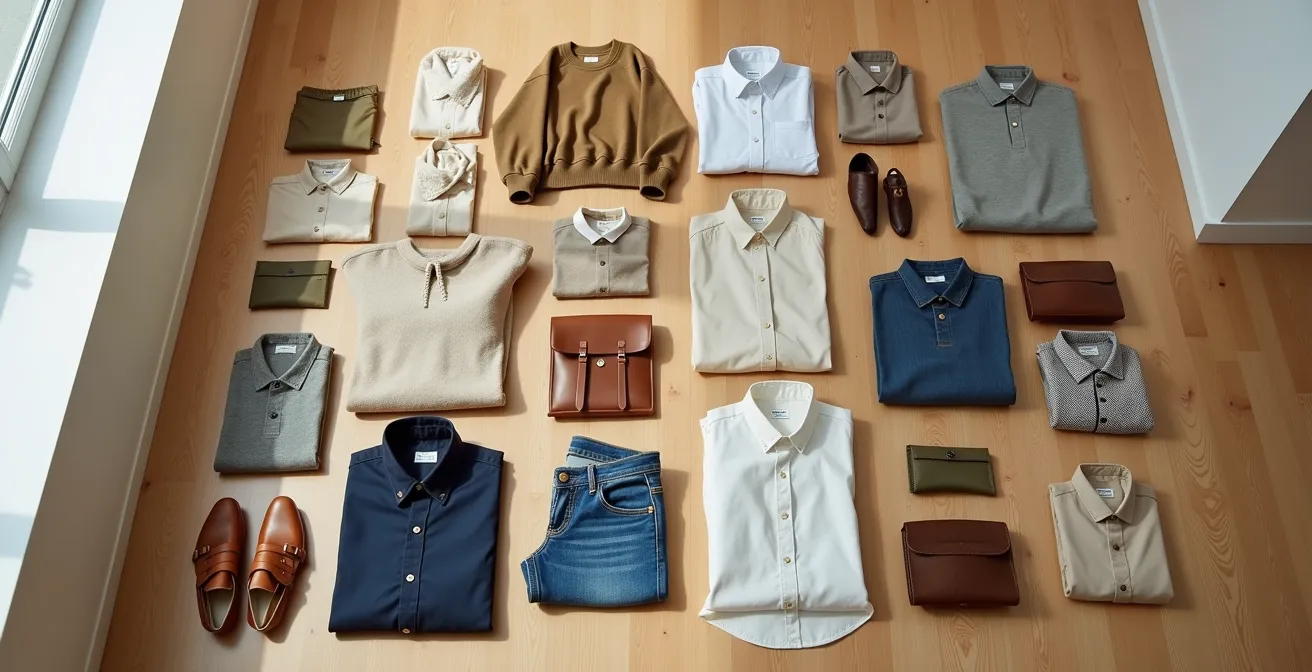
A successful capsule wardrobe isn’t about hitting a 30-item target, but mastering the lifecycle, quality, and maintenance of each piece.
- Prioritize material intelligence and meticulous care over simply decluttering and buying neutrals.
- Calculate an item’s true value using its cost-per-wear (CPW) and resale potential, not just its initial price tag.
Recommendation: Treat your wardrobe as a dynamic, long-term investment that requires active management, not as a one-time project.
The promise of a capsule wardrobe is seductive: a perfectly curated collection of 30 versatile items that eliminates decision fatigue and champions sustainability. Most guides begin and end with the same advice: declutter your closet, choose a neutral color palette, and buy a few high-quality basics. This approach scratches the surface, often leading to a chic but uninspired uniform and a cycle of replacing “quality” items that don’t last.
But what if the number of items is a distraction? What if true, lasting style and eco-conscious living aren’t found in the initial creation of the capsule, but in its ongoing stewardship? The real art of the capsule wardrobe lies in becoming a manager of a small, high-performing ecosystem of clothing. This requires a deeper understanding of what you own, from the microscopic behavior of its fibers to its eventual exit strategy from your life.
This guide moves beyond the basics. We will explore the science behind garment longevity, the economics of cost-per-wear, and the practical skills needed to identify true quality. By shifting your focus from a static collection to a dynamic system, you can build a wardrobe that is not only stylish and functional for all seasons but also genuinely sustainable.
text
To help you navigate this advanced approach, we’ve structured this guide to answer the critical questions that arise after you’ve already decided to embrace a more minimalist closet.
Summary: Mastering the 30-Item All-Season Wardrobe
- Why Polyester Garments degrade After 20 Washes Compared to Natural Fibers?
- How to Identify Fake “Eco-Friendly” Claims from Major Fashion Brands?
- Trench Coat or Leather Jacket: Which Outerwear Offers Better Cost-Per-Wear?
- The Washing Machine Setting That Destroys Your Elastane Jeans
- When to Rotate Your Wardrobe: Storing Winter Wool Without Moth Damage
- Sell or Donate: Is Listing Old Clothes on Vinted Worth Your Time?
- The “Hotel but Outside” Packing List: What Amenities Are Usually Missing?
- How to Spot a High-Quality Leather Bag Without Looking at the Brand Logo?
Why Polyester Garments degrade After 20 Washes Compared to Natural Fibers?
At first glance, polyester seems like a durable, budget-friendly champion for a capsule wardrobe. It resists wrinkles and holds its color. However, its longevity is an illusion that crumbles at a microscopic level. While natural fibers like wool or cotton have complex, resilient structures, polyester is a plastic. With each wash, its simple, extruded fibers begin to fracture and break.
This degradation is not just about pilling or losing shape. It’s an environmental issue. In fact, research published in Scientific Reports shows that a single wash can release between 640,000 and 1,500,000 microfibers into the water system. These plastic particles persist in the environment indefinitely. The garment may look intact from a distance, but it is literally disintegrating with every cleaning cycle.

As the illustration shows, the surface of polyester becomes rough and damaged, while natural fibers maintain their structural integrity for far longer. Wool, for example, has natural lanolin and a crimped structure that resists dirt and requires less frequent washing. For a truly sustainable capsule, prioritizing natural fiber intelligence is key. The initial cost may be higher, but the garment’s extended lifespan and lower environmental impact offer superior long-term value.
How to Identify Fake “Eco-Friendly” Claims from Major Fashion Brands?
In the age of conscious consumerism, “sustainable” and “eco-friendly” have become powerful marketing buzzwords. Unfortunately, many are used without substance—a practice known as greenwashing. A brand might release a small collection made from “recycled materials” while continuing to produce millions of fast-fashion items, effectively using the green line as a reputational shield. To build a genuinely sustainable wardrobe, you must become a detective, looking for proof, not just promises.
The most reliable way to cut through the noise is to understand the hierarchy of evidence. Vague marketing claims are at the bottom, while verifiable, third-party data is at the top. The following table, based on guidance from platforms like sustainability rating app Good On You, breaks down what to look for.
| Evidence Tier | Reliability | Examples | What to Look For |
|---|---|---|---|
| Tier 1: Third-Party Certifications | Highest | GOTS, B Corp, Fair Trade | Certificate numbers, verification QR codes |
| Tier 2: Traceable Data | Medium-High | Factory lists, material sources | Specific locations, supplier names |
| Tier 3: Marketing Claims | Low | ‘Eco-friendly’, ‘Natural’ | No supporting documentation |
To put this into practice, use this red flag checklist when evaluating a brand:
- Vague Language: Be wary of terms like ‘eco-conscious’ or ‘mindful’ that lack specific metrics or certifications.
- Disproportionate Collection Size: One small “green” line next to a massive fast-fashion offering is a classic sign of greenwashing.
- Lack of Third-Party Verification: Look for trusted labels like GOTS (for organic textiles), B Corp (for social and environmental performance), or Fair Trade.
- Opacity: Truly sustainable brands are transparent. They share factory lists, water usage data, and carbon footprint reports.
- Unrealistic Price Point: If a price seems too good to be true for a “sustainable” item, it probably is. True sustainability accounts for fair wages and quality materials.
Trench Coat or Leather Jacket: Which Outerwear Offers Better Cost-Per-Wear?
Outerwear is the cornerstone of an all-season capsule wardrobe and represents a significant investment. Choosing between a timeless trench coat and a classic leather jacket isn’t just a style decision; it’s an economic one. To make the smartest choice, we must look beyond the price tag and analyze the Cost-Per-Wear (CPW). This metric is calculated by dividing the item’s total cost (initial price + maintenance) by the number of times you’ll wear it over its lifetime.
A detailed analysis reveals how different factors like lifespan, maintenance, and versatility impact the long-term value of each piece. This comparison provides a clear financial framework for your decision.
| Factor | Trench Coat | Leather Jacket |
|---|---|---|
| Initial Price Range | $150-800 | $300-1500 |
| Estimated Lifespan | 5-10 years | 10-20+ years |
| Annual Maintenance | $40 (dry cleaning) | $25 (conditioning) |
| Versatility Score | 8/10 (3 seasons) | 9/10 (4 seasons) |
| Resale Value | 20-30% of original | 40-60% of original |
| 5-Year CPW (worn 50x/year) | $2.80-6.40 | $3.50-8.00 |
Lifestyle-Based Outerwear Selection Analysis
While the numbers provide a baseline, context is everything. An analysis of 100 capsule wardrobe builders revealed that corporate professionals in rainy climates achieved a 30% lower CPW with trench coats due to their water resistance and formal appropriateness. In contrast, creative freelancers in drier climates saw 25% better value from leather jackets, thanks to their day-to-night versatility and ruggedness. This highlights the importance of matching your outerwear to your actual lifestyle, not an aspirational one.
The leather jacket often has a higher initial cost but boasts a longer lifespan and superior resale value, potentially making it a better long-term investment. However, the trench coat’s lower entry price and suitability for professional settings might offer better immediate value depending on your climate and career. The ultimate decision rests on an honest assessment of your personal needs.
The Washing Machine Setting That Destroys Your Elastane Jeans
Stretch denim is a modern wardrobe staple, prized for its comfort and flattering fit. That magical stretch comes from elastane (also known as Spandex or Lycra), a synthetic fiber woven with cotton. However, this comfort comes with a hidden vulnerability: heat. The single most destructive thing you can do to your favorite jeans is wash them in hot water and dry them in a high-heat tumble dryer.
Elastane fibers are polymers that are sensitive to high temperatures. Heat causes them to lose their “memory” or ability to snap back into shape, leading to sagging, bagging, and a permanently stretched-out appearance. In fact, textile research demonstrates that high heat reduces elastane recovery by up to 50% after repeated cycles. This damage is irreversible. Once the elastane is compromised, the jeans will never fit the same way again.
Fortunately, preserving your denim is simple. It requires shifting from a “wash after every wear” mindset to a more gentle, deliberate care protocol. This approach not only extends the life of your jeans but also significantly reduces water and energy consumption.
Denim Emergency Room: Your Care Protocol
- Immediate Action: Stop washing in hot water. Switch to a cold cycle (30°C/86°F max) to protect the elastane fibers.
- Spin Control: Reduce the spin speed to 600-800 RPM. High-speed spinning can stretch and stress the fabric.
- Drying Discipline: Never tumble dry elastane blends. Air dry your jeans flat or by hanging them from the waistband to prevent stretching.
- Refresh Alternatives: For minor refreshments between washes, steam the jeans for 5 minutes, freeze them overnight in a bag, or use a fabric refresher spray.
- Wash Reduction: Spot clean minor stains with a damp cloth. Aim to wash your jeans only after 5-10 wears to minimize fiber degradation.
When to Rotate Your Wardrobe: Storing Winter Wool Without Moth Damage
An all-season capsule wardrobe doesn’t mean every item is accessible year-round. Effective seasonal rotation is a key practice for maintaining a streamlined closet and protecting your investment pieces. Storing off-season items, particularly precious woolens, prevents clutter and is critical for preventing damage. But the trigger for this rotation shouldn’t be arbitrary dates on a calendar; it should be guided by your environment.
The 15°C (59°F) Rule for Seasonal Rotation
Experienced capsule wardrobe practitioners often use a simple, climate-adaptive trigger rather than a fixed date. They initiate the wardrobe swap—storing away heavy wools or bringing out light linens—when the consistent daily high temperature crosses the 15°C (59°F) threshold. When temperatures consistently stay above this mark, it’s time to store winter wear. When they consistently drop below it, it’s time to bring it back out. This approach ensures your active wardrobe is always perfectly aligned with the weather.
Once you’ve decided to store your winter wool, the primary threat is the clothes moth. Moths aren’t attracted to the wool itself, but to the microscopic food stains, skin cells, and body oils left on the fabric after wearing. Therefore, proper storage is a three-part process: clean, seal, and control.
- Clean First: Always wash or dry clean every item before storage. This removes the “food” that attracts moths.
- Seal Tightly: Use vacuum-sealed bags or airtight plastic bins with secure lids. Cardboard boxes are not sufficient as they are porous and can attract other pests.
- Control the Environment: Store your sealed items in a cool, dry, and dark place. Aim for a humidity level below 50% to prevent both moths and mildew.
- Use Natural Deterrents: Add cedar blocks or lavender sachets to your storage containers. Cedar oil is a natural moth repellent. Lightly sand the blocks each season to refresh their scent and effectiveness.
- Inspect Regularly: During peak moth season (typically May to October), it’s wise to check on your stored items monthly to catch any potential issues early.
Sell or Donate: Is Listing Old Clothes on Vinted Worth Your Time?
A crucial part of maintaining a capsule wardrobe is having a clear “exit strategy” for items that no longer serve you. The two primary options are selling or donating. While donating is a quick and charitable act, selling on platforms like Vinted or Poshmark offers a financial return that can be reinvested into higher-quality pieces. However, selling requires a significant time investment: photographing, listing, packaging, and shipping.
The decision to sell or donate should be a pragmatic one, based on a simple time-versus-money analysis. Not every item is worth the effort of selling. This matrix provides a strategic framework for making the right choice.
| Item Category | Time Investment | Expected Return | Recommendation |
|---|---|---|---|
| Designer/Branded Items | 1-2 hours total | $50-200+ | SELL – High ROI |
| Quality Basics | 1 hour per item | $10-25 | DONATE – Low ROI |
| Fast Fashion | 1 hour per item | $3-8 | DONATE/RECYCLE |
| Damaged Items | N/A | $0 | TEXTILE RECYCLE |
For items that are not suitable for selling or donating—such as those that are stained, torn, or heavily worn—the responsible choice is textile recycling. Tossing them in the trash contributes to the 26 billion pounds of textiles that end up in landfills each year in the U.S. alone. Instead, consider these options:
- In-Store Recycling Bins: Major retailers like H&M, Zara, and Patagonia have programs that accept textiles from any brand for recycling.
- Upcycling at Home: Transform worn cotton t-shirts into cleaning rags, or convert old leggings into produce bags with a few simple stitches.
- Animal Shelters: Many local shelters accept old towels, blankets, and other textiles for animal bedding.
- Local Programs: Search for municipal or private “textile-to-textile” recycling programs in your area that can break down fibers to create new fabrics.
The “Hotel but Outside” Packing List: What Amenities Are Usually Missing?
The ultimate test of a capsule wardrobe’s versatility is travel. Packing light is the goal, but smart packing is about more than just clothes. It’s about anticipating the “utility gap”—the small but essential amenities that hotels or vacation rentals often lack, which can impact your comfort and routine. A well-prepared traveler packs not just an edited wardrobe, but a curated support system.
The most common mistake is focusing solely on outfits and forgetting the small items that maintain your well-being and the condition of your clothes on the road. From a travel steamer to a universal adapter, these items bridge the gap between being at home and being away. Building a pre-packed “utility kit” can transform your travel experience.
The 3-Shoe Rule Implementation Study
Footwear is the bulkiest item in any suitcase. Travel capsule experts consistently advise following the “3-Shoe Rule” to cover 95% of travel scenarios while saving significant space. The formula is simple: one pair for all-day walking (e.g., quality sneakers or loafers), one “dressy” pair for evenings (e.g., elegant flats or block heels), and one activity-specific pair (e.g., hiking boots or sandals for the beach). This disciplined approach forces you to choose versatile, high-quality options.
Beyond shoes, your packing list should include kits for self-care, tech, and wardrobe maintenance. Here are the essentials often overlooked:
- Self-Care Kit: Solid shampoo/conditioner bars (no spills), a silk pillowcase (protects skin and hair), a microfiber towel (quick-drying), and reef-safe sunscreen.
- Tech Kit: A universal adapter with multiple USB ports, a portable charger (20,000mAh minimum for multiple charges), a cable organizer, and noise-cancelling earbuds.
- Wardrobe-Care Kit: A travel steamer or wrinkle-release spray, a stain-remover pen, a mini sewing kit, and a mesh laundry bag to separate worn clothes.
- Comfort Enhancers: Compression socks for long flights, an eye mask, a collapsible water bottle, and a compact first-aid kit.
- Documentation: Both physical and digital copies of your passport, travel insurance, and a list of emergency contacts translated into the local language.
Key takeaways
- True value is measured in Cost-Per-Wear (CPW) and longevity, not the initial price tag.
- Material intelligence—understanding fiber science, leather grades, and construction—is essential for smart purchasing.
- Active management through proper washing, seasonal storage, and a clear exit strategy is what makes a capsule wardrobe truly sustainable.
How to Spot a High-Quality Leather Bag Without Looking at the Brand Logo?
A quality leather bag is a quintessential capsule wardrobe investment, capable of lasting for decades and developing a beautiful patina over time. However, the term “leather” is widely misused, and a high price or a famous logo is no guarantee of quality. To make a wise investment, you must train your senses to distinguish superior craftsmanship from mass-market imitations.
The industry uses several grades of leather, and understanding them is the first step. Most “genuine leather” products are made from lower-quality corrected grain, which is sanded and painted to hide imperfections. Full-grain leather, the highest grade, uses the entire hide with its natural markings and is far more durable. This guide from leather experts at Stridewise breaks down the differences clearly.
| Leather Type | Characteristics | Durability | Price Point |
|---|---|---|---|
| Full-Grain | Natural surface, shows imperfections, develops patina | 20+ years | Highest |
| Top-Grain | Sanded surface, uniform appearance, some natural strength | 10-15 years | Medium-High |
| Genuine/Corrected | Heavy processing, painted surface, uniform texture | 3-5 years | Low-Medium |
| Bonded | Leather scraps glued together, painted coating | 1-2 years | Lowest |
Beyond the grade, you can assess a bag’s quality in person using a simple sensory test, regardless of what the tag says. This empowers you to find hidden gems in thrift stores or identify overpriced, low-quality items in luxury boutiques.
- The Smell Test: Quality leather has a rich, earthy, and slightly sweet scent. A strong chemical or plastic odor indicates heavy processing, synthetic coatings, or fake materials.
- The Touch Test: Feel for the natural grain. Full-grain leather will have subtle imperfections and a supple, slightly varied texture. Plastic-coated “genuine leather” often feels cold, stiff, and unnaturally smooth.
- The Visual Inspection: Check the stitching. It should be even, tight, and consistent, with about 5-6 stitches per inch. Examine the hardware—zippers, clasps, and feet. It should feel heavy and substantial, with a smooth finish.
- The Sound Test: Jingle the hardware. Quality, solid brass or nickel hardware produces a solid ‘clink.’ Cheap, plated zinc alloys will sound hollow and tinny.
- The Flex Test: Gently bend a corner of the bag. High-quality leather will wrinkle naturally but show no significant color change. Lower-quality corrected grain may show white stress lines as the paint and finish crack.
Now that you have the framework for building and managing a truly sustainable wardrobe, the next step is to apply these principles. Start by evaluating one key piece in your current closet using the cost-per-wear and quality assessment methods outlined here to understand its true value.