
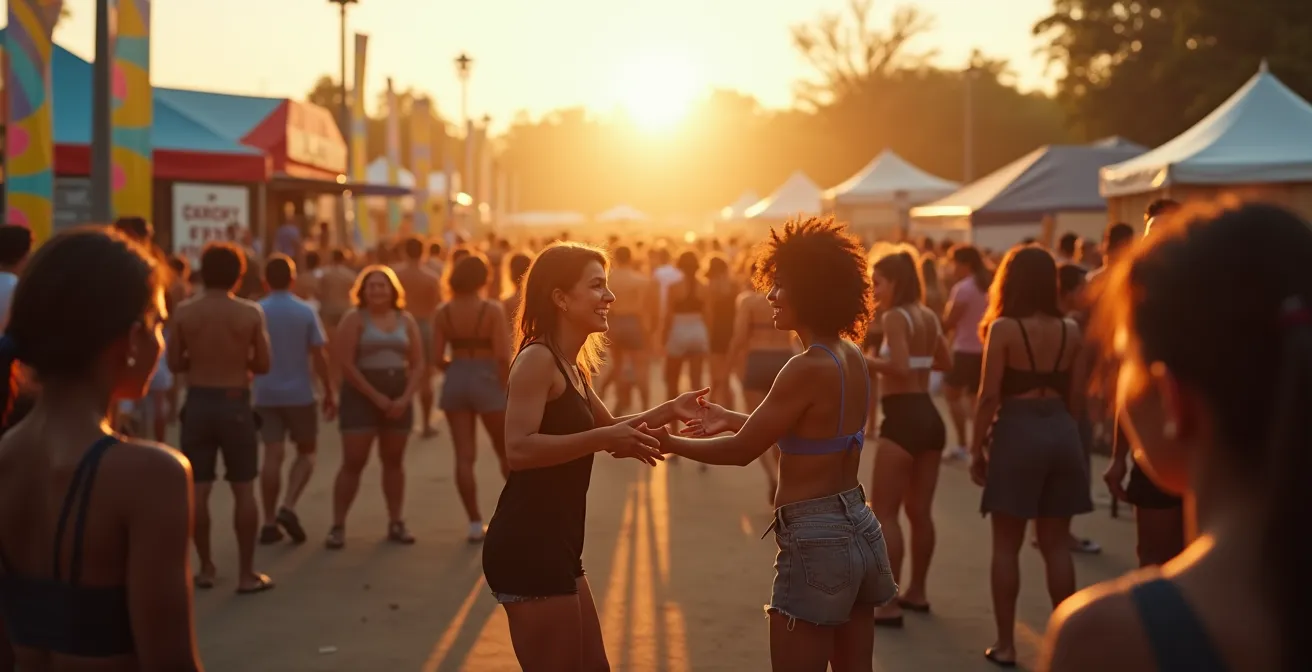
The key to beating loneliness in a new city isn’t just attending more events; it’s becoming a “connection architect” who strategically engineers social interactions.
- Shared emotional experiences at events create scientifically-proven neurological bonds far stronger than generic small talk.
- Choosing the right event type (e.g., workshops for depth, festivals for breadth) is a strategic decision that dictates the quality of connections you’ll make.
Recommendation: Stop being a passive observer. Adopt a “mission-based” mindset at your next event and take control of creating your social opportunities.
Moving to a new city is a paradox of modern life: you’re surrounded by millions of people, yet you’ve never felt more alone. The standard advice is painfully familiar: “put yourself out there,” “join a gym,” or “go to local events.” While well-intentioned, this advice misses the crucial point. Simply showing up is not a strategy; it’s a lottery ticket. You might stand in a crowd at a street festival, bob your head to the music, and go home having spoken to no one, feeling more isolated than before.
The common approach treats making friends as a numbers game based on passive exposure. The assumption is that if you’re physically present in enough places, connections will magically happen. But this often leads to a string of superficial coffee meetings that fizzle out or a collection of contacts that never become genuine friendships. It ignores the underlying science of human connection and the specific social dynamics at play in different environments.
But what if the real solution isn’t about being more social, but more strategic? What if, instead of being a passive attendee, you could become a connection architect? This guide rejects the “hope and pray” method. We will provide a tactical framework for transforming local cultural events from lonely experiences into powerful catalysts for building a real, lasting social circle. This is not about changing your personality; it’s about changing your process.
We’ll deconstruct the science behind why shared experiences forge bonds so quickly, help you choose the right events for your goals, and give you actionable scripts and strategies to move from awkward bystander to active participant. You’ll learn the precise timing for follow-ups that turn a festival acquaintance into a friend, and how to leverage different social platforms to create your own opportunities for connection.
Contents: A Strategic Guide to Building Your Social Circle
- Why Do Shared Cultural Experiences Accelerate Bonding Faster Than Coffee Meetings?
- Festivals Vs Workshops: Which Event Type Yields Quality Connections?
- How To Attend A Festival Alone Without Looking Or Feeling Awkward
- The Bystander Mistake: Why Watching The Parade Won’t Get You Friends
- When To Text: The Perfect Timing To Turn A Festival Meeting Into A Coffee Date
- How To Use ‘Couchsurfing’ Hangouts To Meet Locals Without Sleeping On Their Couch
- Golf Vs Kickball: Which Sport Attracts The Decision Makers You Need?
- How To Network Effectively While Playing In An Adult Sports League?
Why Do Shared Cultural Experiences Accelerate Bonding Faster Than Coffee Meetings?
The standard one-on-one coffee meeting is a high-pressure, low-reward social format. It’s an interview, not an experience. You are forced into a back-and-forth of questions and answers, trying to find common ground through conversation alone. In contrast, sharing an experience—like the collective awe of a concert finale, the shared frustration of a difficult pottery class, or the unified laughter at a comedy show—bypasses this awkward phase entirely. It creates an immediate, unspoken foundation of commonality.
The reason lies in a phenomenon called emotional synchrony. When we experience a powerful emotion alongside others, our physiological responses begin to align. Our heart rates, facial expressions, and even our brainwaves can sync up. This creates a powerful, subconscious sense of “we-ness.” It’s a primal form of bonding that conversation alone struggles to replicate. You’re no longer two separate individuals; you’re part of a temporary tribe that just shared something meaningful.
This isn’t just a feeling; it’s measurable. Recent research reveals that when people share emotional experiences, their physiological responses can align with a median offset of just 850 milliseconds. This neurological mirroring creates a shortcut to intimacy. Instead of having to *tell* someone who you are, you’ve *shown* them through a shared reaction. That moment becomes a powerful “contextual callback” for future interactions, a solid reference point that’s far more memorable than exchanging pleasantries over a latte.
Festivals Vs Workshops: Which Event Type Yields Quality Connections?
Not all events are created equal. As a connection architect, your first strategic choice is selecting the right environment for your social goals. The two most common types of cultural events, festivals and workshops, offer completely different pathways to connection. One prioritizes quantity and serendipity, while the other focuses on quality and structured interaction. Understanding this difference is crucial to managing your expectations and investing your energy wisely.
Festivals—whether music, food, or cultural—are high-energy environments built for high-quantity, low-depth interactions. They are perfect for rapidly expanding your network and meeting a diverse range of people in a short time. The interactions are often serendipitous and fleeting, but the sheer volume of opportunities increases your chances of finding someone you click with. Workshops, on the other hand, are designed for low-quantity, high-depth connections. Think of a pottery class, a writing seminar, or a coding bootcamp. These are structured, recurring events where you are forced to interact with the same small group of people over time, building rapport through collaboration and shared learning.
To choose effectively, you must be clear on your objective. Are you trying to quickly meet as many people as possible to practice your social skills and build social momentum? A festival is your best bet. Are you looking to build a few deep, meaningful bonds with people who share a specific interest? A workshop is the superior choice. The following breakdown clarifies the trade-offs.
| Aspect | Festivals | Workshops |
|---|---|---|
| Connection Type | High-Quantity, Low-Depth | Low-Quantity, High-Depth |
| Interaction Style | Serendipitous | Forced/Structured |
| Frequency | Usually One-Off | Often Recurring |
| Social Momentum | High (meet many quickly) | Low (focused interactions) |
| Best For | Expanding network rapidly | Building deeper bonds |
The structured nature of a workshop provides a natural context for connection, as seen below. The shared task removes the pressure of making conversation, allowing bonds to form organically through the process of creation.
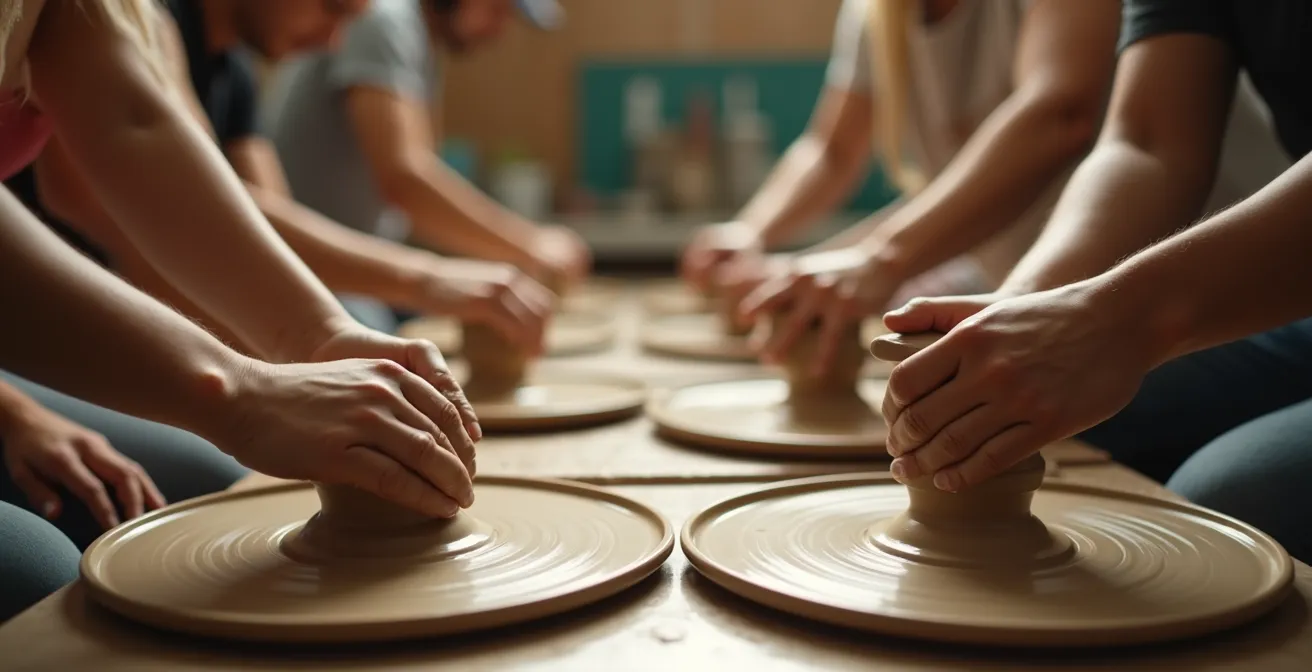
Ultimately, a balanced strategy involves both. Use festivals to cast a wide net and workshops to cultivate the promising connections you find. This dual approach maximizes both the breadth and depth of your new social circle.
How To Attend A Festival Alone Without Looking Or Feeling Awkward
The single biggest barrier to attending events is the fear of going alone. We imagine ourselves standing awkwardly in a corner, a beacon of loneliness while everyone else is happily chatting in groups. This fear is rooted in a feeling of purposelessness. The solution is not to “be more confident,” but to give yourself a purpose. Instead of going to a festival “to make friends,” which is a vague and intimidating goal, you go with a specific, observable mission. You become an actor playing a role.
This is the Mission-Based Strategy. By adopting a role, you project purpose and create a natural pretext for interaction. You’re no longer “the lonely person,” you are “the amateur photographer documenting the event” or “the food blogger on a quest to rate every taco truck.” This mental shift transforms your body language and makes you infinitely more approachable. More importantly, it gives you a reason to talk to strangers. A photographer can ask to take a group’s photo; a food blogger can ask people what they’ve tried.
Your mission provides you with what I call a Mission-Based Opener. It’s a conversation starter that is authentic to your “role” and immediately bypasses small talk. Instead of a generic “Hi, how are you?” you can say, “Hi, I’m on a mission to find the best act of the day. Who are you most excited to see?” This is engaging, positive, and invites a genuine response. Here are some concrete strategies to implement this approach:
- Adopt a Role: Frame your presence with a purpose. Tell yourself (and others, if asked) that you’re there as an amateur photographer, a food reviewer, or someone exploring local music for a blog. This projects confidence and gives you a reason to be there.
- Use the Anchor Point Strategy: Don’t wander aimlessly. Find a “home base”—like a specific art installation, the sound booth, or a chill-out tent. Explore from there and return periodically. This creates a sense of belonging and makes you a familiar face.
- Bring Items to Share: This is the easiest way to generate goodwill. A pack of gum, extra sunscreen, a portable fan, or even a fun deck of cards can be a natural and appreciated conversation starter.
- Wear a Conversation Piece: A unique hat, a band t-shirt for an obscure but beloved group, or a funny pin can act as a social lure, giving people an easy and fun reason to approach you.
Remember the unofficial mantra of solo festival-goers: “Everyone at the festival is your friend already. They’re just waiting for you to say, ‘Hi.'” Your mission is simply the tool that gives you the confidence to do so.
The Bystander Mistake: Why Watching The Parade Won’t Get You Friends
One of the most common errors expats and newcomers make is the Bystander Mistake. You attend a large public event, like a street parade, a free concert in the park, or a fireworks display. You stand in the crowd, watch the spectacle, and leave without a single new connection. Why? Because these events are designed for passive consumption. There is no built-in mechanism for interaction. Everyone is facing the same direction, focused on the main event, not on each other. Being a spectator is the opposite of being a participant.
To escape the bystander trap, you must shift your mindset from “attending an event” to “creating a micro-event.” You need to become a small node of social gravity, a point of interest that draws people in. This doesn’t require being a loud extrovert; it requires being a thoughtful host. By bringing a simple prop or initiating a small activity, you can transform a passive space into an interactive one.
For example, instead of just sitting on a blanket in the park, bring a frisbee or a deck of oversized playing cards. Instead of just standing at a concert, set up a small portable speaker playing chill music in a less crowded area. You are creating a social hub. This gives people a reason to stop, engage, and interact with you and each other. You have provided value and created a shared space, making you the natural connector. The key is to initiate an activity that requires minimal commitment but offers a high potential for fun and interaction.
Here are some effective tactics for creating your own micro-events:
- Bring Interactive Games: A deck of cards, a portable chess set, or a game like Spikeball can instantly create a social focal point.
- Offer Practical Value: Be the person with the extra-large blanket, the portable phone charger, or the bottle opener. Offering to share practical items is a low-effort, high-reward way to start conversations.
- Be the Photographer: Offer to take photos for groups struggling with selfies. It’s a simple act of service that is almost always appreciated and can easily lead to a conversation.
- Organize an Impromptu Activity: At a beach gathering or park hangout, suggesting a game of frisbee or a walk to a nearby viewpoint can turn a collection of individuals into a temporary group.
Don’t wait for the event to provide you with opportunities. Create them yourself. By actively shaping your environment, you move from the sidelines to the center of the action.
When To Text: The Perfect Timing To Turn A Festival Meeting Into A Coffee Date
You did it. You had a great conversation with someone at a concert, you laughed at the same jokes, and you exchanged numbers. This is a critical moment, and it’s where most potential friendships die. The excitement and emotional connection of the event have a very short half-life. If you don’t act quickly to solidify the connection, the memory will fade, and you’ll become just another random number in their phone. The follow-up is not a casual step; it’s a time-sensitive, strategic move to maintain social momentum.
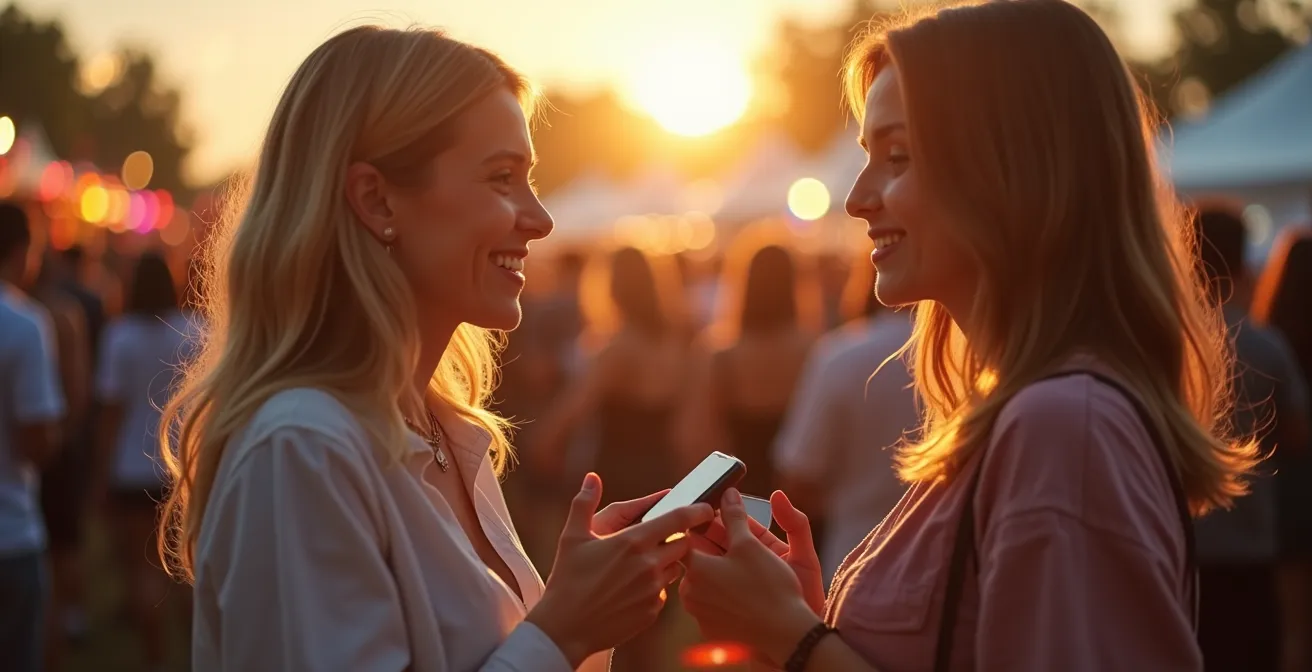
The key is to use a structured follow-up timeline. The most effective method is the 24/72/1 Rule. This simple framework provides the perfect cadence to transition from a serendipitous meeting to a planned meetup without seeming too eager or letting the spark die.
This isn’t just about being polite; it’s about capitalizing on the window of opportunity before the connection goes cold. Social psychology research suggests you have a maximum of two weeks to meet a second time to significantly increase the chances of a new connection strengthening into a real friendship. The 24/72/1 rule ensures you act well within this critical window. Here is the breakdown:
- Text within 24 hours: Your first message should be sent while the memory of the event is still fresh and vivid. It should be light, and most importantly, use a “Contextual Callback.” Reference a specific, shared moment or an inside joke. For example: “Hey [Name], it was great meeting you! I’m still laughing about that guy with the flamingo hat. Hope you got home safe!”
- Propose a concrete plan within 72 hours: Don’t get stuck in an endless text exchange. Your goal is to move the connection offline. Within three days, suggest a concrete plan. A low-stakes group hang is often less intimidating than a one-on-one. For example: “A few of us are going to trivia night at [Pub] on Thursday, you should totally join!”
- Schedule the actual meetup within 1 week: Lock it in. The act of putting a date on the calendar solidifies the intention and shows you are genuinely interested in building a connection. This moves the relationship from a possibility to a reality.
Timing is everything. By following this rule, you demonstrate interest, respect their time, and skillfully navigate the delicate transition from acquaintance to potential friend.
How To Use ‘Couchsurfing’ Hangouts To Meet Locals Without Sleeping On Their Couch
Platforms like Couchsurfing, Meetup, and local expat Facebook groups are often misunderstood. Many people think of them only in terms of their primary function—finding a couch to sleep on or joining a pre-organized, large-scale event. However, their most powerful and underutilized feature is the ability to create and join “Hangouts” or smaller, user-generated events. This is your secret weapon for meeting locals and other transplants in a targeted, low-pressure way.
The beauty of these platforms is that they pre-filter for intent. Everyone on them is, by definition, open to meeting new people. You don’t have to guess if someone is receptive to a conversation; they’ve already opted in. Your job is to move from being a passive browser to a Hangout Creator. Instead of waiting for the perfect event to appear, you propose it yourself. This positions you as a leader and a connector, instantly elevating your social status within the community.
The key to a successful hangout proposal is specificity. “Let’s hang out” is a weak and uncompelling offer. “Photo walk to capture the best street art in the Mission District, followed by coffee” is a strong, compelling plan. It communicates a clear activity, a location, and a low-stakes social component. A great real-world example is the success of groups built around this principle.
Case Study: The London Cultureseekers Group
A prime example of this strategy in action is the London Cultureseekers group on Meetup.com. For over 18 years, this group has organized 2-3 weekly events exploring museums, galleries, and historical sites. It has become London’s largest and most active cultural group, proving that a consistent offering of specific, shared cultural experiences is a reliable engine for friendship. Members, ranging in age from 20 to 80, know exactly what to expect and are united by a shared interest, making it a proven way to build a community from scratch.
You can replicate this success on a smaller scale. By consistently proposing interesting, specific activities, you build a reputation and attract like-minded people. The following checklist outlines how to become an effective Hangout Creator.
Your Action Plan: Creating Irresistible Hangouts
- Identify Your Niche: List 3-5 of your specific interests (e.g., trying new ramen spots, bouldering, board games, exploring brutalist architecture). These will be the foundation of your hangout proposals.
- Craft a Compelling Proposal: For one interest, write a concrete proposal. It must include: an activity, a specific location, a time, and a clear call to action (e.g., “Let’s explore the street art in the Arts District this Saturday at 2 PM, meeting at the corner of X and Y.”).
- Post on Multiple Platforms: Post your proposal on at least two platforms (e.g., a local Facebook group and the Meetup ‘suggest an event’ feature) to maximize visibility.
- Host and Filter: During the hangout, your goal is not to befriend everyone. Your goal is to identify the 1-2 people you connect with most. These are the individuals you will follow up with for a smaller, secondary activity.
- Plan the Follow-Up: Based on conversations during the first hangout, pre-plan a specific follow-up suggestion for the people you connected with (e.g., “You mentioned you liked jazz; there’s a great club we should check out next week.”).
Golf Vs Kickball: Which Sport Attracts The Decision Makers You Need?
Joining an adult sports league is classic advice for meeting people, but the strategic connection architect asks a deeper question: which sport? The choice of sport is a powerful act of social signaling. It communicates your values, your personality, and directly influences the type of social and professional network you will build. A fast-paced basketball league and a slow-paced golf club offer vastly different networking environments. Understanding this is key to aligning your social activities with your personal or professional goals.
The critical concept to consider is the conversational surface area of the sport. This refers to the amount of downtime and opportunity for meaningful conversation that the activity provides. Golf, for instance, has an enormous conversational surface area; it’s essentially a four-hour walk and talk with intermittent bouts of sport. This makes it a traditional favorite for business networking. A sport like competitive basketball, however, has a very low conversational surface area. It’s too fast-paced and intense for much more than quick comments between plays.
As a sports networking expert noted, “The sport you choose signals something about your values and personality. Playing in a charity golf tournament signals community involvement and corporate alignment. Joining a rock-climbing gym signals a focus on personal growth and adventure.” This choice actively filters the people you will meet. By selecting your sport strategically, you can place yourself in the direct path of the “decision makers” or social connectors you wish to meet, whether they are creative professionals, corporate leaders, or adventure-oriented entrepreneurs.
The following matrix, based on analysis from sources like guides on building social circles, breaks down the networking potential of different sports.
| Sport Type | Pace of Play | Conversational Surface Area | Typical Social Network | Social Signaling |
|---|---|---|---|---|
| Golf | Slow | High (hours of talk) | Established business connectors | Corporate alignment, community involvement |
| Ultimate Frisbee | Fast | Medium (breaks between points) | Dynamic creative/tech connectors | Innovation, teamwork, casual culture |
| Kickball | Medium | High (dugout time) | Social/casual professionals | Fun, approachable, work-life balance |
| Rock Climbing | Variable | Medium (belay time) | Adventure-oriented professionals | Personal growth, risk-taking, trust |
| Basketball | Very Fast | Low (fleeting moments) | Competitive, younger professionals | Energy, competitiveness, fitness |
Key Takeaways
- Stop chasing friendships; become a “connection architect” by strategically choosing and shaping your social environments.
- Leverage the science of emotional synchrony by prioritizing shared experiences (concerts, workshops) over formal meetings (coffee dates) to build bonds faster.
- Adopt a “mission-based” mindset when attending events alone to project purpose and create natural conversation starters.
- Shift from being a passive bystander to an active creator by initiating “micro-events” with simple props like games or music.
- Master the 24/72/1 Rule for follow-ups to maintain social momentum and turn acquaintances into real friends.
How To Network Effectively While Playing In An Adult Sports League?
Choosing the right sports league is only the first step. Once you’re on the team, the real networking begins, and it rarely happens on the field. The most common mistake people make is treating the game as the main event. They play hard and then go home. This completely misses the most valuable part of the experience: the Third Half. This is the unofficial post-game gathering, whether it’s for drinks at a nearby bar or pizza at a local joint. It’s during this relaxed, unstructured time that the real relationships are forged.
The game itself serves as the icebreaker. It provides a rich source of shared experiences—a great play, a funny mistake, a close loss—that act as bridges to deeper conversation during the Third Half. You can use these moments as a launchpad: “That incredible catch you made reminded me of a tough project I just finished at work…” This transitions the conversation naturally from the game to other areas of life. Your number one rule should be to never skip the Third Half. This is where team camaraderie evolves into genuine friendship.
To accelerate this process, you can adopt the role of the Team Glue. This is the person who provides value beyond their athletic ability. Be the one who remembers birthdays, suggests the post-game venue, or brings an extra cooler of water. By taking on small organizational tasks, you naturally become a central, trusted figure in the group. This doesn’t require a huge effort, but it pays massive social dividends. It solidifies your position as a connector and an indispensable part of the team’s social fabric. This aligns with broad findings that research shows that 72% of event marketers emphasize the crucial role community events play in fostering a sense of belonging.
- Embrace the “Third Half”: Prioritize the post-game social gathering. This is where the majority of bonding occurs.
- Be a Value-Provider: Take on the role of “team glue.” Organize venues, remember important dates, or bring extra supplies. This makes you a central and valued member.
- Use Game Experiences as Bridges: Leverage moments from the game to transition conversations to personal or professional topics during the Third Half.
- Initiate Smaller Follow-Ups: Suggest a smaller activity, like grabbing lunch or watching a game, with one or two teammates you connect with to deepen those specific bonds.
Building a social circle in a new city is a skill, not a matter of luck. By shifting your mindset from a passive attendee to a strategic connection architect, you take control of the process. Start by choosing one strategy from this guide—whether it’s adopting a mission for your next festival or proposing a specific hangout on Meetup—and apply it. Your new community is out there waiting to be built.