
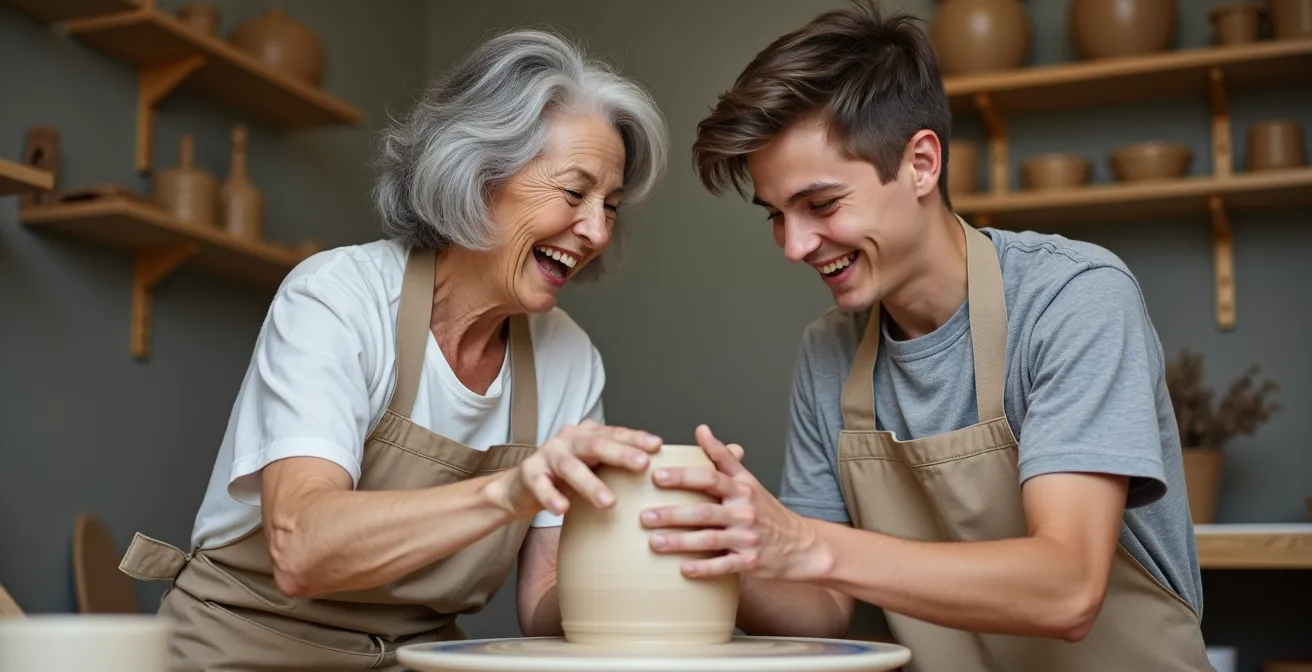
The secret to a successful family outing isn’t finding the one “perfect” activity that pleases everyone. It’s about shifting your role from event planner to experience designer. This guide reveals how to transform any cultural outing—from a museum visit to a pottery class—into a collaborative adventure where teens and grandparents actively create shared memories together, instead of passively enduring the day.
Planning a family outing that bridges the gap between a teenager glued to their phone and a grandparent with a lifetime of stories can feel like an impossible task. The usual advice often falls flat: dragging a reluctant teen through a quiet art gallery or expecting a grandparent to enjoy a loud, fast-paced event rarely ends in happy memories. Many parents resort to simply choosing a place and hoping for the best, often leading to sighs, eye-rolls, and a feeling that the generations are further apart than ever.
We often think the solution lies in finding a mythical “common ground” or bribing participants with a post-activity treat. But what if the problem isn’t the location at all? What if the key to unlocking genuine connection lies not in the *what*, but in the *how*? The real magic happens when we stop trying to entertain and start facilitating shared creation. It’s about transforming passive consumption of culture into an active, collaborative experience.
This guide will walk you through a new framework for thinking about these outings. We’ll explore why a dusty history museum can become a source of vibrant conversation, how a lopsided pottery bowl can be more valuable than a perfect masterpiece, and when to strategically use video games as a bonding tool. By focusing on the dynamics of interaction, you can design experiences that build lasting connections, one shared laugh at a time.
Summary: How To Choose Cultural Activities That Engage Both Teens And Grandparents?
- Why Does Visiting A Historical Museum Spark Better Conversations With Seniors?
- How To Gamify A Museum Tour To Keep Teenagers Off Their Phones?
- Opera Vs Pottery Class: Which Activity Reduces Family Tension?
- The Lecture Trap: Why Turning An Outing Into A School Lesson Backfires
- When To Stop: The Art Of Ending The Activity Before The Meltdown
- Why Do Shared Cultural Experiences Accelerate Bonding Faster Than Coffee Meetings?
- Gaming Vs TV: Which Screen Time Is Better For A Child’s Brain?
- Video Games As Literature: How Playing RPGs Enhances Reading Comprehension?
Why Does Visiting A Historical Museum Spark Better Conversations With Seniors?
A history museum might seem like the classic recipe for teenage boredom, but it holds a secret weapon for intergenerational bonding: tangible objects that act as story prompts. For a grandparent, an old rotary phone or a vintage dress isn’t just an artifact; it’s a memory trigger. This transforms them from a passive visitor into an invaluable storyteller and primary source. The question shifts from a dry “What is that?” to an engaging “What was it like to use this?”
This dynamic flips the script. The teenager, often the digital native and expert in the family, is suddenly in a position of learning from the grandparent’s lived experience. The museum becomes a neutral ground where knowledge flows both ways. The key is to frame the visit not as a history lesson, but as a treasure hunt for stories. By focusing on objects that resonate with the grandparent’s past, you create a natural and compelling reason for conversation to flow.
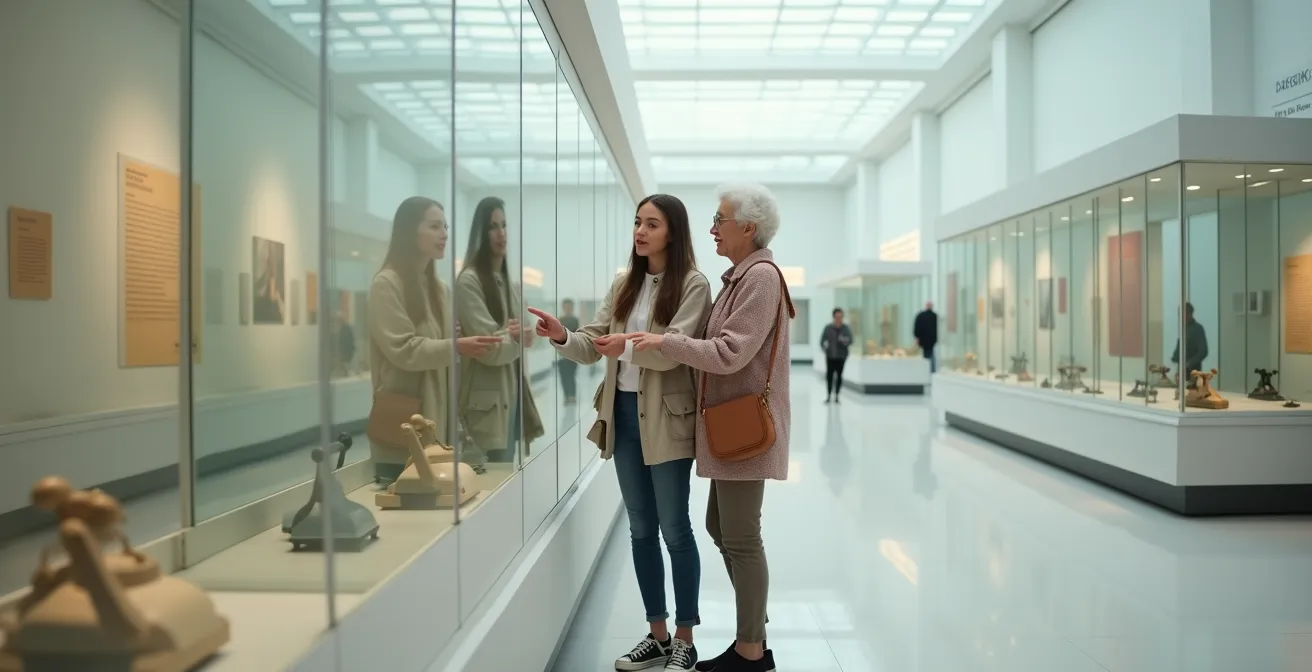
As you can see, the shared focus on a single object creates a moment of genuine connection. The goal isn’t to see every exhibit, but to find a few key pieces that unlock personal histories. Asking sensory questions like, “What did this sound like?” or “How did it feel to wear that?” can draw out rich details that a display card could never provide. This approach turns a sterile environment into a living archive of family history, with the grandparent as the head curator.
How To Gamify A Museum Tour To Keep Teenagers Off Their Phones?
The most common complaint about teens in museums is that their attention is buried in their phones. The solution isn’t to ban the device, but to integrate it into the experience through gamification. This means turning a passive tour into an interactive challenge, a strategy proven to foster positive attitudes in a demographic that museums often neglect. Research shows that gamified strategies make museums more joyful destinations for meaningful informal learning combined with entertainment.
Instead of a random walk, create “mission cards” with specific objectives. For example: “Find an object your grandparent used as a child and make a 15-second video explaining how it works.” This gives the teen a purpose, leverages their tech skills, and naturally prompts an interview with their grandparent. This is a form of reverse mentorship, where the teen becomes the family’s digital chronicler, and the grandparent becomes the star storyteller. The phone is now a tool for connection, not a distraction.
Comparing different engagement strategies reveals why this hybrid approach is so effective.
| Strategy Type | Teen Engagement Level | Grandparent Participation | Key Features |
|---|---|---|---|
| Story-based | Moderate | High | Narrative-driven, passive listening, historical context |
| Game-based | High | Moderate | Interactive challenges, point systems, achievement badges |
| Hybrid (Reverse Mentorship) | High | High | Teen as digital chronicler, grandparent as story source |
The hybrid model leverages the strengths of both generations. It gives the teen an active role that feels like a game while placing high value on the grandparent’s knowledge and memories. Simple challenges, like a photo scavenger hunt for artifacts from a specific decade, can transform the entire dynamic of the visit.
Opera Vs Pottery Class: Which Activity Reduces Family Tension?
When choosing an activity, it’s tempting to aim for high culture, like an opera or a classical concert. However, these “passive consumption” activities often increase tension. They require silence, have rigid rules of etiquette, and place one generation (usually the elder) in the role of expert, while the other may feel bored or out of place. There is little to no room for interaction, which is the entire point of the outing. The alternative? An “active creation” experience like a pottery class.
Activities centered around hands-on collaboration are fundamentally different. A pottery class, for instance, thrives on what can be called “productive failure.” A lopsided bowl or a misshapen cup isn’t a mistake; it’s a source of shared laughter and a story to tell later. This low-stakes environment removes the pressure to perform perfectly and encourages mutual support. As one intergenerational pottery studio, Squeaky Wheel Pottery, describes it, it’s a chance to “roll, pinch, and giggle through making charming cups and quirky bowls… a sweet way to connect, create, and craft a keepsake.”
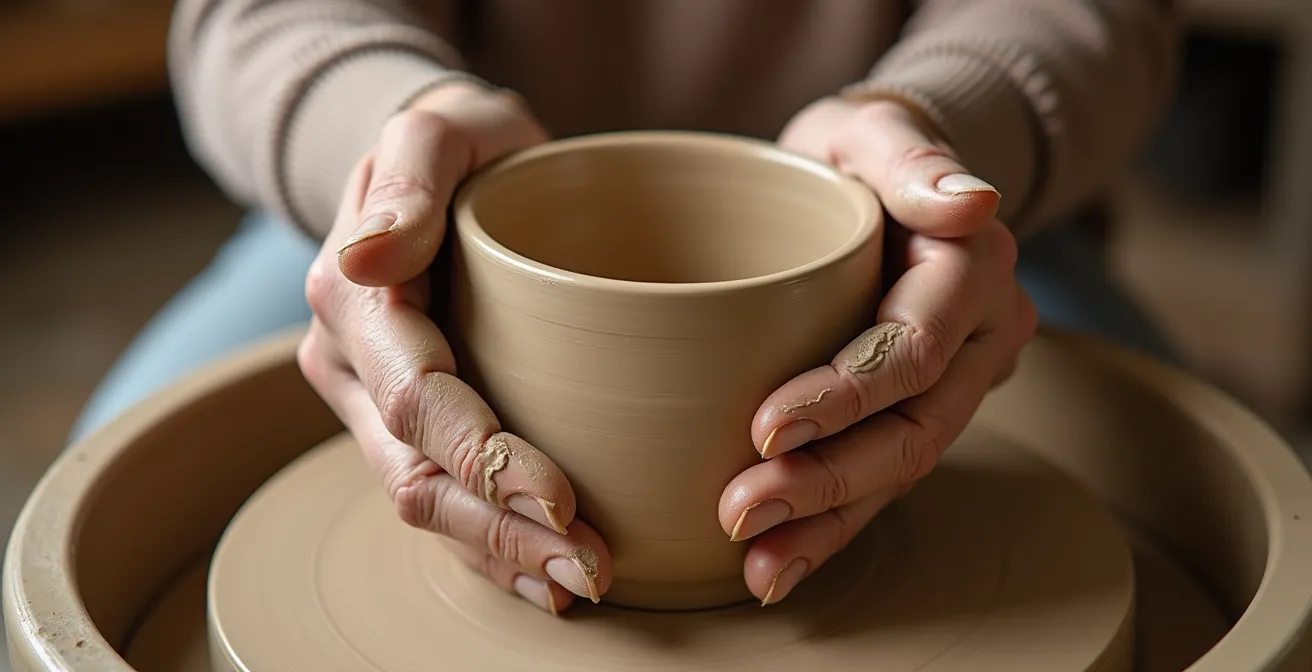
The magic is in the shared act of making. Both the teen and the grandparent are likely beginners, which levels the playing field instantly. They have to solve small problems together, share tools, and celebrate their (imperfect) creations. This process fosters a state of relaxed conversation and teamwork that is impossible to achieve while sitting silently in a dark theater. The goal is not the final product, but the process of creation itself.
The Lecture Trap: Why Turning An Outing Into A School Lesson Backfires
One of the quickest ways to ensure an intergenerational outing fails is to fall into “The Lecture Trap.” This happens when one person, usually the parent or grandparent, becomes a tour guide, dispensing facts and figures without any real interaction. While well-intentioned, this one-way flow of information turns an experience into a boring lesson, causing teens to disengage immediately. As a study from the Journal on Computing and Cultural Heritage bluntly states, “Museums are not always designed to engage and interest young audiences, particularly teenagers.” The lecture format only makes this worse.
To avoid this trap, you must consciously design opportunities for two-way exchange. The goal is to spark curiosity, not to test knowledge. Instead of stating facts, ask open-ended questions. Rather than saying, “This painter was part of the Impressionist movement,” try, “What do you think is going on in this picture? What title would you give it?” This invites opinion and interpretation, making the teen a participant in the meaning-making process, not just a recipient of information.
Case Study: The Expert Switch Technique
A brilliant example of avoiding the lecture trap comes from a museum summer camp program where teens were tasked with a unique project. According to a paper on intergenerational learning, the program had teens design their own board games to teach other visitors about the museum. This masterstroke turned the teens into the experts and teachers. It fostered critical thinking and creativity, and parents were naturally drawn into the process by playing the games with their kids. The teens weren’t being lectured; they were building the lecture themselves, making it infinitely more engaging.
This “expert switch” is a powerful tool. In any setting, look for a chance to let the teen take the lead. If there’s a digital exhibit, let them be the guide. If you’re using a map, put them in charge of navigation. Giving them ownership and responsibility within the activity is the most effective antidote to the passive, disengaging nature of a lecture.
When To Stop: The Art Of Ending The Activity Before The Meltdown
Even the most perfectly planned activity can be ruined by going on for too long. Knowing when to end the outing is just as important as choosing it. The key is to manage the experience according to the “Peak-End Rule,” a psychological principle that says our memory of an event is shaped not by its total duration, but by how we felt at its most intense moment (the peak) and at its very end. Groundbreaking 1993 research by Daniel Kahneman showed that people judge an experience based on its peak and final moments, regardless of overall length.
This means you should always aim to end on a high note, before fatigue and crankiness set in. A three-hour museum visit that ends in an argument will be remembered as a negative experience, while a 90-minute visit that concludes with a shared laugh and a favorite snack will be remembered fondly. Don’t fall for the “we have to see everything” fallacy. Your goal is a positive shared memory, not a comprehensive tour.
Pay close attention to the “energy barometer.” When conversation dwindles, phone use increases, or someone starts looking for a place to sit, those are your cues. The activity has reached its natural conclusion. Pushing past this point will only lead to diminishing returns and a sour ending that will tarnish the entire memory of the day. Having a clear exit plan is a sign of a smart experience designer.
Your Energy Barometer Checklist: How to Read the Room
- Monitor screen time: Watch for a sudden increase in phone use from the teen, as this often signals cognitive fatigue.
- Listen to the conversation: Notice when engaged dialogue degrades into one-word answers or prolonged silence.
- Observe physical cues: Pay attention to when grandparents start looking for benches or when anyone’s posture starts to slump.
- Plan the peak: Intentionally schedule the most exciting part of the activity for about two-thirds of the way through the visit.
- End with a treat: Save a small, special surprise—like a favorite coffee shop or a scenic viewpoint on the way home—for the very end to ensure a positive final memory.
Why Do Shared Cultural Experiences Accelerate Bonding Faster Than Coffee Meetings?
Sitting down for coffee or a meal is often our default for “catching up,” but it can place immense pressure on conversation, especially between generations with different communication styles. A shared cultural activity, when designed correctly, bypasses this pressure. Instead of forcing face-to-face dialogue, it provides a “third thing” to focus on—an artifact, a piece of art, a puzzle in a game. This external focus object lowers social anxiety and allows conversation to emerge more naturally.
The experience becomes a platform for creating a shared narrative. You aren’t just talking *about* your lives; you are *living* a small story together. You navigated the museum, you built the lopsided pot, you solved the puzzle. These collaborative actions build a bank of unique, private memories that belong only to the participants. This is fundamentally different from a coffee meeting, which relies on recounting past events. Here, you are actively generating new ones.
Museum professionals have increasingly recognized this power. According to interviews with experienced staff, successful game design and other interactive approaches in cultural spaces require a deep understanding of the benefits of intergenerational engagement. It’s about enhancing visitor engagement by turning a passive space into an active playground for connection. This shared context provides a much richer and more effective foundation for bonding than a simple conversation ever could.
Gaming Vs TV: Which Screen Time Is Better For A Child’s Brain?
The debate over screen time often lumps all digital activities together, but this is a critical mistake. There is a vast difference between the passive consumption of television and the active problem-solving required by many video games. When it comes to intergenerational bonding, this distinction is everything. Watching a movie together is a parallel activity; you are both looking at the same screen, but there is minimal interaction. Playing a game together can be a truly collaborative one.
The most effective model for this is the “co-pilot” approach. In this setup, the teen, who is often more comfortable with the controls, “pilots” the game. The grandparent acts as the co-pilot, strategist, or navigator. They can help solve puzzles, track the story, read maps, or make crucial decisions about the narrative’s direction. This creates a powerful dynamic of mutual reliance and shared goals. The teen’s technical skill is valued, and the grandparent’s strategic thinking and life experience become an asset.
This table illustrates the profound difference in engagement between these two types of screen time.
| Activity Type | Cognitive Engagement | Intergenerational Interaction | Learning Potential |
|---|---|---|---|
| TV Watching | Passive consumption | Parallel viewing, minimal interaction | Low – primarily reception |
| Gaming (Co-Pilot Model) | Active problem-solving | Teen drives, grandparent strategizes | High – collaborative learning |
| Narrative Games | Story comprehension + decisions | Shared decision-making on plot | Moderate to high – discussion-based |
Choosing the right kind of game is key. Narrative-driven adventure games or collaborative puzzle games are ideal. They function like interactive novels, prompting discussions about choices, morality, and consequences. In this context, screen time is no longer a source of isolation but a vibrant and modern campfire for telling stories together.
Key takeaways
- The goal is not finding a perfect activity, but designing a collaborative interaction within any activity.
- Empower grandparents as storytellers and teens as tech guides to create a “reverse mentorship” dynamic.
- Choose “active creation” (like pottery) over “passive consumption” (like opera) to lower pressure and encourage laughter.
- End the activity on a high note, using the Peak-End Rule to shape a positive memory, rather than trying to see everything.
Video Games As Literature: How Playing RPGs Enhances Reading Comprehension?
It’s time we re-evaluate the cultural status of video games. Far from being a “lesser” form of entertainment, complex role-playing games (RPGs) function as a modern form of literature. They present intricate plots, deep character development, and complex moral dilemmas that players must navigate. For a teen, engaging with a narrative-rich game can build the same skills as reading a novel: story comprehension, critical thinking, and empathy for characters’ motivations.
When a grandparent joins in using the “co-pilot” model, the game becomes a shared reading experience. Discussing “what should our character do next?” is no different from a book club discussing a protagonist’s choices. This has been validated by large-scale community programs, such as Penn State University’s Intergenerational Friends Fairs, which successfully bring young people and older adults together for enjoyment and learning through structured, engaging activities. These initiatives prove that well-designed programs can bridge generational divides on a broad scale.
This approach fundamentally changes how we view cultural artifacts. As one expert noted at a Museums and the Web conference, this new way of interacting shifts the role of cultural institutions.
Games allow the audience to look at objects in different ways with a shift in museums’ role from a traditional ‘keeper of artefacts’ to ‘keeper of stories.’
– Beale, Museums and the Web Asia 2014
Whether the “artifact” is a clay pot in a museum or a digital sword in a video game, the goal is the same: to use it as a catalyst for sharing stories. By embracing this broader definition of culture, you open up a whole new world of possibilities for connection.
Ultimately, creating an engaging cultural outing for your family is less about logistics and more about mindset. By stepping into the role of an experience designer, you can turn any activity into a chance for genuine connection, shared laughter, and memories that will be cherished by every generation.