
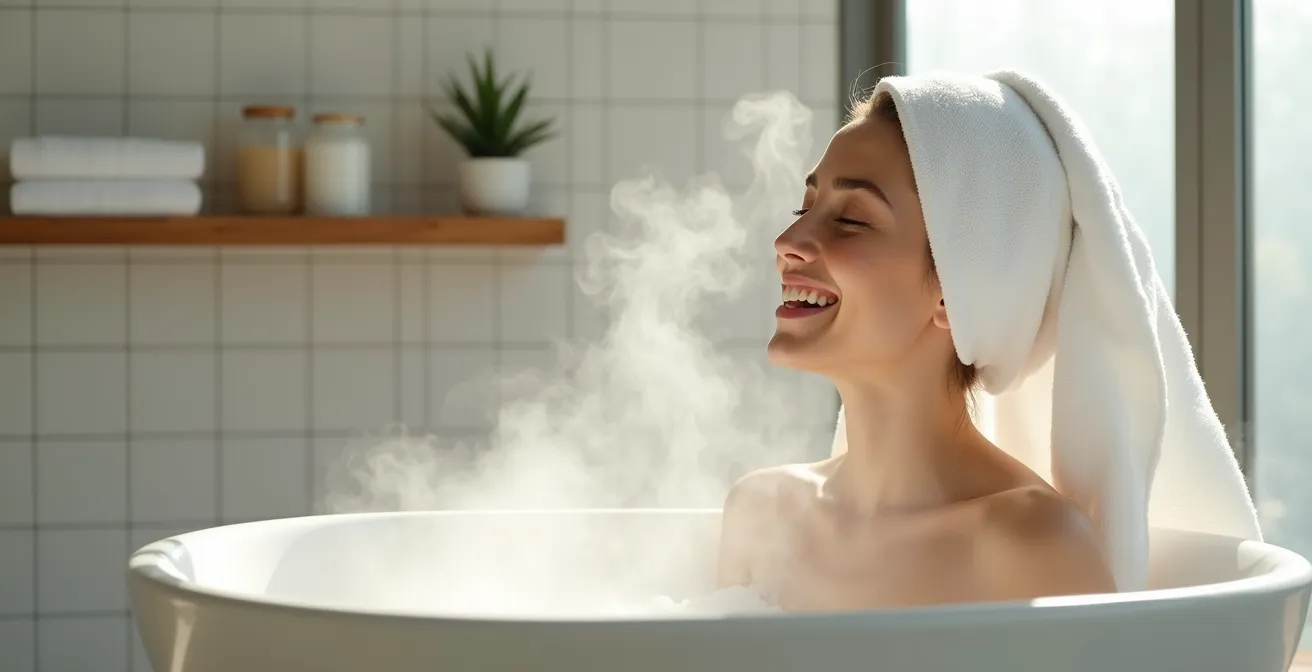
In summary:
- A true spa-quality steam facial is a multi-step ritual, not just hot water in a bowl.
- Controlling steam temperature is crucial to open pores safely and avoid skin damage like broken capillaries.
- The choice of essential oils and herbs directly impacts mental relaxation and skin benefits.
- What you do *before* (cleansing, dry brushing) and *after* (masking, moisturizing) is as important as the steam itself.
There’s a certain magic to the post-spa glow—skin that’s dewy, plump, and utterly refreshed. The price tag for that magic, however, can quickly bring you back to reality. Many of us try to replicate the experience at home, boiling a kettle and hoping for the best. We’re told it “opens the pores,” and while that’s true, it’s a tiny piece of a much bigger puzzle. This common approach often misses the key details that elevate a simple steam into a transformative ritual.
But what if the secret to that professional-grade facial wasn’t in an expensive steamer or a fancy salon, but in understanding the *sequence* and *synergy* of the process? The true art of an at-home steam facial lies in transforming it from a single action into a holistic wellness ritual. It’s about mastering temperature integrity, knowing which botanicals calm your mind and skin, and sequencing your pre- and post-steam care like an expert esthetician.
This guide will walk you through creating that complete sanctuary experience. We’ll go beyond just the steam to explore the entire ritual, from preparing your body for relaxation to the crucial final steps that lock in all the benefits, turning your bathroom into a frugal yet luxurious spa.
To help you navigate this complete at-home spa experience, we have broken down the process into key stages. This structure will guide you from setting the mood to perfecting your post-steam skincare, ensuring you get the most out of every single step.
Summary: How to Create a Steam Facial at Home Without Buying Expensive Gadgets?
- Epsom Salts vs Bath Bombs: Which One Actually Relaxes Sore Muscles?
- The Temperature Mistake That Causes Broken Capillaries on Your Face
- Lavender or Eucalyptus: Which Essential Oil Reduces Cortisol Faster?
- Why Sunday Night Spa Rituals Improve Monday Morning Productivity?
- How to Use a Dry Brush for Lymphatic Drainage Without Scratching Skin?
- Lavender vs Rosemary: Which Scent Reduces Blood Pressure Faster?
- When to Meditate: Is 20 Minutes Once Better Than 10 Minutes Twice?
- How to Layer Retinol and Vitamin C Without Burning Your Skin Barrier?
Epsom Salts vs Bath Bombs: Which One Actually Relaxes Sore Muscles?
Before we even bring steam near our face, let’s set the stage. A truly holistic spa ritual often begins with a full-body immersion to signal to your mind and muscles that it’s time to unwind. The two bathroom staples for this are Epsom salts and bath bombs. Bath bombs offer a fun, sensory experience with fizz and fragrance, but when it comes to deep muscle relaxation, the conversation always turns to Epsom salts (magnesium sulfate). The belief is that magnesium is absorbed through the skin, helping to ease soreness.
However, the science on this is surprisingly thin. In fact, despite their widespread use for muscle relief, research shows zero published studies confirming that magnesium from Epsom salts can be absorbed through the skin in sufficient amounts to affect muscle pain. The real hero here is the hot water. A warm bath itself is what relaxes muscles and calms the nervous system. The ritual of using the salts contributes to a powerful placebo effect, which is a valid part of relaxation.
So, should you ditch them? Not necessarily. If the ritual makes you *feel* relaxed, it’s working. For an effective muscle-soothing bath to kickstart your spa session, dissolve one to two cups of Epsom salts in water around 130°F (54°C) to ensure they dissolve properly, then let it cool to a comfortable temperature before getting in. A 15-minute soak is plenty to get the benefits of the heat without dehydrating your skin. Think of it as the opening act that quiets the noise before the main event: your facial.
The Temperature Mistake That Causes Broken Capillaries on Your Face
Now for the centerpiece of our ritual: the steam. This is where the most common—and most damaging—mistake is made. The “hotter is better” mindset can be a disaster for your skin. Water straight from a boiling kettle is far too hot and can lead to burns and, more insidiously, broken capillaries (telangiectasias). These tiny, spidery red lines appear when the delicate blood vessels in your face expand too quickly from extreme heat and then fail to contract, leaving permanent marks. This is the opposite of the healthy glow we’re after.
Achieving temperature integrity is non-negotiable for a safe and effective steam. You want the steam to be warm enough to soften the sebum in your pores and increase circulation, but gentle enough to avoid shocking your vascular system. According to skincare experts, the sweet spot is a consistent temperature at the skin’s surface. For this, dermatologists recommend keeping facial steam between 45-50°C (113-122°F).
This illustration provides a visual reference for what healthy, happy capillaries look like under ideal conditions, free from the stress of extreme temperatures.

How do you achieve this without a thermometer? A simple, frugal rule: after boiling the water, let it sit for 3-5 minutes off the heat before you begin. The steam should feel pleasantly warm and enveloping, never stinging or uncomfortably hot. Keep your face at least 10-12 inches away from the water’s surface to maintain this safe, effective temperature zone.
Lavender or Eucalyptus: Which Essential Oil Reduces Cortisol Faster?
With the temperature perfected, we can now enhance our steam with the power of aromatherapy. This step transforms the facial from a purely physical treatment into a profound mental reset. The aromatic molecules in essential oils are inhaled, directly interacting with the brain’s limbic system—the center for emotion and memory. This is the science behind why certain scents can make us feel instantly calm or energized. When it comes to deep relaxation, the goal is to lower cortisol, the body’s primary stress hormone.
Both lavender and eucalyptus have relaxation properties, but they work differently. Lavender is the undisputed champion for directly targeting stress and anxiety. Its key compound, linalool, has a sedative effect on the nervous system, making it ideal for lowering cortisol and preparing you for sleep. Eucalyptus, while also relaxing for the mind, is primarily known for its respiratory benefits. It clears sinuses and promotes deep breathing, which indirectly lowers stress. For a pre-bedtime ritual aimed at pure calm, lavender is your best bet.
However, more important than the specific oil is the *amount* you use. Overdoing it can irritate the skin and overwhelm the senses. As aromatherapist Charlynn Avery emphasizes, moderation is key—just a few drops are enough to deliver full benefits. Add only 3-5 drops of your chosen oil to the hot water after it has cooled slightly. If you have sensitive skin, it’s always wise to do a patch test on your inner wrist first. This principle of “less is more” ensures your steam is a gentle, therapeutic cloud, not an aggressive chemical bath.
Why Sunday Night Spa Rituals Improve Monday Morning Productivity?
It might feel like pure indulgence, but dedicating time to a spa ritual on a Sunday night is a strategic investment in your week ahead. The connection between weekend relaxation and weekday performance isn’t just a feeling; it’s rooted in physiology. When we engage in calming activities like a warm bath or a mindful steam facial, we actively work to lower our cortisol levels. Cortisol, when chronically high from stress, impairs cognitive function, memory, and focus. It literally makes it harder to think clearly.
By creating a ritual that signals a definitive end to the weekend and a transition into a state of rest, you are resetting your hormonal balance. As sports physiologists confirm that relaxation from warm baths may help reduce cortisol, which also promotes muscle breakdown. Lowering this hormone allows your body and mind to enter a state of recovery. This means you start Monday not in a state of depletion, but from a baseline of calm and restoration. The result is improved focus, better mood regulation, and a greater capacity to handle the challenges of the morning.
Making this a consistent practice is what turns it into a powerful tool. It’s not about one random spa day; it’s about the predictable rhythm of self-care. This predictable structure helps regulate your circadian rhythm and anchors your week, creating a psychological buffer against the “Sunday scaries” and the dreaded Monday morning rush.
Your Weekly Spa Ritual Checklist: A Plan for Consistency
- Set the schedule: Limit facial steaming to once per week to avoid over-stripping your skin’s natural oils.
- Time it right: Steam for a maximum of 10 minutes per session to get all the benefits without risking dehydration or irritation.
- Plan for evening: Schedule your steam for the evening when you can follow up with your full, uninterrupted skincare routine.
- Cool down correctly: Rinse with lukewarm water immediately after steaming to remove impurities and soothe the skin.
- Lock in moisture: Apply your favorite moisturizing serum or cream while your skin is still damp for dramatically enhanced absorption.
How to Use a Dry Brush for Lymphatic Drainage Without Scratching Skin?
Before we even think about cleansing our face, let’s consider a preparatory step that enhances the detoxification benefits of our entire spa ritual: dry brushing. This ancient practice involves using a soft-bristled brush on dry skin to gently exfoliate and, more importantly, stimulate the lymphatic system. Your lymphatic system is like your body’s waste-disposal network, and unlike your circulatory system, it doesn’t have a pump. It relies on muscle movement and manual stimulation to keep things flowing and remove toxins.
The key to effective dry brushing without causing irritation or micro-scratches is the technique. It’s about light, feathery strokes, not aggressive scrubbing. Always brush towards the heart, following the natural direction of your lymphatic pathways. Start at your feet and work your way up using long, sweeping motions. On your stomach and back, use gentle circular motions. The pressure should be just enough to feel stimulating, never painful. Your skin might turn slightly pink, but it should never be red or scratched.
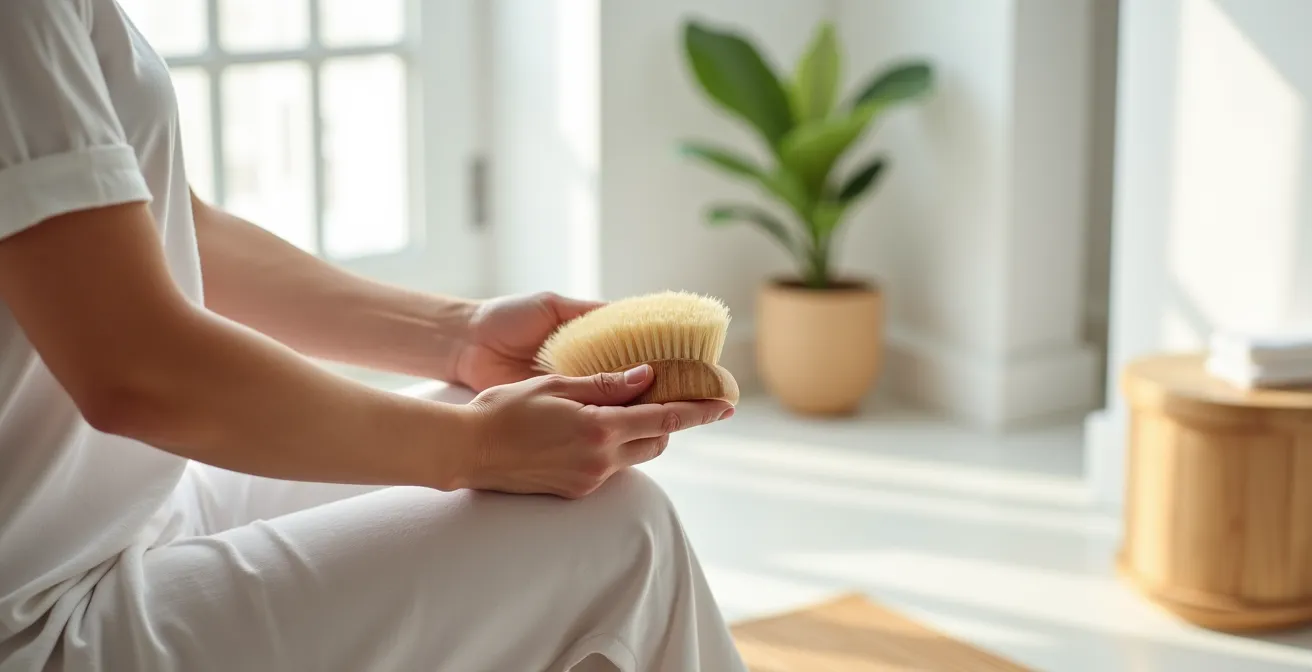
After dry brushing your body, it’s time to prep your face for the steam. To get the most out of your steam, your skin must be impeccably clean. As licensed esthetician Melissa Urban recommends, double cleansing is non-negotiable. Start with an oil-based cleanser to melt away makeup, SPF, and excess sebum. Follow with a gentle gel or foam cleanser to wash away any remaining residue. This ensures that when your pores open from the steam, you’re not pushing dirt and impurities deeper into your skin.
Lavender vs Rosemary: Which Scent Reduces Blood Pressure Faster?
We’ve discussed how lavender can lower cortisol for mental stress, but what about the physical manifestations of stress, like elevated blood pressure? Here, the choice of herb can have a different, though equally beneficial, effect. While lavender is a general-purpose relaxant, rosemary has been studied for its effects on circulation and cognitive performance. Some studies suggest that inhaling rosemary can lower cortisol and have a calming effect, while others show it can be stimulating. The key seems to be its ability to improve circulation, which can contribute to a feeling of well-being.
The true power of a facial steam, however, comes from its ability to make any topical application more effective. The combination of heat and moisture dramatically increases your skin’s permeability. In fact, research on skin permeability shows a 3x increase in absorption when skin temperature is raised. This means that the beneficial compounds from the herbs and oils in your steam have a much better chance of penetrating the skin’s surface. This is why a steam isn’t just “hot air”; it’s a delivery system.
You can tailor your steam to your skin’s specific needs by creating your own herbal blends from your kitchen cabinet. It’s a frugal and effective way to customize your treatment.
- For Irritated or Sensitive Skin: A handful of dried chamomile flowers is incredibly soothing.
- For Oily or Acne-Prone Skin: Add a sprig of fresh rosemary, which has natural astringent and antibacterial properties.
– For a Cooling Sensation: A few fresh mint leaves can feel wonderfully refreshing, especially after a workout. – For Brightening: Dried citrus peels like orange or lemon can provide a gentle brightening effect and an uplifting aroma.
Simply add your chosen herbs to the bowl of hot water along with your essential oils to create a synergistic, multi-beneficial steam.
When to Meditate: Is 20 Minutes Once Better Than 10 Minutes Twice?
Your at-home spa ritual is the perfect container for a mindfulness practice. The question often isn’t *if* you should meditate, but *how* to fit it in effectively. Should you do one longer session or break it up? In the context of our spa ritual, the answer is clear: a focused session timed for maximum benefit is more powerful than scattered, shorter ones. The ideal time to meditate is during the steam itself or immediately after. Your body is already in a state of physical relaxation, making it much easier for your mind to follow suit.
Placing a 10-minute meditation during your 10-minute steam is a masterclass in multitasking mindfulness. As you sit with the towel over your head, enveloped in a warm, fragrant cloud, you are already in a sensory-limited environment. It’s the perfect opportunity to close your eyes and focus on your breath. Instead of letting your mind wander, you can actively engage with the sensations of the warm steam on your skin and the rhythm of your inhales and exhales. This anchors you firmly in the present moment, amplifying the stress-reducing benefits of the ritual.
This practice also helps regulate the frequency of your steaming. It’s easy to get addicted to that clean, dewy feeling, but over-steaming can damage your skin barrier. As a rule of thumb, dermatologists advise limiting facial steaming to 1-2 times per week at most. By tying your steam to a weekly meditation ritual, you create a healthy, sustainable habit that benefits both your skin and your mind without going overboard. A 20-minute session once a week, combining steam and meditation, is far more restorative than sporadic, unfocused efforts.
Key takeaways
- The effectiveness of a home facial steam lies in the entire ritual—from the pre-steam bath to the post-steam skincare sequence.
- Temperature control is paramount: steam should be warm (45-50°C), not boiling, to protect delicate facial capillaries.
- The post-steam window is when your skin is most absorbent; this is the time to apply nourishing masks and serums, but never harsh actives like retinol.
How to Layer Retinol and Vitamin C Without Burning Your Skin Barrier?
You’ve cleansed, you’ve steamed, you’ve meditated. Your pores are clean and your skin is receptive. This is the moment where all your hard work can be amplified or undone. The post-steam window is a period of heightened sensitivity and absorption, which makes it a golden opportunity for nourishment, but a red-alert danger zone for harsh active ingredients. Your skin barrier, softened by the heat and moisture, is more vulnerable.
This brings us to a critical rule of ritual sequencing: never, ever apply potent actives like retinol or high-concentration Vitamin C immediately after steaming. These ingredients are powerful exfoliants and antioxidants that work wonders on their own, but applying them to freshly steamed, sensitized skin is a recipe for irritation, redness, and a compromised skin barrier. The increased absorption that makes your moisturizer more effective will also make these actives far more aggressive and likely to cause a burn-like reaction.
So, what *should* you do? The post-steam protocol is all about calming, hydrating, and locking in moisture.
- Clarify with a Mask: Immediately after steaming is the perfect time to use a gentle clay or charcoal mask. Your pores are open, and the mask can effectively draw out any remaining impurities.
- Tone and Balance: After rinsing the mask, sweep a gentle, hydrating toner over your face to rebalance your skin’s pH.
- Cool and Tighten: For a true pro touch, gently glide an ice cube over your face. This helps to reduce any residual redness and encourages your pores to tighten back up.
- Hydrate Generously: While your skin is still slightly damp, apply your favorite hyaluronic acid serum and a nourishing, lightweight moisturizer to seal in all that hydration.
Save your retinol and Vitamin C for another night, at least 24 hours away from your steam facial, to ensure your skin barrier remains strong, healthy, and happy.
Now that you have the complete blueprint for a professional-grade spa ritual at home, the next step is to gather your simple supplies and carve out the time to treat yourself. Embrace this process not as a chore, but as a powerful act of self-care that will leave your skin glowing and your mind clear.