
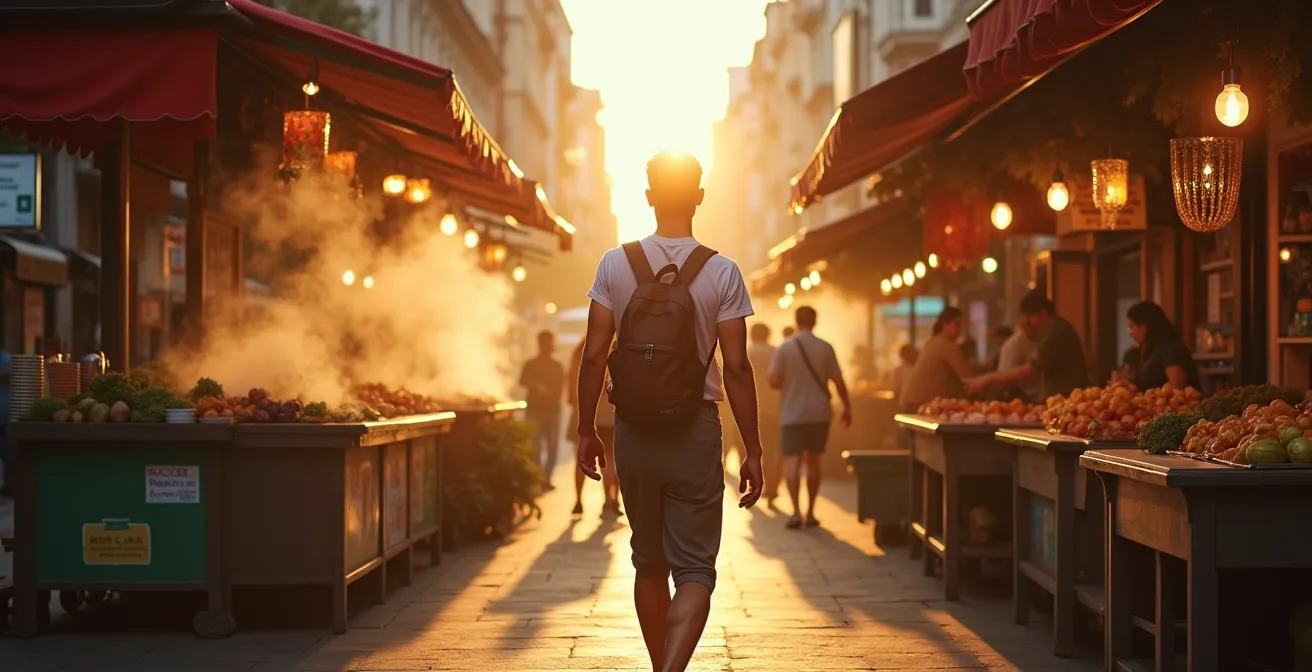
To truly explore your city’s food on a budget, you must think like a culinary detective, not just a tourist.
- Decode hidden signals in menu design to instantly spot authentic gems and avoid tourist traps.
- Use strategic sharing and timing to taste a wider variety of dishes for a fraction of the cost.
- Structure your tour based on flavor science to prevent “palate fatigue” and maximize enjoyment.
Recommendation: Start by picking one neighborhood and applying these detective techniques to 3-4 promising spots to build your confidence and palate.
You love food. You see your own city—or a new one—as a sprawling buffet of undiscovered flavors. The idea of a “food tour” sounds like heaven, a guided journey through the best local bites. But then you see the price tag. Suddenly, that delicious dream feels out of reach, reserved for tourists with deep pockets. Many guides will tell you the solution is simple: eat at cheap places or just grab a sandwich from a supermarket. But that’s not a food tour; it’s just eating on a budget. You miss the discovery, the authenticity, and the story behind the food.
What if the real secret wasn’t about spending less, but about tasting smarter? What if you could become your own guide, a culinary detective equipped with the skills to uncover hidden gems, taste five dishes for the price of two, and experience your city’s gastronomy on a whole new level? This isn’t about just finding deals; it’s about a strategic approach to tasting. It’s about decoding the subtle clues that separate an authentic, chef-driven kitchen from a tourist trap, understanding the rhythm of a city’s bakeries, and even using the adventure to boost your brainpower. Forget expensive guided tours. This guide will give you the framework to build your own, more authentic, and deeply satisfying food adventure.
This article provides a complete blueprint for your culinary investigation. We will cover everything from analyzing menus and ensuring street food safety to sequencing your stops for maximum flavor and even applying your newfound knowledge back in your own kitchen. Get ready to unlock your city’s true taste.
Summary: Your Guide to a Budget-Friendly City Food Tour
- How to Spot an Authentic Restaurant by Reading the Menu Layout?
- The “Family Style” Strategy to Taste 5 Dishes for the Price of 2
- Street Food Safety: The 3 Visual Cues That Signal a Stall Is Clean
- When to Visit Popular Bakeries: Avoiding the Line vs Getting Fresh Bread
- Sweet vs Savory: In What Order Should You Visit Stops to Avoid Palate Fatigue?
- Why Trying a New Activity Boosts Neuroplasticity More Than Routine Exercise?
- Chain Hotel vs Homestay: Where Does Your Money Actually Go?
- How to Cook a Gourmet Meal from “Fridge Scraps” Without a Recipe?
How to Spot an Authentic Restaurant by Reading the Menu Layout?
Your first clue as a culinary detective is the menu itself. Before you even taste the food, the menu’s design, language, and material can tell you almost everything you need to know about a restaurant’s authenticity and target audience. Tourist traps design menus to maximize profit from unsuspecting visitors, while authentic, locally-loved spots focus on the food. The key is to look for signs of a chef-driven kitchen versus a marketing-driven enterprise. For instance, a menu that feels like a photo album is a major red flag. In fact, research by menu engineer Gregg Rapp found a 30% increase in item sales when just one photograph appears on a page, a trick often used to push overpriced, generic dishes.
Look for signs of freshness and specialization. A truly authentic restaurant is proud of its focused cuisine. If a single menu offers Italian pasta, Mexican tacos, and Thai curry, it’s a strong signal that the kitchen is relying on frozen, pre-made ingredients to cover a wide base, rather than excelling at one thing. The most telling signs of authenticity are often subtle and indicate that a real chef, not a corporate manager, is in charge. Handwritten elements or separate paper inserts for daily specials suggest the offerings change based on what’s fresh at the market. A simple, no-frills paper menu often means the focus is on the quality of the ingredients, not on a laminated, indestructible menu built to withstand thousands of tourist hands.
Even the way prices are displayed is a clue. Tourist-focused restaurants often use large, bold dollar signs and prominent pricing to guide your eyes, a psychological trick to frame value. In contrast, many authentic “mom-and-pop” eateries use simple, unadorned numbers. These are not just aesthetic choices; they are authenticity signals that reveal the restaurant’s philosophy. By learning to read these signals, you can confidently walk past the tourist traps and straight into the places where the locals eat.
The “Family Style” Strategy to Taste 5 Dishes for the Price of 2
The single biggest barrier to a solo food tour is the “one-person, one-plate” dilemma. You want to try everything, but your budget (and stomach) can only handle one full meal. The solution is to abandon the traditional appetizer-main-dessert structure and adopt a strategic, multi-stop “family style” approach, even if you’re with just one other person. The goal is to maximize variety, not volume. Instead of ordering two full entrees at one restaurant, order three to four signature appetizers to share. This allows you to sample the best of what a kitchen offers for a fraction of the cost.
This strategy transforms your food tour from a series of heavy, sit-down meals into a dynamic, progressive tasting experience. Plan a route with three or four different restaurants in close proximity. At the first, order their most famous appetizer. At the second, try a unique side dish or small plate. At the third, share a dessert. You’ll have experienced three distinct culinary points of view for roughly the price of one full dinner. This approach works especially well during off-peak hours (typically 2-5 PM), when you can take advantage of happy hour specials and smaller crowds, making it easier to just grab a small bite without the pressure of ordering a full meal.

As you can see, sharing small plates is not just economical; it’s a more social and engaging way to eat. It encourages conversation and comparison, turning the meal into an active experience. This philosophy is championed by travel experts like Rick Steves, who famously advocates for exploring street markets. He notes that in a place like London with nearly 300 markets, you can sample dozens of authentic local foods for the price of a single restaurant meal. Whether it’s tapas in Spain or meze in Greece, the principle is the same: sharing small portions is the key to unlocking a wide spectrum of flavors on a limited budget.
Street Food Safety: The 3 Visual Cues That Signal a Stall Is Clean
Street food is the heart and soul of a city’s culinary scene, offering authentic flavors you won’t find in a formal restaurant. With 2.5 billion people consuming street food daily worldwide, it’s a global phenomenon. However, for the uninitiated, it can also be a source of anxiety. How do you know if a stall is clean and the food is safe to eat? The answer lies in a few quick visual checks. Your “culinary detective” skills are crucial here, allowing you to assess hygiene standards in seconds without having to ask a single question.
The first and most important cue is observing the vendor’s hands. A vendor who handles money with the same hand they use to prepare your food is a major red flag. Look for a system: a dedicated “money hand” and a “food hand” (which might be gloved or use tongs and other utensils). This separation shows a fundamental understanding of cross-contamination prevention. If a vendor is diligent about this, it’s a strong indicator that they are serious about hygiene in other areas as well.
Next, scan the workstation itself. Is it organized? Are raw ingredients, like uncooked meat, kept physically separate from cooked and ready-to-eat items? A clean, well-organized stall with surfaces wiped down and no visible food waste piling up reflects a professional attitude. Pay special attention to the oil in any fryers. Fresh, clean oil should be light in color and transparent. If the oil is dark, cloudy, or has particles floating in it, it means it hasn’t been changed in a long time, which not only affects the taste but can also be a health risk. Finally, glance at the condiment station. Clean, non-sticky bottles of sauce and tidy containers for garnishes are a small but telling detail about the vendor’s overall standards.
Your 5-Point Street Food Safety Audit
- Points of contact: Observe how the vendor handles money versus food. Are they using separate hands, gloves, or tools?
- Collecte: Inventory the workstation. Are raw and cooked foods separated? Are surfaces clean and free of old food scraps?
- Cohérence: Check the cooking medium. Is the frying oil clear and light, or dark and cloudy?
- Mémorabilité/émotion: Examine the condiment station. Are the bottles clean and wiped down, or sticky and crusted?
- Plan d’intégration: Watch the crowd. Is there a steady flow of customers, especially locals? High turnover is a good sign of freshness.
When to Visit Popular Bakeries: Avoiding the Line vs Getting Fresh Bread
For any food lover, the magnetic pull of a local bakery is irresistible. The smell of freshly baked bread, the sight of glistening pastries—it’s a multi-sensory experience. But popular bakeries present a classic dilemma: do you go early to beat the crowds, or do you wait for the freshest batch? The answer depends on your priority: savings or freshness. Understanding a bakery’s daily rhythm is key to getting exactly what you want.
If your main goal is getting the absolute freshest product, especially for signature items like croissants or a specific type of sourdough, timing is everything. Most bakeries have a primary bake in the early morning, meaning the best selection is available right at opening. However, many artisanal bakeries now do a “second bake” in the early afternoon (around 1-2 PM) to replenish stock. This can be a sweet spot: the morning rush is over, and you get bread that’s still warm from the oven. This is often the best time to visit for a specific, high-demand item without having to wait in a long line.
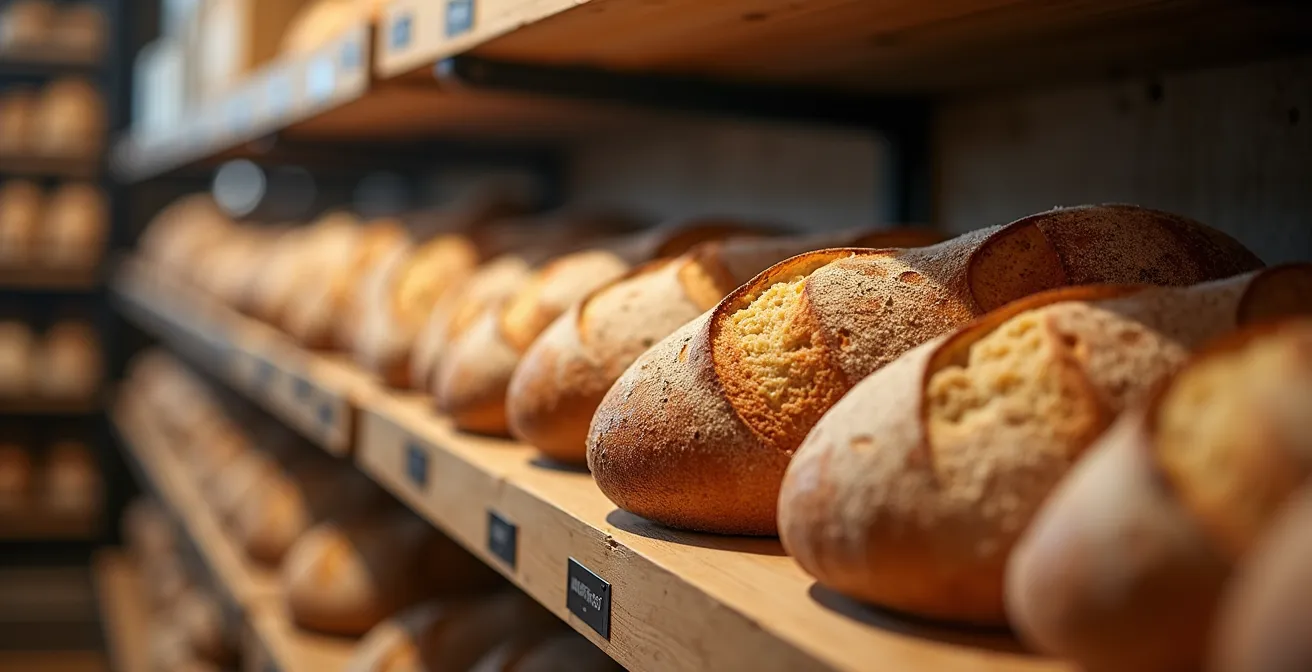
If savings are your priority, then a different strategy applies. Many bakeries and grocery stores mark down items from the previous day to reduce food waste. According to a study on markdown patterns, these discounts of 25-50% typically happen at two key times: either in the early morning (6-10 AM) as staff take inventory, or in the early evening (4-8 PM) as they clear shelves for the next day’s delivery. The hour before closing is often when you’ll find the steepest discounts, but the selection will be extremely limited. The table below breaks down this trade-off.
| Time of Day | Pros | Cons | Best For |
|---|---|---|---|
| Early Morning (6-8 AM) | First pick of day-old discounts, fresh morning bake available | Limited fresh selection | Budget shoppers, day-old deals |
| Afternoon (1-2 PM) | Second bake often happens, no crowds | Morning items sold out | Fresh bread without lines |
| Evening (1 hour before close) | 50% off remaining items | Very limited selection | Maximum savings |
Sweet vs Savory: In What Order Should You Visit Stops to Avoid Palate Fatigue?
A multi-stop food tour is a marathon, not a sprint. A common rookie mistake is to visit stops in a random geographical order, which can lead to “palate fatigue”—a state where your taste buds become overwhelmed or desensitized, causing subsequent dishes to taste bland or muddled. A true culinary detective plans their route not just by location, but by flavor profile. The goal is to create a gastronomic arc that keeps your senses engaged and appreciative from the first bite to the last.
The science of taste suggests a specific progression. You should always start with light, clean, and acidic flavors. Think of a citrusy ceviche, a light salad, or a fresh oyster. These dishes act as an overture, awakening your palate without overwhelming it. From there, you can progress to richer, more complex savory items. This is the heart of your tour, where you might enjoy savory dumplings, a slice of rich pizza, or a flavorful stew. Your taste buds are most active and receptive during this middle phase.
The transitions are just as important as the stops themselves. Between a particularly rich savory dish and your first sweet stop, it’s wise to incorporate a palate cleanser. This doesn’t have to be a fancy sorbet; it can be as simple as a few bites of a pickle, some pickled ginger, or a glass of sparkling water with a lemon wedge. These items cut through lingering fats and reset your taste buds. Intensely spicy foods should always be saved for the very end of your tour. The capsaicin in chili peppers can numb your taste buds, making it difficult to appreciate the subtle flavors of anything that follows. Finally, alternating textures—crunchy, soft, creamy, chewy—throughout the tour also helps prevent sensory boredom and keeps the experience exciting.
Why Trying a New Activity Boosts Neuroplasticity More Than Routine Exercise?
A self-guided food tour is more than just a budget-friendly way to eat; it’s a powerful workout for your brain. While routine activities like jogging on the same route are good for your body, the novelty and complexity of a food tour create the perfect conditions for boosting neuroplasticity—your brain’s ability to form and reorganize synaptic connections. Every step of your culinary investigation is a cognitive challenge that builds new mental pathways.
A food tour is not just about indulging in delicious dishes; it’s an adventure that requires some preparation to fully enjoy the experience.
– Secret Food Tours, Food Tour Ultimate Tips Guide
Unlike a passive dining experience where you simply order from a familiar menu, a food tour forces you into active problem-solving. First, there’s the navigation. Challenge yourself to use a paper map or follow sensory cues—the smell of grilling meat, the sound of a bustling market—instead of blindly following a GPS. This process actively engages your brain’s spatial memory centers. Then comes the language. Decoding unfamiliar menu terms, trying to pronounce foreign dish names, and interacting with vendors all stimulate the parts of your brain responsible for language and social processing.
The sensory analysis is perhaps the most potent cognitive exercise. Instead of just passively consuming a dish, make it a game. Challenge yourself to actively identify at least three distinct ingredients or spices in everything you taste. This practice of active sensory engagement hones your palate and forces your brain to make new connections between smells, tastes, and memories. You’re not just eating; you are analyzing, decoding, and learning. This level of cognitive engagement is far more stimulating than the passive consumption of a routine meal, making your food tour an exercise that nourishes both your mind and your stomach.
Chain Hotel vs Homestay: Where Does Your Money Actually Go?
When planning a trip, even in your own city, a key decision is where you stay. The choice between a standardized chain hotel and a local homestay or boutique inn seems like a simple matter of preference. However, just like your food choices, this decision has a significant economic impact. The philosophy of a culinary detective—seeking authenticity and supporting local creators—extends beyond the plate. Where your money goes matters, and the principles that guide you to an authentic eatery can also guide you to more meaningful lodging.
Think about the restaurants you’ve learned to identify. As travel expert Rick Steves points out, handwritten menus often indicate smaller, family-run “mom-and-pop” eateries. When you eat there, a larger portion of your money stays within the local community, supporting the family that runs it and the local suppliers they use. According to some analyses, these authentic spots not only provide better economic value for the community but are also filled with locals, offering a richer cultural experience. The same logic applies to lodging. A chain hotel sends a significant portion of its revenue to a corporate headquarters in another state or country, whereas money spent at a local homestay or B&B directly supports a local family and circulates within the neighborhood economy.
This choice becomes even more significant when you consider how much of our budget is allocated to these experiences. It’s estimated that, on average, consumers allocate 40% of their monthly food budgets to restaurants. By consciously directing even a fraction of that spending toward independent, locally-owned businesses—both for food and lodging—you are voting with your wallet for a more diverse and vibrant local economy. Choosing a homestay over a chain hotel or a small taqueria over a fast-food giant is a deliberate act of economic support for authenticity. It ensures that the unique character of a neighborhood, which is what makes it an interesting place to explore in the first place, continues to thrive.
Key takeaways
- Think like a “culinary detective” by decoding menus, vendor hygiene, and timing to find authentic, budget-friendly food.
- Adopt a “family-style” sharing strategy across multiple stops to maximize taste diversity while minimizing cost.
- Plan your tour’s sequence from light to rich and savory to sweet to avoid palate fatigue and enhance the tasting experience.
How to Cook a Gourmet Meal from “Fridge Scraps” Without a Recipe?
The ultimate goal of a culinary detective isn’t just to find great food, but to understand it. The skills you develop on your food tour—analyzing flavors, understanding ingredient pairings, and recognizing cooking techniques—are not just for a day out. They are tools you can bring back into your own kitchen. The final step of your journey is learning to apply this new “flavor literacy” to transform your own “fridge scraps” into a gourmet meal, without needing a recipe.
The secret lies in deconstruction. On your tour, you didn’t just eat a taco; you learned to identify the balance of its core components: the savory meat, the acidic salsa, the fresh cilantro, and the creamy avocado. You can apply this same framework to the random ingredients in your fridge. Instead of seeing a lone carrot, half an onion, and some leftover chicken, you see building blocks: aromatics (onion), sweetness (carrot), and protein (chicken). Your mission is to figure out how to combine them and what they’re missing—perhaps some fat (olive oil), acid (a splash of vinegar or lemon juice), and spice (paprika or cumin).
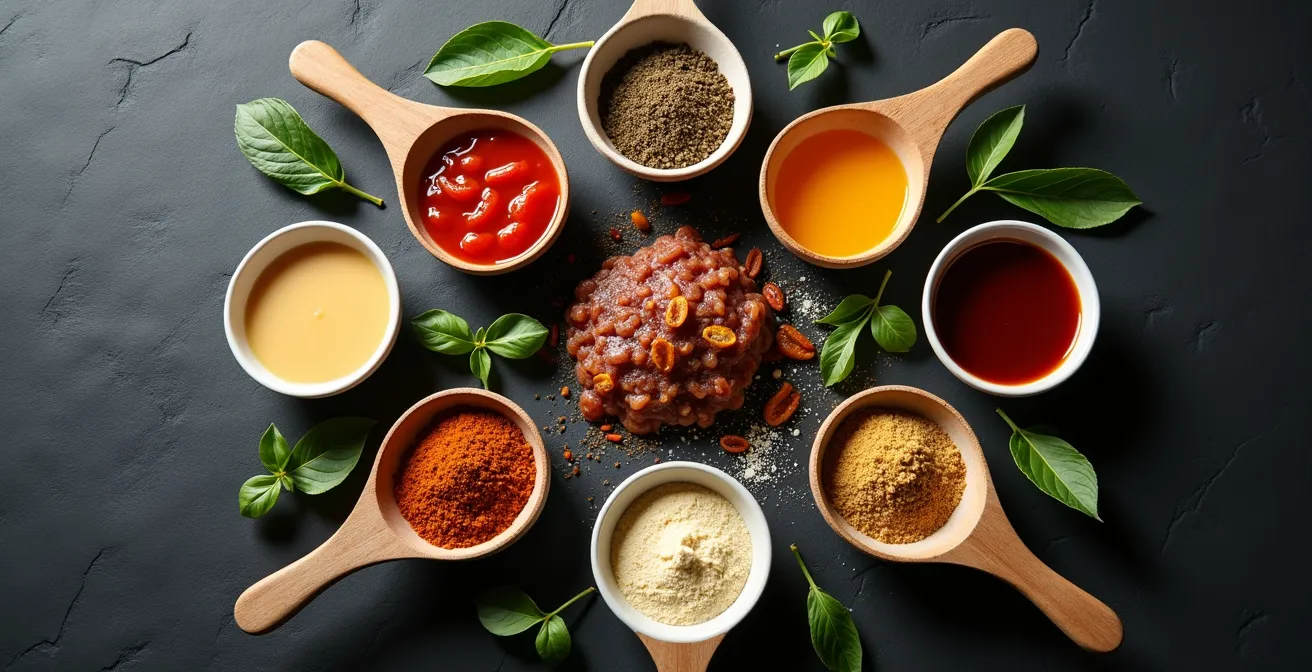
This image of deconstructed components is a metaphor for this new way of thinking. Every great dish is a balance of five key elements: salt, fat, acid, heat, and texture. Your food tour was a real-world masterclass in how different chefs achieve this balance. Now, when you look in your fridge, you can ask detective questions: “What fat do I have? Butter or oil? What acid can I use? Lemon juice, vinegar, or even yogurt? How can I add texture? Toast some nuts, or use the crispy carrot raw instead of cooked.” This approach frees you from the tyranny of the recipe and empowers you to cook intuitively, based on the principles you observed in the wild. Your fridge becomes a palette, not a puzzle.
Now that you have the complete toolkit of a culinary detective, the only thing left is to take that first step. Pick a neighborhood, scout a few spots online using these principles, and go on your first micro-tour. Start planning today to transform how you experience the food in your own city.