
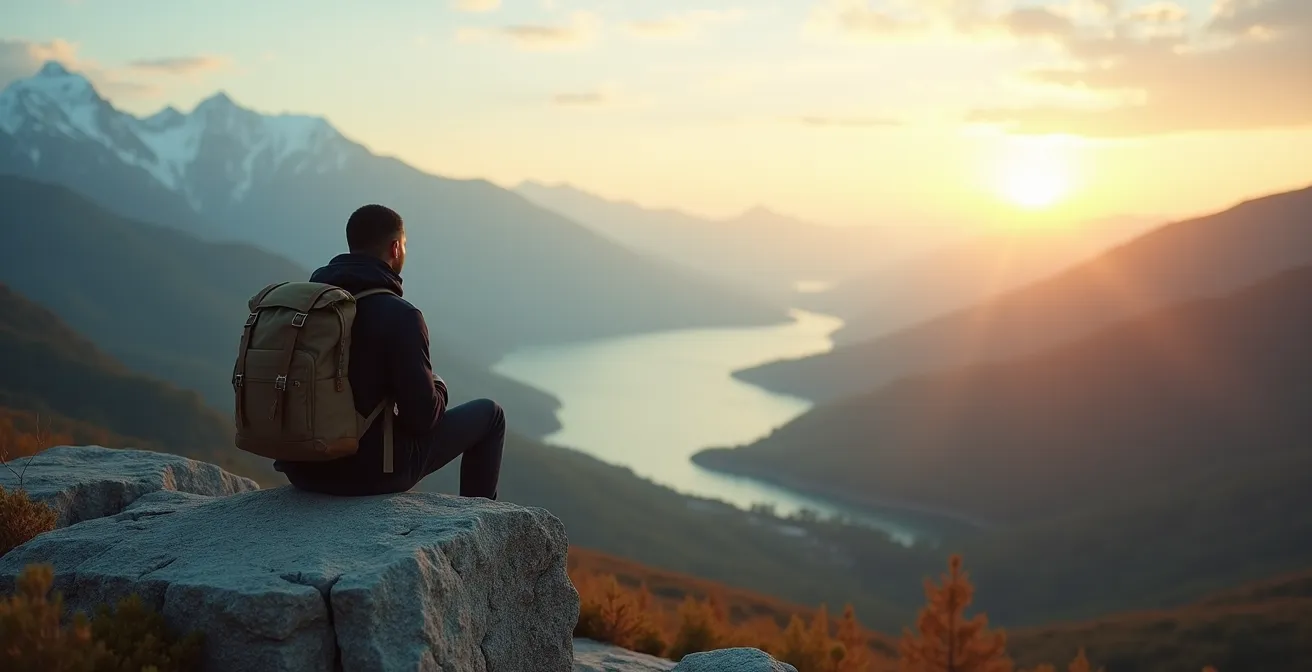
The key to a transformative solo trip isn’t where you go, but how you intentionally structure your experience to manage your energy and foster self-discovery.
- This involves choosing your trip type based on your mental state (restorative vs. stimulating) and actively creating a ‘safety ecosystem’ rather than just hoping for the best.
- Success lies in reframing solitude as a strength and using practical tools to find quiet moments, even in popular destinations.
Recommendation: Start by auditing your current level of burnout to decide if a structured wellness retreat or an exploratory city break is your ideal first step for a true mental reset.
The feeling is unmistakable: a persistent hum of exhaustion, a sense of being constantly “on,” and a quiet longing to just… stop. For many burnt-out professionals and introverts, the idea of a solo trip emerges as a beacon of hope—a chance to disconnect, breathe, and reconnect with a version of yourself you haven’t seen in a while. Yet, this dream is often quickly overshadowed by anxieties about safety, loneliness, and the overwhelming task of planning it all alone. The common advice to simply “pick a safe spot and go” feels inadequate, failing to address the core need: this isn’t just a vacation, it’s a mission of mental recovery.
Most travel guides focus on itineraries and packing lists, treating a trip as a series of external checkboxes. They tell you what to see, but not how to *be*. But what if the true secret to a restorative solo journey wasn’t about the destination at all? What if it was about the *intentional structure* you build around your time? This approach transforms travel from a passive consumption of sights into an active practice of self-discovery. It’s about consciously designing an experience that lowers your cognitive load, empowers you to embrace solitude, and creates a secure container for introspection.
This guide is your blueprint for that intentional structure. We will move beyond the superficial and explore the mental architecture of a successful first solo trip. From choosing the right kind of reset and mastering the art of dining alone to building a robust safety ecosystem, you’ll learn how to craft a journey that is not only manageable and safe but profoundly transformative. It’s time to stop dreaming about that trip and start designing it with purpose.
Summary: How to Plan a First Solo Trip That Truly Reconnects You With Yourself
- Why a “Digital Detox” Retreat Is More Effective Than a Beach Vacation?
- Loneliness vs Solitude: How to Enjoy Dining Alone in a Foreign City?
- Wellness Retreat or City Break: Which Solo Trip Suits Your Personality?
- The Safety App Every Solo Female Traveler Should Install Before Departure
- When to Visit Popular Spots: The “Shoulder Season” Advantage for Solitude
- How to Plan a “Micro-Adventure” That Fits Between 5 PM and 9 PM?
- Chain Hotel vs Homestay: Where Does Your Money Actually Go?
- How to Find Hidden Gems in Your Own City Using Satellite Maps?
Why a “Digital Detox” Retreat Is More Effective Than a Beach Vacation?
A typical beach vacation promises relaxation, but often, we just trade our office screen for a phone screen, scrolling endlessly against a prettier backdrop. The constant influx of notifications, news alerts, and social media comparisons keeps our brains in a state of high alert, preventing a true mental reset. A digital detox, by contrast, is not about the absence of work; it’s about the intentional removal of digital stimuli to allow your nervous system to recover. This isn’t just a trend; it’s a neurological necessity. By starving your brain of the constant, cheap dopamine hits from technology, you force it to find reward in the real world: the taste of a meal, the feeling of the sun, the sound of a foreign language.
The benefits are scientifically supported. A landmark 2024 randomized controlled trial found that participants who limited smartphone use to just 2 hours daily for three weeks reported significant improvements in sleep quality, mood stability, and perceived stress. This structured restriction creates the mental space required for self-reconnection. While a beach trip can be relaxing, a digital detox retreat is restorative on a biological level, recalibrating your brain’s reward system and enhancing your ability to be present.
This doesn’t mean you have to go cold turkey. A tiered approach can make it manageable. Start by removing social media apps and charging your phone outside the bedroom. As you get comfortable, you might switch to airplane mode for most of the day, using an analog alarm clock and paper maps. The goal isn’t to reject technology forever, but to re-establish it as a tool you control, not one that controls you. This conscious uncoupling is the foundational step in hearing your own thoughts again.
Loneliness vs Solitude: How to Enjoy Dining Alone in a Foreign City?
For many aspiring solo travelers, the thought of sitting alone at a restaurant table is more intimidating than navigating a foreign subway. This fear stems from a deep-seated confusion between two very different states: loneliness and solitude. Loneliness is a painful, passive feeling of isolation. Solitude is an active, empowering choice to be with yourself. The key to enjoying a meal alone is to transform it from a moment of potential loneliness into a deliberate act of solitude and sensory engagement.
This isn’t just a mental trick; it’s an opportunity. When you’re not engaged in conversation, your senses are heightened. The restaurant is no longer just a place to eat; it becomes a theater of experiences. You can notice the intricate colors of your dish, identify the individual spices in its aroma, and map the textures as you eat. It’s a mindfulness practice disguised as a meal. To start, find a seat at the bar or a chef’s counter. It provides a focal point—the theater of the kitchen—and feels less exposed than a table for two in the middle of the room. It also signals that you are there for the culinary experience, a fact reflected in spending habits; OpenTable data reveals that solo diners spend 48% more per person, often investing in a higher-quality experience.
To fully embrace this, try a sensory dining technique. Before eating, take three deep breaths to activate your body’s “rest-and-digest” mode. Observe the visual presentation of your food. Inhale its aroma. As you eat, focus on the textures—crispy, creamy, chewy. Pay attention to the ambient sounds of the restaurant. You’re not just a person dining alone; you are a connoisseur of the present moment.

This intentional practice turns a moment of potential anxiety into a rich, memorable highlight of your trip. Bringing a journal to record your sensory memories can further solidify the experience, making it a story you tell yourself, not a situation you endure. This is the heart of solo travel: finding joy and connection not from others, but from within and your immediate surroundings.
Wellness Retreat or City Break: Which Solo Trip Suits Your Personality?
The “perfect” solo trip is a myth. The truly effective solo trip is one that aligns with your current mental state and personality. For someone on the verge of burnout, the high-stimulus environment of a bustling city break can be more draining than restorative. Conversely, for someone stuck in a creative rut, the structured tranquility of a wellness retreat might feel stifling. The key is to assess your “reset type” and match it to a destination that manages your cognitive load—the amount of mental effort required to navigate your day.
Understanding your needs is the first step. Are you seeking a Restorative Reset from exhaustion? Or a Stimulating Reset to break through a creative block? A wellness retreat offers a low cognitive load; your schedule is structured, meals are planned, and decisions are minimal. A city break is the opposite, demanding a high cognitive load with constant navigation, choices, and sensory input. Neither is inherently better, but choosing the wrong one can sabotage your goal of self-reconnection.
The following table can help you identify which trip style best suits your current needs, balancing the mental state you’re in with the level of daily decision-making you can handle.
| Reset Type | Mental State | Ideal Destination | Cognitive Load | Daily Decisions |
|---|---|---|---|---|
| Restorative Reset | Burnout/Exhaustion | Wellness Retreat | Low (structured) | 5-10 |
| Stimulating Reset | Creative Block | City Break | High (exploratory) | 30-50 |
| Challenge Reset | Monotony/Boredom | Adventure Trip | Variable | 15-25 |
| Hybrid Reset | Mixed Needs | City + Nature Combo | Moderate | 20-30 |
For a first-timer, a “Hybrid Reset” is often the ideal solution, offering the best of both worlds. It allows you to adjust your daily cognitive load based on your energy levels.
Case Study: The Power of Hybrid Destinations
Cities like Kyoto, Japan, or Vancouver, Canada, exemplify the perfect hybrid experience. In Kyoto, you can spend a morning in the restorative calm of a Buddhist temple meditation session (low cognitive load) and an afternoon exploring the mentally stimulating historic Gion district (high cognitive load). Similarly, Vancouver offers vibrant urban culture just a 30-minute drive from quiet, restorative nature trails. These destinations empower solo travelers to be the architects of their own recovery, choosing stimulation or serenity on a day-by-day, or even hour-by-hour, basis.
By choosing a destination that matches your internal needs, you set the stage for a trip that energizes rather than depletes, making self-reconnection not just possible, but inevitable.
The Safety App Every Solo Female Traveler Should Install Before Departure
For solo female travelers, safety is not a single action but a comprehensive mindset. While common sense is your most important tool, technology can provide a powerful, layered safety net. Relying on one single app or trick is fragile; the most effective approach is to build a Personal Safety Ecosystem that combines proactive research, reactive alerts, and analog backups. This system moves you from a position of anxiety to one of empowered preparedness.
The proactive layer of your ecosystem begins before you even book your flight. It’s about understanding the environment you’re entering. This is where apps like GeoSure come in. Unlike generic travel warnings, GeoSure provides granular safety scores for over 65,000 neighborhoods worldwide, with specific ratings for categories like women’s safety and LGBTQ+ safety. These comprehensive safety data for over 65,000 neighborhoods allow you to assess the vibe of an area before you commit to an accommodation, helping you avoid inadvertently booking a hotel in a location that feels unsafe at night.
The reactive layer is for in-the-moment emergencies. Apps like bSafe are critical here. It allows you to set up a network of trusted contacts who can be alerted with an SOS button. Its key feature is voice activation, allowing you to trigger an alarm and start automatic video recording simply by saying a code word. This is crucial for situations where you cannot physically access your phone. Your ecosystem should also include an informational layer—offline maps, embassy contacts, and translation apps—and a crucial analog backup layer, because technology can fail. A simple rubber doorstop alarm for your hotel room and a personal safety whistle are non-negotiable, low-cost additions to your toolkit.
Your Action Plan: Building a Personal Safety Ecosystem
- Proactive Layer: Install GeoSure for pre-arrival neighborhood safety scores. Research areas extensively before booking your accommodation.
- Reactive Layer: Set up bSafe with trusted contacts for voice-activated SOS and automatic video recording during emergencies.
- Informational Layer: Download offline maps (like Maps.me), save embassy/consulate contact numbers, and install a translation app with pre-saved emergency phrases.
- Analog Backup: Pack a rubber doorstop with an alarm for your room, carry a personal safety whistle, and have a physical, written copy of emergency contacts.
- Communication Protocol: Share your daily itinerary with two trusted contacts, establish firm check-in times, and agree on a code word that signals a genuine emergency.
By building this multi-layered system, you’re not planning for the worst; you’re creating the confidence to enjoy the best. You’ve outsourced the anxiety to a system, freeing your mind to focus on the joy of discovery.
When to Visit Popular Spots: The “Shoulder Season” Advantage for Solitude
One of the great paradoxes of solo travel is wanting to see iconic landmarks without being swallowed by the crowds that flock to them. The dream is a quiet moment of awe in front of the Eiffel Tower or a solitary walk through the Roman Forum, but the reality is often a sea of selfie sticks. While traveling in the “shoulder season” (the months just before and after peak season) is a well-known strategy, a more powerful technique is micro-timing: strategically planning your visit to a specific hour, not just a specific month.
Technology has made this easier than ever. You no longer have to guess when a location will be busy. Google Maps’ “Popular Times” feature uses aggregated, anonymous location data to show you crowd levels by hour and day. This isn’t just a rough estimate; it’s a powerful tool with crowd prediction technology that boasts an accuracy rate of up to 85%. Before heading to any museum, monument, or market, a quick check of the live data can help you decide whether to go now or wait an hour for the tour buses to depart.
Beyond technology, several micro-timing rules of thumb can help you find pockets of solitude. The “Sunrise Strategy” involves arriving at a popular outdoor site 30 minutes before it officially opens; security often permits early entry, granting you a golden hour of near-empty serenity. Conversely, the “Last Hour Rule” is perfect for museums, as most large tour groups have already left, allowing you to experience the art in relative peace. For a solo traveler, these moments of quiet contemplation with world-class art or architecture are the very essence of the journey.
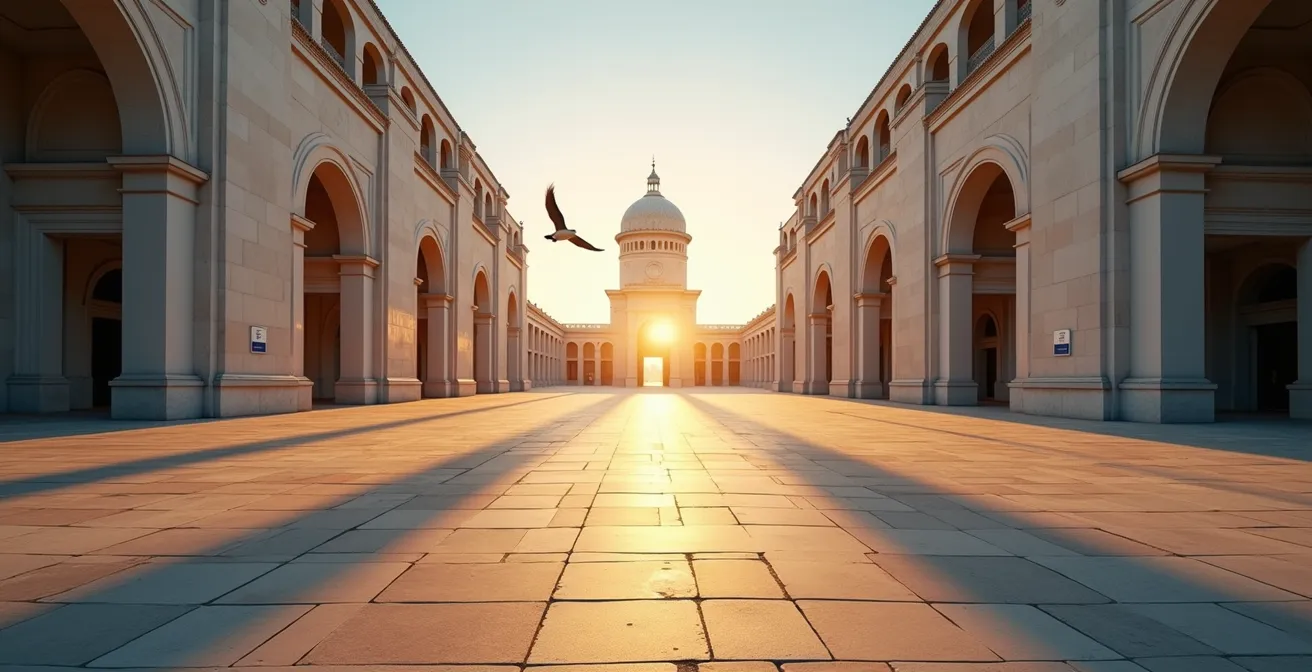
Even weather can be an ally. A light rain shower can reduce crowds at outdoor attractions by over 60%. For the prepared solo traveler with a good raincoat, this is a golden opportunity for an impromptu private viewing. By combining these strategies, you can engineer moments of profound connection with a place, transforming a tourist attraction into a personal pilgrimage.
How to Plan a “Micro-Adventure” That Fits Between 5 PM and 9 PM?
The spirit of adventure doesn’t require a plane ticket or a week off work. It’s a mindset that can be cultivated anywhere, anytime—even in the four-hour window between the end of a workday and bedtime. A “micro-adventure” is a short, local, and intentionally designed experience that breaks your routine and injects a dose of novelty and discovery into an ordinary evening. For a burnt-out professional, this is a powerful tool for self-reconnection, proving that you don’t need to go far to feel a world away.
The key to a successful micro-adventure is to create a framework that transforms a simple walk into a quest. Instead of aimlessly wandering, give your evening a theme. This provides structure and purpose, focusing your attention and turning the familiar into the fascinating. For example, you could embark on a “Golden Hour Photography Challenge,” tasked with capturing the sunset from three unique, pre-scouted vantage points in your neighborhood. Or you could plan an “Artisanal Food Crawl,” visiting a local cheesemonger, chocolatier, and bakery, spending time at each to learn about their craft.
The ritual of preparation is just as important as the adventure itself. Create a clear separation from your workday. Change into “adventure clothes,” put your phone on silent, and maybe even create a specific “exploration” playlist. This signals to your brain that you are transitioning from one mode of being to another. The goal is to engage your senses and curiosity, whether you’re on a quest to find five different types of urban wildlife in a local park at dusk or acting as a “local history detective” by researching an old building and then visiting it after dark to see it in a new light. These small, structured quests are a form of active mindfulness, forcing you to look at your surroundings with fresh eyes.
These experiences are more than just a way to pass the time; they are training for your larger solo journey. They build your “discovery muscles” and teach you how to find wonder in the small details. By practicing this at home, you’ll arrive at your solo travel destination already equipped with the skills to find magic beyond the guidebooks.
Chain Hotel vs Homestay: Where Does Your Money Actually Go?
Your choice of accommodation on a solo trip is more than just a place to sleep; it’s a decision that shapes your entire experience and determines the very nature of your connection to a place. The debate between a predictable chain hotel and an immersive homestay often overlooks a powerful middle ground: the boutique guesthouse. Understanding where your money goes and what you get in return—both economically and experientially—is crucial for designing a trip that aligns with your goal of self-reconnection.
In a large chain hotel, a significant portion of your payment leaves the local community, flowing to a corporate headquarters elsewhere. The experience is standardized and anonymous, offering privacy but minimal cultural exchange. A homestay, by contrast, directs nearly all of your money to a host family, maximizing local economic impact and offering deep cultural immersion. However, for an introvert or someone seeking a mental reset, the required social interaction and lack of privacy can be draining.
The boutique guesthouse or small, locally-owned hotel often represents the ideal balance for a solo traveler. It combines the privacy and professional standards of a hotel with the local character and economic benefits of a homestay. A 2024 study on solo traveler preferences found that boutique guesthouses rated highest for overall satisfaction, praised for their unique character, knowledgeable staff who provide authentic recommendations, and common areas designed for optional social interaction. They offer a curated experience without the unpredictability of a homestay.
This table breaks down the key differences, helping you make an intentional choice based on your priorities for privacy, cultural exchange, and local impact.
| Aspect | Chain Hotel | Homestay | Boutique Guesthouse |
|---|---|---|---|
| Local Economic Impact | 15-20% stays local | 90% to host family | 70% local retention |
| Cultural Exchange | Minimal | High (meals, stories) | Moderate (local tips) |
| Privacy Level | Complete | Limited | High |
| Predictability | Standardized | Variable | Curated uniqueness |
| Solo Traveler Support | 24/7 desk | Personal guidance | Knowledgeable staff |
| Average Cost | $$$ | $ | $$ |
By choosing a boutique guesthouse, you are often investing in a model that supports local entrepreneurs, provides a high level of comfort and privacy, and still offers doors to authentic cultural connection—but only when you choose to open them. It’s an intentional choice that supports both your inner journey and the community you are visiting.
Key Takeaways
- A successful solo trip is an intentionally designed experience, not just a destination.
- Actively reframing loneliness as solitude is crucial for enjoying your own company.
- Building a multi-layered “safety ecosystem” creates the confidence needed for true exploration.
How to Find Hidden Gems in Your Own City Using Satellite Maps?
The most memorable travel experiences are rarely found in a guidebook. They are the hidden courtyards, secret gardens, and quiet alleyways you stumble upon by chance. But these discoveries don’t have to be left to chance. With the right technique, you can become a “satellite detective,” using free tools like Google Maps and Google Earth to systematically uncover the hidden gems of any city, including your own. This is the ultimate skill for a solo traveler seeking authentic connection over pre-packaged tourism.
The process begins by switching from the standard map view to satellite view and scanning a neighborhood for anomalies. Look for unusual patches of green tucked between buildings, rooftops with strange shapes that might hide a garden, or footpaths that seem to lead nowhere. These are the visual cues that a space is being used in a way that isn’t officially documented. Once you’ve identified a point of interest, drop into Street View for reconnaissance. “Walk” down alleys, peer through gates, and look for the desire paths—the unofficial trails worn into grass by locals—that reveal how people *actually* move through a space.
For a deeper level of discovery, use Google Earth’s historical imagery feature. This allows you to see how a location has evolved over time, potentially revealing forgotten gardens or public spaces that have been built over. By cross-referencing your discoveries with local history websites or Instagram geotags, you can piece together the story of a place before you even visit. This research transforms a simple walk into an archaeological expedition, with you as the lead explorer.
This methodology is more than a fun trick; it’s a way of training your eyes and mind to see the world differently. It cultivates curiosity and empowers you to find your own stories in a new city. When you arrive at your solo travel destination, you won’t be dependent on a list of “top 10 sights.” You will have the skill to look at a map and see not just streets and buildings, but a landscape of potential discovery. You become the creator of your own adventure, finding personal meaning in places others overlook.
Now that you have the tools to plan a safe, intentional, and deeply personal journey, the next step is to take action. Start by applying these principles to a micro-adventure in your own city this week. Choose an accommodation that truly aligns with your goals, not just your budget. Begin building your safety ecosystem today. Your journey of self-reconnection doesn’t start when the plane takes off; it starts the moment you decide to plan with purpose.