

Challenging the brain after 40 is less about playing games and more about engaging in complex, hands-on skills that stimulate holistic growth.
- True neuroplasticity is triggered by ‘high-friction’ activities that combine cognitive, motor, and sensory challenges.
- Passive screen-tapping provides minimal benefit; active, real-world application is key for long-term retention.
Recommendation: Choose a multi-domain skill like balcony gardening that forces problem-solving and provides tangible feedback, then integrate it using spaced repetition and micro-learning.
For many adults navigating life beyond 40, the fear of cognitive decline can feel like a shadow on the horizon. Concerns about memory, sharpness, and mental agility are common. The conventional advice is often a mix of familiar refrains: do crossword puzzles, learn a language with an app, or simply “keep your brain active.” While well-intentioned, this approach often misses the fundamental mechanism of how the adult brain truly grows and maintains its power: the science of neuroplasticity.
The truth is, not all learning is created equal. The key to robust cognitive health isn’t just activity, but a specific kind of structured, multi-faceted challenge. This guide moves beyond the platitudes to explore the core principles of neuroplasticity. We will argue that the most potent way to stimulate your brain is not through isolated digital puzzles, but through ‘high-friction’ skills that engage your mind, body, and senses simultaneously. Using the tangible example of starting a small balcony garden, we will deconstruct how a seemingly simple hobby becomes a powerful tool for cognitive rewiring, demonstrating how to build a resilient, sharper mind one plant at a time.
For those who prefer a visual summary, the following video offers insights into creating meaningful connections and overcoming isolation, a key component of overall mental well-being that complements the cognitive strategies discussed in this guide.
This article is structured to guide you from the foundational science of adult brain growth to the practical application of these principles in your daily life. Explore the sections below to build a comprehensive understanding of how to strategically learn and thrive after 40.
Summary: How to Learn New Skills After 40 for a Sharper Mind
- Why Does the Adult Brain Still Grow New Neurons When Challenged?
- How to Select a Hobby That Is Frustrating Enough to Stimulate Growth
- Dancing vs. Sudoku: Which Activity Is Superior for Preventing Dementia?
- The Duolingo Trap: Why Tapping a Screen Won’t Make You Fluent or Sharp
- When to Review: Using Spaced Repetition to Lock in New Skills Forever
- When to Embrace Grey Hair: The Psychological Shift of Letting Go of Dye
- Why Does Spaced Repetition Beat Binge-Learning for Long-Term Retention?
- Micro-Learning for Personal Growth: How to Reskill in 15 Minutes a Day
Why Does the Adult Brain Still Grow New Neurons When Challenged?
The long-held belief that the brain becomes fixed and unchangeable after a certain age has been decisively overturned by modern neuroscience. The brain, even in adulthood, possesses a remarkable capacity for change and growth known as neuroplasticity. This process involves forming new neural pathways and, in specific regions like the hippocampus, even generating new neurons—a process called adult neurogenesis. This isn’t just a passive process; it is an active response to novel and challenging stimuli. When you learn a new skill, you are literally forcing your brain to build new connections and strengthen existing ones to meet the demand.
Contrary to the narrative of inevitable decline, extensive research shows that many cognitive functions can be maintained or even improved in midlife. For instance, the Seattle Longitudinal Study revealed that cognitive abilities like verbal fluency, inductive reasoning, and spatial orientation can peak between the ages of 40 and 69. This peak performance is not an accident; it is the result of a lifetime of accumulated knowledge and the brain’s ongoing ability to adapt. The key is providing the right kind of “exercise” to trigger this adaptive response.
Case Study: The MTT24.5 Program
A 2024 study published in PLOS ONE on the MTT24.5 cognitive training program provided compelling evidence of this principle. The research demonstrated that structured mental training could significantly improve core cognitive abilities, including processing speed, working memory, and fluid reasoning in adults. Crucially, these improvements showed that neuroplasticity is maintained across all age groups, proving that with the right input, the brain can be trained to become more efficient and powerful, regardless of age.
This biological reality is profoundly encouraging. It means that your brain is not a static organ but a dynamic system waiting for a challenge. The feeling of being “stuck in your ways” is more a matter of habit than a biological limitation. By intentionally engaging in new and complex activities, you actively participate in the process of rewiring and strengthening your own cognitive architecture.
How to Select a Hobby That Is Frustrating Enough to Stimulate Growth
If challenge is the catalyst for brain growth, the next logical question is: what kind of challenge is best? The answer lies in a concept we can call ‘high-friction learning.’ This refers to activities that are not passive or easy, but instead require active problem-solving, sensory engagement, and the potential for minor, low-stakes failure. An activity that is slightly frustrating forces your brain out of its comfort zone, compelling it to forge the new neural pathways necessary for growth. Easy, repetitive tasks might feel productive, but they often operate on well-worn neural highways, offering little stimulus for new construction.
Balcony gardening is a prime example of a high-friction hobby. It demands a blend of skills: cognitive planning (what to plant, when, and where), sensory feedback (feeling the soil, seeing leaf discoloration), and motor skills (planting tiny seeds, pruning). When a plant fails to thrive, you are forced into a cycle of research, hypothesis, and experimentation—a rich cognitive workout. This multi-domain engagement is precisely what the brain needs to stay sharp.
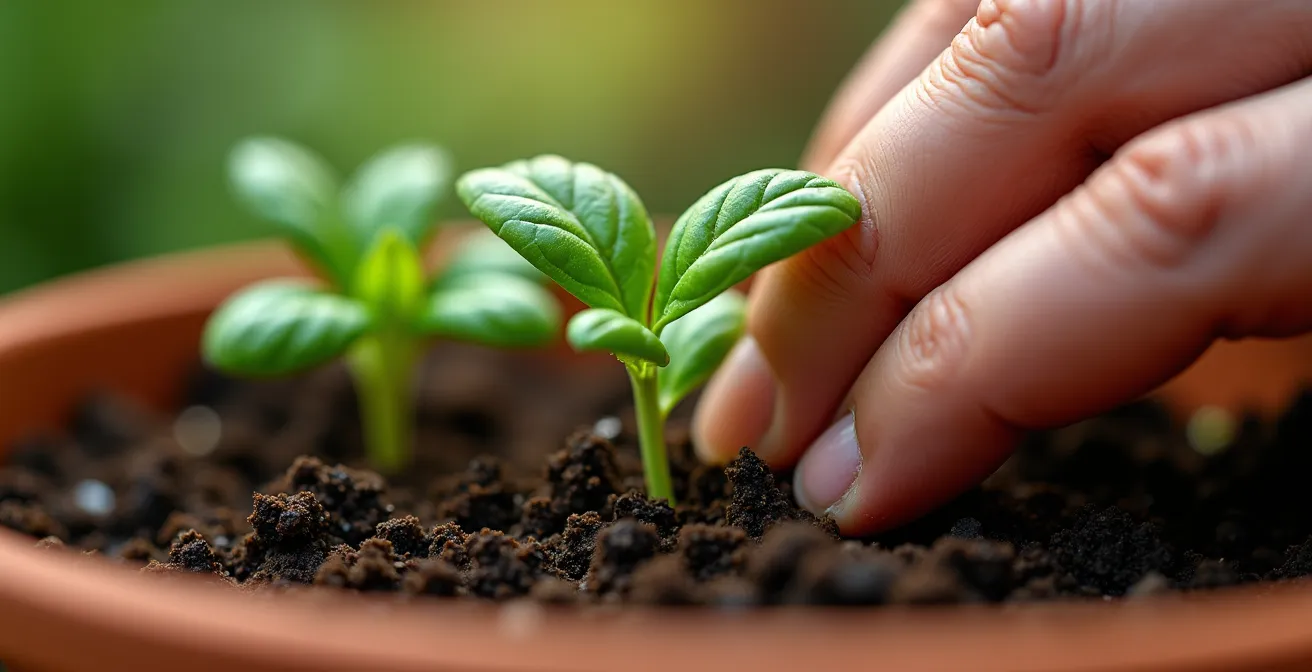
As the image above illustrates, the tactile nature of gardening provides a rich stream of sensory data that purely intellectual pursuits lack. This principle of embodied cognition—the idea that our thinking is deeply intertwined with our physical body and environment—is crucial. The act of physically manipulating the world to achieve a goal creates a much stronger and more complex learning experience than simply manipulating information on a screen.
To help you choose an activity with the right level of cognitive demand, the following matrix compares different skills. As it shows, activities like gardening strike a unique balance between cognitive challenge, physical engagement, and a manageable feedback loop, making them ideal for stimulating neuroplasticity.
This table, based on an analysis of skill attributes, helps visualize why certain activities are more stimulating. A hobby with moderate cognitive demand, a physical component, and a clear feedback loop provides an optimal environment for brain growth, as demonstrated by a comparative analysis of beginner-friendly skills.
| Skill Type | Cognitive Demand | Physical Component | Feedback Speed | Failure Consequence |
|---|---|---|---|---|
| Balcony Gardening | Moderate (planning + problem-solving) | Light-Moderate | Daily-Weekly | Low (replant) |
| Learning Instrument | High (coordination + memory) | Moderate | Immediate | Medium (frustration) |
| Coding | Very High (logic + abstraction) | None | Immediate | Low (debug) |
| Pottery | Moderate (spatial + creative) | High | Delayed (after firing) | Medium (material cost) |
Dancing vs. Sudoku: Which Activity Is Superior for Preventing Dementia?
The debate over the best activities for cognitive health often centers on popular brain games like Sudoku. These puzzles are undeniably beneficial. Research has shown that people who regularly do puzzles have brain function equivalent to someone up to 10 years younger. They excel at targeting specific cognitive domains like logic and reasoning. However, focusing exclusively on one type of mental exercise is like going to the gym and only ever working out your biceps. For holistic brain health, a more diversified approach is far superior.
This is where the concept of a ‘Cognitive Portfolio’ comes into play. Just as a diversified financial portfolio mitigates risk, a diversified portfolio of cognitive activities builds a more resilient brain. The most powerful activities are those that combine multiple types of stimulation at once: cognitive, physical, and social. Consider dancing. It requires learning new steps (memory), moving in time with music (coordination and sensory processing), navigating space (spatial awareness), and often, interacting with a partner (social cognition). This multi-layered engagement creates a much richer and more robust neural workout than the single-domain challenge of a number puzzle.
This perspective is supported by experts in the field. As Dr. Anne Corbett from the University of Exeter Medical School noted in a major study:
We’ve found that the more regularly people engage with puzzles such as crosswords and Sudoku, the sharper their performance is… We can’t say that playing these puzzles necessarily reduces the risk of dementia in later life but this research supports previous findings that indicate regular use of word and number puzzles helps keep our brains working better for longer.
– Dr. Anne Corbett, University of Exeter Medical School Study
The key takeaway is that while puzzles are a valuable part of a brain-health routine, they are not the entire solution. Researchers increasingly emphasize the magnified benefits of combining learning with physical activity. Taking on a skill that has a physical component, like dancing, a new sport, or even the light physical activity of balcony gardening, provides significantly more “bang for your buck” in preventing cognitive decline. The ideal strategy is to build a portfolio of activities that challenge your brain in different ways.
The Duolingo Trap: Why Tapping a Screen Won’t Make You Fluent or Sharp
In our quest for self-improvement, the allure of language-learning apps is powerful. They promise fluency through fun, gamified, bite-sized lessons. While these apps can be excellent tools for vocabulary acquisition, they often lead users into the “Duolingo Trap”: the illusion of learning without the deep cognitive engagement required for true mastery and neuroplastic benefit. The primary issue is the passive, repetitive nature of tapping matching words or filling in blanks. It’s a low-friction activity that quickly becomes automatic, offering diminishing returns for brain growth.
True learning, especially for a complex skill like language, requires active recall and real-world application. You need to pull information from your brain, not just recognize it from a list of options. Furthermore, you must connect the new language to your existing world and use it in a meaningful context. Research on learning methods has consistently shown the power of active engagement. For example, studies on vocabulary acquisition demonstrate that methods requiring active recall and spaced repetition can yield a 25% increase in retention compared to more passive review techniques.
This is where combining a digital tool with a high-friction hobby like balcony gardening can be transformative. Instead of just learning the word for “tomato,” you can use your target language to research tomato plant diseases, label your plant with its new name, and then describe its growth in a journal. This process forces your brain to use the new vocabulary in a practical, problem-solving context, creating much stronger and more durable neural connections.
Action Plan: High-Transfer Activities for Language Learning
- Use your target language to research seed varieties and gardening techniques online.
- Label all your balcony plants with their names in the language you’re learning.
- Join online gardening forums in your target language to ask questions about plant care.
- Watch gardening YouTube tutorials in the target language while working on your balcony.
- Keep a garden journal in your new language, describing daily observations and plant progress.
When to Review: Using Spaced Repetition to Lock In New Skills Forever
Learning something new is only half the battle; the other half is remembering it. Our brains are naturally wired to forget information that isn’t reinforced. This is known as the “forgetting curve.” If you learn a new piece of information and don’t revisit it, your ability to recall it drops exponentially over time. The most effective way to combat this is a scientifically-proven technique called Spaced Repetition System (SRS). The core idea is simple: you review information at increasing intervals, just as you’re about to forget it. This process signals to your brain that the information is important, interrupting the forgetting curve and transferring the knowledge from short-term to long-term memory.
The effectiveness of this method is well-documented. For instance, a study on medical students found that learners who used a spaced repetition app achieved a mean exam score of 70%, whereas those who did not use the method scored only 61%. This seemingly small difference represents a significant leap in long-term retention. This technique is the engine behind many successful learning apps, but the principle can be applied organically to any skill, especially a hands-on one like gardening.
Case Study: Organic Spaced Repetition in Gardening
Applying SRS to gardening doesn’t require a special app; it happens naturally through the lifecycle of the plants. Consider this schedule: On Day 1, you read about companion planting for tomatoes. On Day 3, you watch a video on identifying common pests. On Day 7, you inspect your actual plants and apply this knowledge. Two weeks later (Day 14), you might review your notes and adjust your pest management strategy. This natural spacing of review and application integrates learning directly into the maintenance routine, making the knowledge practical and memorable without feeling like a chore.
This “organic” application of spaced repetition is a form of high-friction learning in itself. It forces you to retrieve information and apply it to a real-world problem, which is the gold standard for creating strong, lasting memories. Instead of cramming information, you are building a scaffold of knowledge over time, with each review strengthening the entire structure. This is how you move from simply knowing a fact to truly understanding a skill.
When to Embrace Grey Hair: The Psychological Shift of Letting Go of Dye
At first glance, the decision to stop dyeing one’s hair may seem unrelated to learning a new skill. However, it represents a profound psychological shift that is deeply connected to the themes of personal growth and self-investment after 40. Choosing to embrace grey hair is often an act of letting go—releasing the need to conform to a specific standard of youthfulness and, in doing so, freeing up significant mental and financial resources. This reallocation of energy is a powerful enabler of new growth.
The effort spent maintaining an appearance can be substantial. It’s not just the time in a salon chair or the money spent on products; it’s the mental energy consumed by worrying about roots, scheduling appointments, and managing the anxiety associated with visible signs of aging. As one psychologist noted:
Letting go of the need to maintain a youthful appearance through hair dye can free up significant mental and financial resources – the average person spends 2-3 hours monthly and $1,500-$3,000 annually on hair coloring.
– Sarah Johnson, Psychology of Aging and Self-Acceptance Study
Imagine redirecting those resources. The time once spent in a salon can become 15 minutes of daily care for a balcony garden. The budget for color treatments can become an investment in quality seeds, tools, and books on horticulture. This is not about “giving up”; it’s about making a conscious choice to invest in a different kind of vitality—one based on acquiring new capabilities rather than preserving a past appearance. It’s a shift from a defensive posture against aging to an offensive strategy for growth and engagement.
This mindset shift can be deliberately structured:
- Calculate your annual hair dye time and cost (which can easily exceed 30 hours and $1,500).
- Redirect that budget toward gardening supplies, quality soil, and learning materials.
- Use the time previously blocked for salon appointments for daily garden observation and care.
- Channel the mental energy from appearance anxiety into the creative challenge of designing your small space.
- Document your garden’s growth as a new, dynamic marker of your identity.
Why Does Spaced Repetition Beat Binge-Learning for Long-Term Retention?
To truly appreciate the power of spaced repetition, it’s essential to understand the science behind why its opposite—binge-learning, or “cramming”—is so ineffective for long-term memory. The answer lies in a fundamental neurological principle: the consolidation of memory. When you first learn something, the memory is fragile, held in the short-term by temporary synaptic connections. For that memory to become stable and long-lasting, it must go through a process of consolidation, where the brain physically reorganizes and strengthens the neural pathways associated with it. This process takes time and, crucially, it happens most effectively during periods of rest and sleep.
Binge-learning overwhelms this system. By flooding your brain with a massive amount of information in a short period, you don’t give your synapses the time they need to consolidate each new piece of knowledge. This leads to what is known as the Ebbinghaus Forgetting Curve, a concept first described in the 19th century. The curve shows that we forget information at an exponential rate. Without reinforcement, you might forget 50% of what you “learned” within an hour and over 70% within a day.
Spaced repetition works by systematically fighting against this natural curve. By re-exposing your brain to the information at the precise moment it’s about to be forgotten, you achieve two things. First, you signal to your brain that this information is important and worth holding onto. Second, each review flattens the forgetting curve, meaning you can wait longer before the next review is needed. Each successful recall strengthens the synaptic connections, making the memory more robust and easier to access in the future. Binge-learning is like trying to build a brick wall by throwing all the bricks into a pile at once; spaced repetition is like laying one brick at a time, letting the mortar set before adding the next layer. The result is a far stronger, more permanent structure.
Key takeaways
- The adult brain retains significant neuroplasticity, but it requires specific, challenging stimuli, not just passive activity.
- A ‘Cognitive Portfolio’ approach, combining physical, creative, and logical tasks, is more effective for preventing cognitive decline than focusing on a single type of puzzle.
- Spaced repetition is a scientifically-backed method to overcome the brain’s natural forgetting curve and cement new skills long-term.
Micro-Learning for Personal Growth: How to Reskill in 15 Minutes a Day
The principles of neuroplasticity and spaced repetition are powerful, but they can seem daunting to a person with a busy schedule. The idea of dedicating hours to a new hobby feels like a luxury many can’t afford. This is where micro-learning becomes a game-changing strategy. Instead of trying to find large, contiguous blocks of time, micro-learning focuses on breaking down a skill into small, 15-minute sessions that can be integrated throughout the day. The key to its success is not the duration of the sessions, but their consistency and strategic timing.
A powerful framework for this is ‘task-energy matching.’ This involves aligning the cognitive demand of a task with your natural energy levels. For most people, energy is highest in the morning, dips after lunch, and is lowest in the evening. By scheduling your micro-learning sessions accordingly, you can maximize your effectiveness without feeling drained. High-energy mornings are perfect for hands-on, high-friction tasks, while low-energy evenings are better suited for passive intake, like watching a tutorial or browsing a forum.

This approach transforms learning from a monolithic task into a series of manageable, almost effortless steps that build on each other. A balcony garden, as pictured above, is not built in a single weekend. It is the result of many small, consistent actions over time—a perfect physical metaphor for the micro-learning process.
Case Study: The Task-Energy Matching Framework
A software developer successfully transitioned to a new field in their spare time using this method. They dedicated their high-energy morning 15 minutes to practicing a core technical skill, used their lunch break for listening to industry podcasts, and spent their low-energy evening time browsing design portfolios for inspiration. By combining these daily 15-minute sessions with a longer deep-dive session on the weekend, they built a new career in six months. The key was consistently matching task difficulty to their daily energy rhythms.
You can apply this same scaffold to learning about gardening:
- Morning (High Energy): Spend 15 minutes physically practicing one new technique, like pruning or pollinating.
- Commute (Low Energy): Listen to a gardening podcast or audiobook.
- Lunch Break (Medium Energy): Spend 15 minutes researching a solution to a current plant problem you’ve noticed.
- Evening (Low Energy): Browse gardening forums or watch video tutorials.
Embracing a new, high-friction skill is one of the most powerful investments you can make in your long-term cognitive well-being. It is a proactive step that goes far beyond passive entertainment, actively building a more resilient and adaptable brain. Start today by choosing one small, manageable action to begin your learning journey.