
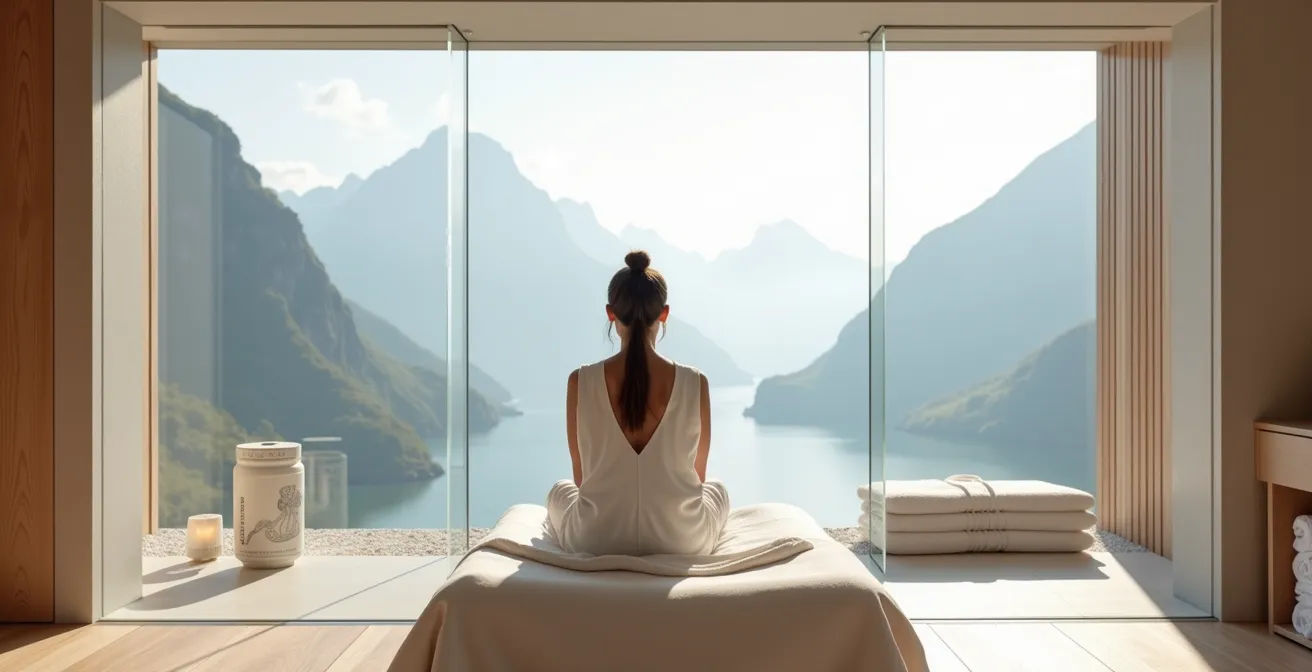
The five-figure price tag for a Swiss wellness retreat is justified only when viewed as an investment in medical-grade diagnostics and clinical efficacy, not as a luxury holiday.
- True value lies in programs that offer preventative medicine and cellular-level treatments, far surpassing standard hotel spa services.
- Lasting benefits depend on structured post-retreat integration and addressing the root causes of burnout, not just its symptoms.
Recommendation: Scrutinize the medical credentials and diagnostic depth of a retreat before committing; the investment pays dividends in long-term health, not short-term relaxation.
For the high-achieving individual, burnout isn’t a possibility; it’s an occupational hazard. The standard two-week vacation, filled with fleeting moments of relaxation, often fails to address the deep-seated physiological and psychological stress that accumulates. You return to the office feeling marginally better, but the underlying exhaustion quickly resurfaces. The allure of a Swiss luxury wellness retreat, with its pristine landscapes and promises of total rejuvenation, presents itself as a more potent solution. But with price tags easily crossing the $5,000 threshold for a single week, a critical question emerges: is this a sound investment in long-term health, or the world’s most expensive pampering session?
The common perception revolves around massages, gourmet healthy food, and serene infinity pools. While these elements are present, they are merely the surface. The real proposition of a top-tier Swiss retreat lies in a fundamental shift from hospitality-grade wellness to medical-grade intervention. This isn’t about escaping work; it’s about systematically rebuilding your capacity to perform. The true value isn’t measured in the thread count of the sheets, but in the depth of the diagnostics, the credentials of the medical staff, and the scientifically validated protocols designed to address burnout at a cellular level.
This analysis moves beyond the glossy brochures to deconstruct the clinical efficacy and psychological return on investment (ROI) that these institutions claim to offer. We will dissect the difference between a medical detox and a spa weekend, evaluate competing therapeutic modalities, and provide a framework for spotting pseudo-scientific “guru” traps. By understanding the underlying mechanics of these programs, you can determine if the substantial financial outlay translates into a tangible and lasting strategic advantage for your health and performance.
To help you navigate this complex decision, this guide breaks down the essential components that determine the true value of a Swiss wellness retreat. We will explore the medical foundations, the psychological benefits, and the practical strategies for ensuring the results last long after you’ve checked out.
Table of Contents: A Critical Look at Swiss Wellness Investments
- Why A Medical Spa Detox Is Different From A Hotel Massage Weekend
- How To Overcome The Fear Of Dining Alone At A Wellness Resort?
- Thalassotherapy Vs Ayurveda: Which Modality Fixes Chronic Fatigue?
- The ‘Guru’ Trap: How To Spot Cult-Like Behavior In Wellness Retreats
- How To Maintain The ‘Retreat Glow’ Once You Return To The Office
- The ‘Just Breathe’ Trap: When Mindfulness Masks Burnout Symptoms
- The Slum Tour Mistake: Why Gawking At Poverty Is Not Cultural Exchange
- The Psychology Of Stays: Why Sleeping In A Treehouse Fixes Burnout?
Why A Medical Spa Detox Is Different From A Hotel Massage Weekend
The primary justification for the premium price of a Swiss wellness retreat lies in the distinction between hospitality and healthcare. A luxury hotel offers comfort and temporary relief; a medical spa delivers a clinical diagnosis and a targeted treatment plan. The former is a pleasant escape, while the latter is a strategic investment in preventative health. The difference is tangible, moving beyond generic “detox” marketing to incorporate rigorous medical science. As Simone Gibertoni, CEO of Clinique La Prairie, points out, these institutions are a “pioneering combination of exceptional healthcare and wellness,” a philosophy backed by decades of expertise in longevity.
This medical-first approach is evident in the scale and specialization of the facilities. For instance, the renowned Chenot Palace Weggis features a medical spa facility spanning 5,000 square metres, a space dedicated to advanced diagnostics and therapies, not just massage rooms. Here, a “detox” program isn’t about drinking green juice; it’s a comprehensive protocol based on medical assessment. Consider the Waldhotel Health & Medical Excellence’s 7-Day Detox Pro program. Starting at US$6,100, it includes a battery of medical examinations, functional movement screens, cryotherapy sessions, and even a colon cleanse, all administered by a medical team within a 45,000-square-foot medical center. This is not a menu of spa services you can pick from; it’s a prescribed regimen designed to produce a measurable physiological outcome.
The core value proposition is the shift from treating symptoms (feeling tired) to addressing root causes (cellular inflammation, hormonal imbalance). A hotel massage can ease muscle tension for a day, but a medical detox program aims to reset your body’s systems for lasting resilience. It’s the difference between a cosmetic touch-up and a fundamental engine overhaul. This clinical depth is the non-negotiable factor that begins to justify the significant financial outlay.
How To Overcome The Fear Of Dining Alone At A Wellness Resort?
For many high-powered individuals accustomed to business lunches and social dinners, the prospect of dining alone at a wellness retreat can be surprisingly daunting. It can trigger feelings of isolation or self-consciousness, detracting from the very peace one is seeking. However, in the context of a medical-grade Swiss retreat, reframing mealtimes is the key. These are not social occasions; they are a prescribed part of your personalized treatment protocol. Your meals are often meticulously designed by nutritionists based on your specific medical results, making each course a dose of targeted medicine.
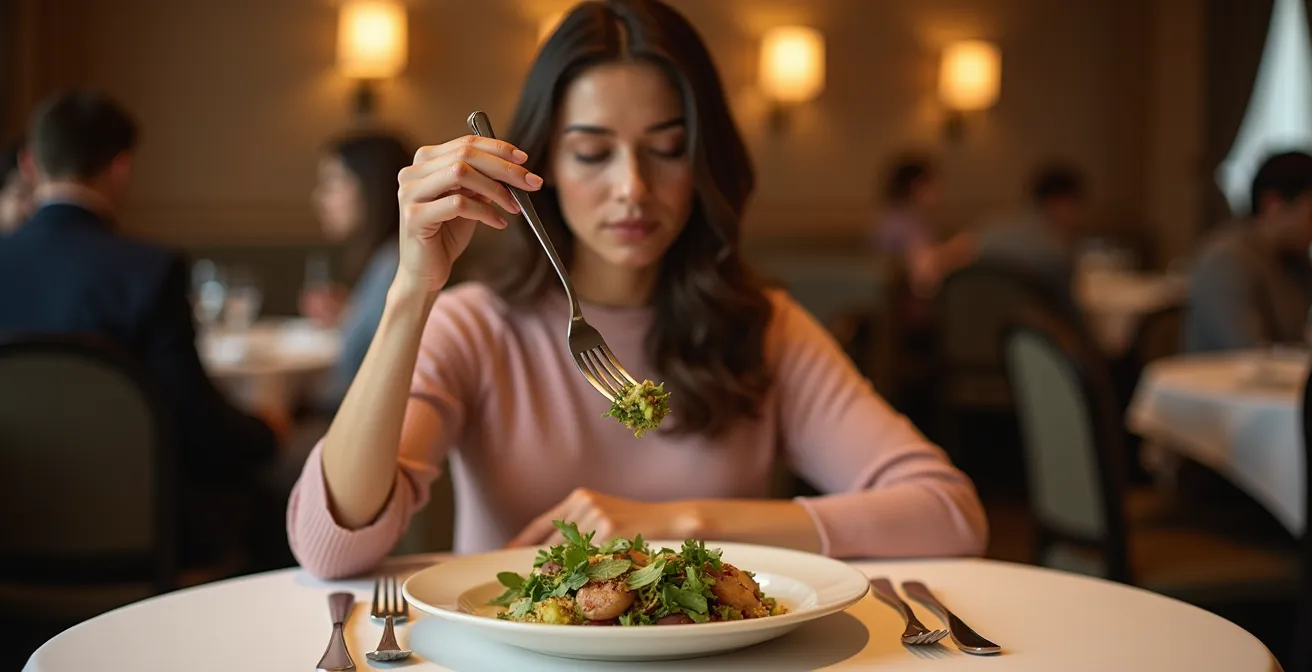
Viewing dining through this clinical lens transforms the experience from a social challenge into an opportunity for mindful practice. It becomes a time to focus on the textures and flavors of the food, to eat slowly, and to be present—an act of self-care rather than a performance of sociability. You’ll quickly notice that most other guests are equally focused on their own journeys. They are not observing you; they are immersed in their own process of healing and reflection. This shared purpose creates an atmosphere of mutual respect and privacy, even in a communal dining room.
Action Plan: Mastering Solo Dining with Confidence
- Plan Strategically: Request a schedule delivered to your room each evening, allowing you to plan your dining times for when you feel most comfortable.
- Leverage the Concierge: Connect with your dedicated concierge. They can make reservations at quieter tables or suggest optimal times to avoid feeling overwhelmed.
- Focus on the Prescription: Remind yourself that you are following a personalized nutrition program. The meal is a critical component of your medical treatment.
- Shift Your Mindset: Actively view mealtimes as a part of your wellness therapy, not as social events requiring interaction. This removes the pressure to “network.”
- Observe the Environment: Notice that other guests are engrossed in their own wellness journeys. The focus is internal, not external, fostering a sense of private community.
Thalassotherapy Vs Ayurveda: Which Modality Fixes Chronic Fatigue?
When selecting a retreat to combat chronic fatigue, the choice of therapeutic modality is paramount. Swiss retreats often specialize in distinct, powerful philosophies, with Thalassotherapy and Ayurveda being two prominent examples. They approach healing from opposite directions: Thalassotherapy works from the outside-in, while Ayurveda works from the inside-out. Thalassotherapy, rooted in Greek and Roman traditions, uses the therapeutic properties of seawater, thermal spring water, and mineral-rich mud to correct external deficiencies. The body absorbs essential minerals, which is believed to reduce inflammation and rebalance the system.
Ayurveda, an ancient Indian system of medicine, operates on the principle of correcting internal imbalances. It begins with identifying an individual’s unique constitution, or “dosha,” and then creates a highly personalized program of diet, herbal treatments, and specific massage techniques to restore equilibrium. It is a holistic system that sees fatigue not as an isolated symptom, but as a sign of a deeper systemic disharmony. The choice between them depends on your belief in the source of your ailment: a lack of external resources or a disruption of internal processes. The following table breaks down their core differences in the Swiss context.
This choice often comes down to a philosophical preference between external intervention and internal rebalancing. As noted in a candid observation from Swiss Airlines Magazine on these high-end retreats, the significant cost itself can be a psychological component of the healing process.
| Modality | Philosophy | Key Treatments | Swiss Retreat Example | Price Range |
|---|---|---|---|---|
| Thalassotherapy | External deficiency correction through mineral absorption | Thermal spring water treatments, seaweed wraps, mineral baths | Grand Resort Bad Ragaz (180-year tradition) | CHF 5,000-15,000/week |
| Ayurveda | Internal imbalance correction through holistic approach | Dosha analysis, customized nutrition, herbal treatments, massage | Clinique La Prairie Ayurvedic programs | CHF 10,000-35,000/week |
Ever since Sigmund Freud, psychoanalysts have argued that health seekers will not get better unless they pay for their treatment.
– Swiss Magazine, Swiss Airlines Magazine on Wellness Retreats
The ‘Guru’ Trap: How To Spot Cult-Like Behavior In Wellness Retreats
The wellness industry is unfortunately rife with charismatic “gurus” who promote unproven theories and foster environments with cult-like dynamics. The exorbitant cost of a retreat does not guarantee its scientific legitimacy. A key differentiator of premier Swiss institutions is their grounding in regulated, evidence-based medicine, which provides a bulwark against this “guru trap.” The value you’re paying for is not just the therapy, but the professional and ethical framework in which it is delivered. A legitimate medical spa operates like a hospital, not an ashram.

The most reliable way to vet a retreat is to look for the hallmarks of a regulated medical facility. For example, leading clinics like Clinique La Prairie operate under strict Swiss regulations. They employ over 50 licensed medical specialists, maintain hospital-grade standards, and base their programs on principles of preventative medicine, not spiritual doctrine. Crucially, all treatments require informed consent and prior medical evaluation. There is a clear boundary between staff and guests, with no pressure to adopt a specific belief system or personality-driven ideology. In contrast, red flags for a guru-led program include a lack of transparent medical credentials, an over-reliance on a single charismatic leader, pressure to isolate from outside contact, and promises of “secret knowledge” or miraculous cures.
Case Study: Swiss Medical Regulation as a Safeguard
Clinique La Prairie exemplifies the legitimate medical wellness model. It operates as a licensed medical center, employing over 50 specialists. Before any program begins, guests undergo a transparent medical evaluation. All treatments, grounded in preventative medicine, require informed consent. This contrasts sharply with guru-led retreats by ensuring professional boundaries are maintained and that all practices are medically cleared, protecting the guest from unsubstantiated claims and potentially harmful practices.
How To Maintain The ‘Retreat Glow’ Once You Return To The Office
The most significant risk of a high-cost wellness retreat is that its benefits will evaporate upon re-entry into your high-stress environment. The “retreat glow” can fade within days if there isn’t a structured plan for integration. This is where the ROI of a truly elite program becomes apparent. It’s not just about the week you spend there; it’s about the tools and support systems provided to ensure the changes stick. The goal is not a temporary detox, but a permanent lifestyle architecture upgrade. This is why many leading programs have stringent duration recommendations to ensure habits are properly formed before departure.
For example, some exclusive programs like those offered by Privé-Swiss understand that deep-seated patterns can’t be unwound in a few days. The fact that wellness experts at Privé-Swiss recommend a 2-4 weeks minimum stay underscores their focus on lasting change rather than a quick fix. A superior retreat arms you with a concrete integration protocol. This often includes scheduling “buffer days” between the end of the retreat and your return to work to ease the transition shock. Rather than attempting a complete, and often overwhelming, lifestyle overhaul, the focus is on implementing one or two micro-habits at a time, such as a 10-minute morning meditation or a specific dietary change.
Furthermore, the best programs extend their support beyond your stay. They facilitate follow-up consultations (often via secure messaging apps like WhatsApp) with your wellness team and provide access to online communities for ongoing accountability. This continuous support system is a critical component of the value proposition. Creating home spa rituals using products from the retreat can also maintain a powerful sensory connection to the feelings of calm and well-being. Ultimately, maintaining the glow requires viewing the retreat as the beginning of a process, not the end, and scheduling periodic “maintenance” visits to reinforce the learnings.
The ‘Just Breathe’ Trap: When Mindfulness Masks Burnout Symptoms
In the mainstream wellness narrative, mindfulness and breathing exercises are often presented as a panacea for stress and burnout. While these are valuable tools, they can also become a dangerous trap. The “Just Breathe” approach often focuses on managing the *symptoms* of burnout—anxiety, racing thoughts, irritability—without ever addressing the underlying physiological causes. For a high-net-worth individual dealing with chronic, high-stakes pressure, masking these symptoms can be counterproductive, allowing the root problems to fester and worsen. A top-tier Swiss medical spa understands this distinction and avoids this superficial trap.
The philosophy is not to simply manage stress, but to eliminate it at its source. This requires a deep, evidence-based diagnostic approach. For example, a program like Clinique La Prairie’s is explicitly designed to go beyond mindfulness. As highlighted in a review of their advanced programs that cost between CHF 5,000-35,000, their method involves comprehensive health mapping, advanced individual screening, and even genetic testing to identify the specific cellular and systemic drivers of burnout. It’s the difference between turning down the volume on a fire alarm versus actually putting out the fire.
The USP of Clinique La Prairie is that everything is based on medical evidence, and for that reason they do not prescribe colonics or fasting and instead believe that a more natural, probiotic and balanced approach provides longer term benefits.
– Dr. Magali Flot, Head of Detox Programme at Clinique La Prairie
This quote from a leading expert perfectly encapsulates the ethos: long-term benefits derived from medical evidence, not trendy but unproven practices. When you are paying a premium, you are paying for this level of diagnostic depth. Mindfulness becomes a complementary tool used in conjunction with targeted medical interventions, not a standalone solution. The investment is in a strategy that rebuilds your physiological resilience from the ground up, making you less susceptible to burnout in the first place.
The Slum Tour Mistake: Why Gawking At Poverty Is Not Cultural Exchange
The concept of ethical tourism is a crucial consideration for any discerning traveler. The “slum tour” phenomenon, where tourists gawk at poverty under the guise of cultural exchange, represents the pinnacle of exploitative travel. In stark contrast, the Swiss luxury wellness model, when executed correctly, exemplifies a form of sustainable and contributive tourism. The high price tag, rather than being purely extractive, is reinvested into a system that values quality of life, environmental stewardship, and local economic stability. Switzerland’s consistent high ranking in global quality-of-life surveys is not accidental; it’s the result of a culture that prioritizes sustainable practices.
Unlike transient, low-budget tourism that can strain local resources, elite wellness retreats are deeply integrated into their communities. They are significant local employers, providing stable, high-quality jobs. Many, like those in the historic spa town of Bad Ragaz with its 180-year thermal bath tradition, are custodians of local heritage, preserving it for future generations. They prioritize sourcing ingredients from regional farmers, directly supporting the local agricultural economy. This creates a symbiotic relationship where the retreat’s success is tied to the prosperity and health of the surrounding community.
Furthermore, these facilities are held to some of the world’s strictest environmental regulations. Many, like the Waldhotel, are built with sustainability-driven operations and locally sourced materials, minimizing their ecological footprint. For the guest, choosing a retreat with transparent community engagement policies and verifiable sustainability reports ensures that their investment is not only healing for themselves but also beneficial for the local ecosystem and economy. It transforms a personal health journey into an act of responsible global citizenship, the absolute antithesis of the gawking slum tourist.
Key Takeaways
- The value of a Swiss retreat is in its clinical diagnostics and medical staff, not just its luxury amenities.
- True ROI is measured by long-term habit integration and physiological change, not temporary relaxation.
- Scrutinize retreats for evidence-based practices and transparent medical credentials to avoid “guru” traps and superficial wellness trends.
The Psychology Of Stays: Why Sleeping In A Treehouse Fixes Burnout?
The question isn’t literally about treehouses, but about the profound psychological impact of unique, elevated environments. Why does being physically removed from your daily life in a novel setting feel so restorative? The answer lies in cognitive psychology. Staying in a place that is dramatically different from your norm—be it a metaphorical “treehouse” or a resort perched 450 meters above a lake—creates what psychologists call “cognitive distance.” This physical and symbolic elevation helps you detach from persistent stressors and view your problems with greater clarity and perspective.
Case Study: The Elevated Experience at Bürgenstock Resort
Perched high above Lake Lucerne, the Bürgenstock Resort’s Waldhotel is a prime example of environmental psychology in action. Its rooms offer panoramic Alpine views from 450 meters above the lake, combining the psychological impact of elevation with the calming effects of being surrounded by forest. The journey to the resort itself, via a funicular, becomes a therapeutic ritual, symbolically lifting guests above their daily stressors. The resort leverages this unique setting with treatments like the IceLab cryotherapy chamber and forest-view meditation spaces, proving that the architecture and location are integral parts of the healing, not just a backdrop.
This experience is amplified by the “peak-end rule,” a cognitive bias where we disproportionately remember the most intense point (the “peak”) and the final moment (the “end”) of an experience. A unique stay creates a powerful, positive peak memory. As one analysis by Health Travel on Swiss wellness notes, this “creates a stronger, more lasting memory…that serves as a mental resource long after the trip.” When you’re back in the office facing a stressful situation, you can mentally access this powerful memory of serenity and perspective, which acts as an internal buffer against stress. You’re not just paying for the room; you are investing in the creation of a durable psychological anchor.
Therefore, the unusual architecture or dramatic location of a retreat is not a gimmick. It is a deliberate therapeutic tool designed to maximize the psychological ROI of your stay, creating a mental reset that is far more profound and lasting than one from a conventional luxury hotel.
To determine if the investment is right for you, the next logical step is to conduct a frank self-assessment of your health goals and match them against the clinical offerings and philosophical approaches of your shortlisted retreats.
Frequently Asked Questions About Luxury Wellness Retreats In Switzerland: Are They Worth The $5,000 Price Tag?
How do Swiss wellness retreats contribute to local communities?
Many Swiss wellness retreats employ local staff, source ingredients from regional farmers, and are custodians of local heritage, preserving historic spa towns like Bad Ragaz which has a 180-year thermal bath tradition. This creates a stable, high-quality economic contribution.
What environmental standards do Swiss luxury spas maintain?
Swiss spas are required to comply with stringent national environmental regulations. Many facilities, such as the Waldhotel, feature sustainability-driven operations, from construction with locally-sourced materials to energy-efficient daily practices, minimizing their ecological footprint.
How can guests ensure their wellness tourism supports ethical practices?
To ensure your investment is ethical, choose retreats with transparent ownership structures that are clear about where the money goes. Prioritize facilities with verified medical credentials, published sustainability reports, and clear policies on community engagement and local sourcing.