

The debate isn’t about choosing retinol over hyaluronic acid; it’s about understanding their distinct cellular missions. Retinol is the architect, rebuilding your skin’s foundation by accelerating cell turnover. Hyaluronic acid is the support system, providing the critical hydration needed for those rebuilding processes to succeed. True anti-aging success comes not from a duel between ingredients, but from a strategic alliance where each is deployed correctly to maximize its biological function.
In the crowded landscape of skincare, two ingredients consistently dominate the conversation on aging: retinol and hyaluronic acid. You’ve been told one is for wrinkles and the other for hydration, a simplistic binary that fuels confusion and often leads to misuse. Many users, frustrated by marketing jargon, invest in potent formulas only to experience irritation or lackluster results, wondering where they went wrong. They follow the basic advice—layering products and hoping for the best—without grasping the fundamental science at play.
But what if the key to unlocking their true potential wasn’t in choosing a “winner” or simply applying them together? What if the secret lies in understanding *how* they function at a cellular level and *why* their timing and combination are so critical? The common approach of just layering ingredients overlooks crucial biochemical interactions, like pH levels and cellular processes, that can render your expensive serums ineffective or, worse, damage your skin barrier.
This article moves beyond the surface-level advice. We will dissect the mechanisms of action for each of these powerhouse ingredients. We’ll explore the science behind the dreaded “retinization” phase, provide a safe protocol for graduating to stronger retinoids, and reveal the critical mistakes made when combining actives. By understanding the ‘how’ and ‘why’, you can finally build an intelligent, effective routine that respects your skin’s biology and delivers real, visible, anti-aging results.
This comprehensive guide breaks down the science into actionable strategies. Below, we’ll explore everything from the cellular mechanics of peeling to creating a perfectly timed, multi-night cycle for your most powerful ingredients.
Summary: The Definitive Guide to Using Retinoids and Hydrators for Anti-Aging
- Why Does Retinol Cause Peeling Before It Reveals Better Skin?
- How To Transition From Retinol To Tretinoin Without Burning Your Face?
- L-Ascorbic Acid Vs Sodium Ascorbyl Phosphate: Which Brightens Sensitive Skin?
- The Exfoliation Error: What Happens When You Mix Glycolic Acid And Retinol
- How To Cycle Your Actives Over 4 Nights For Maximum Tolerance
- How To Repair A Damaged Skin Barrier Within 21 Days Without Steroids?
- When To Test: Which Blood Markers Actually Predict Biological Age?
- Turmeric For Inflammation: What Clinical Studies Actually Say About Dosage?
Why Does Retinol Cause Peeling Before It Reveals Better Skin?
The initial peeling, redness, and dryness that often accompany a new retinol regimen is a misunderstood but crucial process known as retinization. It’s not an allergic reaction, but rather a sign that the ingredient is actively remodeling your skin at a cellular level. Retinol works by binding to receptors in your skin cells, signaling them to behave more like their younger, healthier versions. This triggers a significant increase in the rate of cellular turnover, pushing old, dull, and damaged cells to the surface to be shed more quickly.
This accelerated shedding is what you experience as flaking or peeling. Simultaneously, the retinoid is stimulating the production of new collagen and encouraging skin cells to divide more rapidly. This helps build up a stronger, more protective epidermal layer over time. The initial irritation is the temporary side effect of this intense cellular “boot camp.”
Clinical Observations on the Retinization Phase
In a review of clinical observations at Stanford, dermatologist Dr. Zakia Rahman documented this exact process. The research highlights that retinoids work by encouraging skin cells to divide more quickly, which ultimately thickens and reinforces the protective epidermis. However, this initial period of adaptation commonly causes side effects like redness, dry and scaly skin, and itching. According to Stanford Medicine’s insights, this retinization phase typically lasts for about three to four weeks as the skin acclimates to the accelerated cell turnover rate. During this time, the skin also shows increased sensitivity to UV light, a factor that subsides after a few months of consistent use.
Understanding this process is key. The peeling is a temporary phase that precedes the reward: smoother texture, fewer fine lines, and a more even skin tone. Pushing through this period with proper hydration and sun protection allows the skin to complete its transformation and reveal the healthier layer beneath.
How To Transition From Retinol To Tretinoin Without Burning Your Face?
Graduating from over-the-counter retinol to prescription-strength tretinoin is a significant step up in potency, and it requires a strategic, patient approach to avoid overwhelming your skin. Tretinoin is the active form of Vitamin A that your skin can use directly, whereas retinol must first be converted. This makes tretinoin far more powerful—and potentially more irritating. The goal is to build your skin’s tolerance systematically, not shock it into a state of inflammation.
The transition should only begin after your skin has been fully “retinized” from consistent, nightly use of a high-strength OTC retinol for at least 6 to 12 months without irritation. This ensures your skin has already built up the necessary cellular machinery to handle a more potent retinoid. As expert dermatologists advise, listening to your skin is paramount.
My skin has been ‘retinized’ for decades since my twenties and tolerates high-potency retinoids well. But remember that the key to success with a retinol is to start low and slow. Listen to your skin as you increase the potency as tolerated.
– Dr. Linda Honet, MD, NewBeauty dermatologist survey
A proven method is the “low and slow” protocol. This involves using the lowest concentration of tretinoin (typically 0.025%) just a couple of nights a week, buffered with a heavy moisturizer, and gradually increasing the frequency as your skin adapts over several months. This measured approach minimizes the risk of a compromised skin barrier.
- Start with retinol twice a week for 4-6 weeks to establish initial tolerance.
- After cleansing, dry your face and wait 20-30 minutes before applying the retinoid to reduce the risk of irritation.
- Use only a pea-sized amount for the entire face to prevent over-application and sensitivity.
- Apply your retinoid first to clean, dry skin, then layer a hyaluronic acid serum for hydration, followed by a moisturizer to lock it in.
- Once your skin tolerates retinol nightly (which may take 6-12 months), consult a dermatologist for a tretinoin prescription, starting at the lowest concentration (0.025%) and repeating the slow introduction process.
L-Ascorbic Acid Vs Sodium Ascorbyl Phosphate: Which Brightens Sensitive Skin?
While retinol and hyaluronic acid are pillars of an anti-aging routine, Vitamin C is the cornerstone for daytime antioxidant protection and brightening. However, not all Vitamin C is created equal, and choosing the wrong form can be a disaster for sensitive skin. The two most common forms, L-Ascorbic Acid (L-AA) and Sodium Ascorbyl Phosphate (SAP), have vastly different properties rooted in their chemical stability and pH levels.
L-Ascorbic Acid is the purest, most potent form of Vitamin C. It is highly effective at neutralizing free radicals and boosting collagen production, but it comes with two major drawbacks: it is notoriously unstable and must be formulated at a very low pH (around 3.5) to be effective. This high acidity is often the culprit behind the stinging and redness that sensitive skin types experience. For L-AA to work, it has to be a bit aggressive.
This is where Sodium Ascorbyl Phosphate comes in as the gentler, more stable alternative. SAP is a derivative that converts to ascorbic acid once absorbed by the skin. It is formulated at a more neutral pH (around 6-7), which is much closer to the skin’s natural pH. This makes it significantly less irritating and an ideal choice for those with sensitive or reactive skin who still want the brightening and antioxidant benefits of Vitamin C without the discomfort.
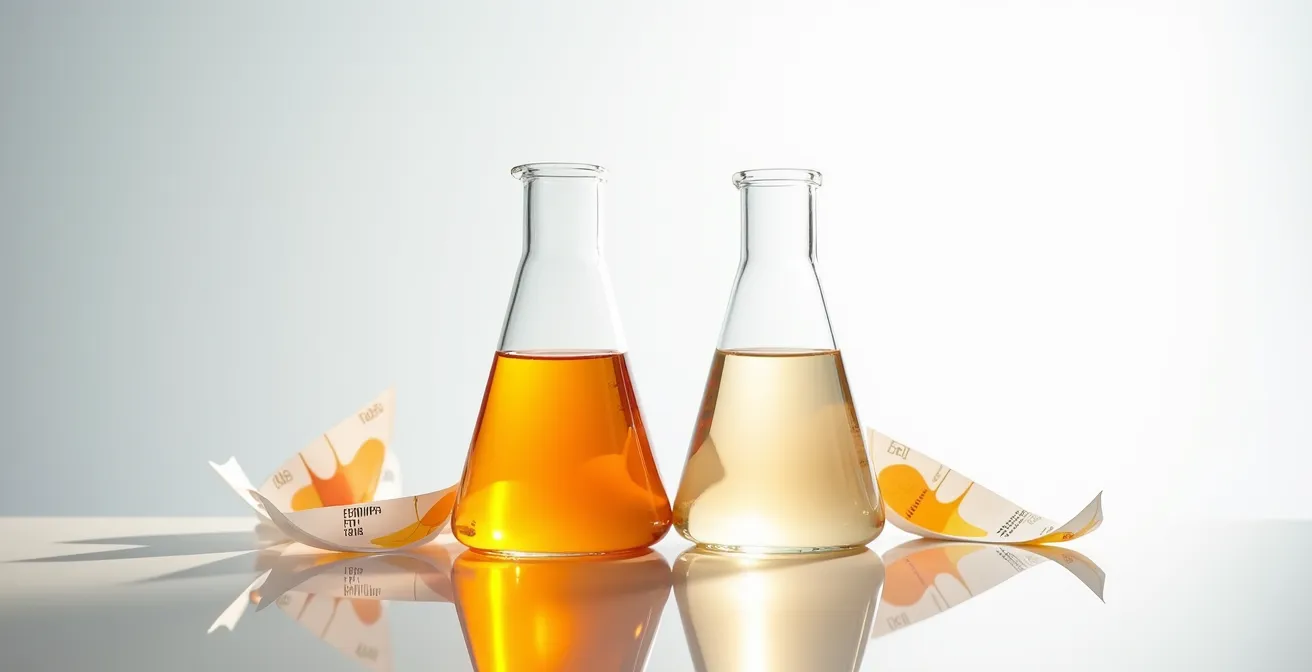
As the visual contrast suggests, the choice isn’t just about effectiveness but about compatibility. While L-AA offers potent, fast results for tolerant skin, SAP provides a steadier, more comfortable path to a brighter complexion for those who are easily sensitized. For sensitive skin, the stability and gentleness of SAP make it the superior long-term choice for daily use.
The Exfoliation Error: What Happens When You Mix Glycolic Acid And Retinol
One of the most common and damaging mistakes in an advanced skincare routine is mixing exfoliants like glycolic acid (an AHA) with retinol in the same application. While both are celebrated for their ability to refine skin texture and combat aging, using them together can lead to significant irritation and, more importantly, can render one or both ingredients ineffective. This isn’t just about over-exfoliation; it’s a matter of basic chemistry and pH-driven inactivation.
Glycolic acid works best in a low-pH environment, which is necessary for it to effectively dissolve the “glue” holding dead skin cells together. Retinol, on the other hand, requires a more neutral pH (around 5.5-6.0) for the enzymes in your skin to convert it into its active form, retinoic acid. When you apply a low-pH acid right before or with your retinol, you alter the skin’s surface environment. This acidic shift can disrupt the enzymatic conversion process, significantly reducing retinol’s efficacy. You’re essentially preventing it from doing its job.
Dermatologist Protocol on Separating Actives
The importance of separating these actives is a core principle in dermatological practice. For instance, Dr. Daniel Sugai’s clinical practice demonstrates a protocol where retinol and lactic acid (another AHA) are strictly used on alternate nights. This separation strategy prevents the pH clash that can reduce retinol’s conversion efficiency. His protocol further reserves Vitamin C for morning use only, keeping all three key actives in their own optimal environments to maximize benefits and minimize irritation. This thoughtful scheduling ensures each ingredient can perform at its peak without chemical interference from another.
The solution isn’t to abandon one ingredient for the other. It’s to give each of them their own time to shine. By alternating nights—using your acid exfoliant one night and your retinol the next—you allow each product to work in its ideal pH environment. This strategic separation not only prevents irritation and a compromised skin barrier but ensures you receive the full, unadulterated benefits of both powerful ingredients.
How To Cycle Your Actives Over 4 Nights For Maximum Tolerance
For those looking to incorporate multiple powerful actives like retinoids and chemical exfoliants without compromising their skin barrier, “skin cycling” is the ultimate strategic framework. Popularized by dermatologists, this method involves rotating your evening products over a four-night cycle, ensuring you get the benefits of your actives while building in crucial recovery time. It’s a proactive approach to prevent irritation before it starts, allowing for consistent, long-term use of potent ingredients.
The logic is simple: instead of bombarding your skin with actives every single night, you create a rhythm of treatment and recovery. This gives your skin the time it needs to process the active ingredients, repair itself, and build resilience. The star of the recovery nights is often hyaluronic acid, which draws in moisture and supports the skin barrier, preparing it for the next active night. This cycle is the key to achieving maximum results with minimum inflammation.
A typical and highly effective skin cycling protocol looks like this:
- Night 1: Exfoliation. After cleansing, apply a chemical exfoliant (like an AHA or BHA). This removes dead skin cells and preps your skin for the next night’s treatment. Follow with a simple moisturizer.
- Night 2: Retinoid. This is the night for your retinol or tretinoin. Apply it to clean, dry skin to maximize its efficacy in stimulating collagen and cell turnover. Follow with your moisturizer.
- Night 3: Recovery. No actives. Focus on replenishing your skin. After cleansing, apply hydrating serums rich in ingredients like hyaluronic acid, followed by a nourishing, barrier-repairing moisturizer.
- Night 4: Recovery. Repeat the same protocol as Night 3. This second recovery night is vital, especially for beginners or those with sensitive skin, to ensure the skin barrier is fully restored.
After Night 4, you simply repeat the cycle. This structured approach allows you to use powerful ingredients consistently and safely, transforming your skin not by force, but by a smart, sustainable strategy that works with your skin’s natural biology.
How To Repair A Damaged Skin Barrier Within 21 Days Without Steroids?
A damaged skin barrier—often the result of over-exfoliation, incorrect use of actives, or environmental stress—manifests as redness, tightness, peeling, and sensitivity. Repairing it is not about finding a quick fix but about creating an environment where your skin can heal itself. This process hinges on two principles: removing all potential irritants and providing the skin with the building blocks it needs to rebuild. This can typically be achieved within the skin’s natural 21 to 28-day turnover cycle, without resorting to topical steroids.
The first step is a complete “routine reset.” This means stopping all active ingredients: retinoids, vitamin C, and exfoliating acids. Your routine should be pared back to the absolute basics: a gentle, pH-balanced cleanser, a barrier-repairing moisturizer, and a broad-spectrum sunscreen during the day. This removes the stressors and gives your skin the peace it needs to begin the repair process. This healing timeline is similar to the adaptation period for new treatments; dermatologists note it can take anywhere from six weeks to three months to start seeing results from retinol, and barrier repair follows a similar path of gradual improvement.
The second step is to actively support the barrier with the right ingredients. Here, hyaluronic acid is a hero, but it is not enough on its own. It acts as a powerful humectant, drawing water into the skin, but that moisture needs to be locked in. This is where barrier-mimetic ingredients are crucial.
The Power of Barrier-Mimetic Ingredients
Clinical research has shown that hyaluronic acid can hold up to 1,000 times its weight in water, making it a cornerstone of any hydration strategy. However, for true barrier repair, it must be combined with ingredients that replicate the skin’s natural lipid structure. Studies demonstrate that a specific combination of ceramides, cholesterol, and fatty acids—ideally in a 3:1:1 ratio—is most effective at restoring barrier function. This cocktail effectively patches the “holes” in a compromised barrier, allowing the skin’s natural 21-day turnover cycle to rebuild a healthy, resilient structure from within, often eliminating the need for short-term fixes like steroids.
Action Plan: Auditing Your Skin Barrier Health
- Points of Contact: List every single product that touches your face, including cleansers, serums, moisturizers, masks, and sunscreens.
- Collecte & Inventory: For each product, identify the key active ingredients (e.g., retinol, glycolic acid, L-ascorbic acid) and potential irritants (e.g., fragrance, denatured alcohol).
- Coherence Check: Compare your product list to a barrier-safe routine. Are you using multiple exfoliants or actives daily? Is your moisturizer rich in ceramides, cholesterol, or fatty acids?
- Mémorabilité & Emotion: Assess how your skin feels. Note any signs of distress like tightness after cleansing, persistent redness, or stinging when applying products. This is your skin’s direct feedback.
- Plan of Integration: Create a 21-day “barrier reset” plan. Strip your routine down to a gentle cleanser, a barrier-repair serum/moisturizer, and SPF. Plan to re-introduce actives one by one, slowly, after this healing period.
When To Test: Which Blood Markers Actually Predict Biological Age?
While topical treatments like retinol and hyaluronic acid address the visible signs of aging on the skin, the concept of “biological age” goes deeper, reflecting our health at a cellular and systemic level. It’s a measure of how well our bodies are functioning, independent of our chronological age. Scientists are increasingly identifying specific blood markers that can offer clues to our biological age, and many of these are directly linked to the processes we try to influence with our skincare.
One of the most significant changes reflected in both skin and blood work is chronic inflammation. Markers like C-reactive protein (CRP) can indicate a level of systemic inflammation that accelerates aging processes throughout the body, including the breakdown of collagen in the skin. Similarly, markers related to metabolic health, such as HbA1c (glycated hemoglobin), reveal how well our body manages sugar. High levels of glycation lead to the formation of Advanced Glycation End-products (AGEs), which stiffen collagen and elastin fibers, leading directly to wrinkles and loss of elasticity.
Another key aspect of biological aging visible in the skin is the decline of essential molecules. The very components we apply topically, like hyaluronic acid, also diminish internally. In fact, key biological aging markers show that by age 50, skin contains approximately 50% less hyaluronic acid compared to levels in the twenties. This internal depletion mirrors the external signs of volume loss and dryness, highlighting the connection between systemic health and skin appearance.
While there is no single “aging test,” a panel that includes markers for inflammation (hs-CRP), metabolic health (HbA1c, fasting insulin), and nutrient levels (like Vitamin D) can provide a powerful snapshot of your body’s internal state. Consulting with a physician to interpret these markers can help you make targeted lifestyle and dietary changes that support healthy aging from the inside out, making your topical skincare routine even more effective.
Key Takeaways
- Retinol’s initial peeling (retinization) is a necessary phase of cellular remodeling that precedes visible improvement.
- A successful skincare strategy relies on separating actives with conflicting pH requirements, such as using acids and retinoids on alternate nights.
- Skin cycling—a 4-night rotation of exfoliation, retinoid application, and recovery—is the key to using potent ingredients safely and effectively long-term.
Turmeric For Inflammation: What Clinical Studies Actually Say About Dosage?
The conversation around anti-aging is increasingly moving beyond just topical products to include the impact of systemic inflammation. As we’ve seen, ingredients like retinol can induce a temporary, localized inflammatory response in the skin. Managing your body’s overall inflammation levels through diet and supplementation can be a powerful complementary strategy to support your skin’s health and resilience, especially when using potent actives.
Turmeric, and its active compound curcumin, has been extensively studied for its potent anti-inflammatory properties. Curcumin works by inhibiting several key molecules known to play a major role in inflammation, such as NF-kappaB. By helping to quell systemic inflammation, it can potentially reduce the body’s overall inflammatory load, which may help mitigate the severity of topical irritation from sources like retinoids.
The Link Between Systemic and Topical Inflammation
The connection is not just theoretical. Dermatologists at Stanford have observed that retinoids can trigger a mild, localized inflammatory response during the initial retinization phase. This process involves the release of cytokines that cause the characteristic redness and irritation, which typically lasts for 3-4 weeks. Clinical experience suggests that managing systemic inflammation through dietary interventions, including the use of well-researched anti-inflammatory compounds, can support the skin’s adaptation to retinoid therapy. This inside-out approach may help reduce the severity and duration of the uncomfortable retinization symptoms by creating a less reactive internal environment.
However, the key to unlocking turmeric’s benefits lies in dosage and bioavailability. Curcumin is poorly absorbed on its own. Clinical studies showing significant anti-inflammatory effects typically use high-dose extracts, often standardized to 95% curcuminoids, in dosages ranging from 500 mg to 2,000 mg per day. Crucially, these formulations almost always include piperine (an extract from black pepper) or are formulated with phospholipids to dramatically enhance absorption. Simply adding turmeric spice to your food is unlikely to provide a therapeutic dose. For anti-inflammatory benefits that could support your skin, a high-quality, bioavailable supplement is necessary, taken under the guidance of a healthcare professional.
By shifting your focus from simply choosing ingredients to strategically deploying them based on their cellular function, you can build a truly effective anti-aging routine. This knowledge empowers you to move beyond marketing hype and work with your skin’s biology, not against it. Start today by auditing your current routine and planning your first skin cycle to transform your results.