
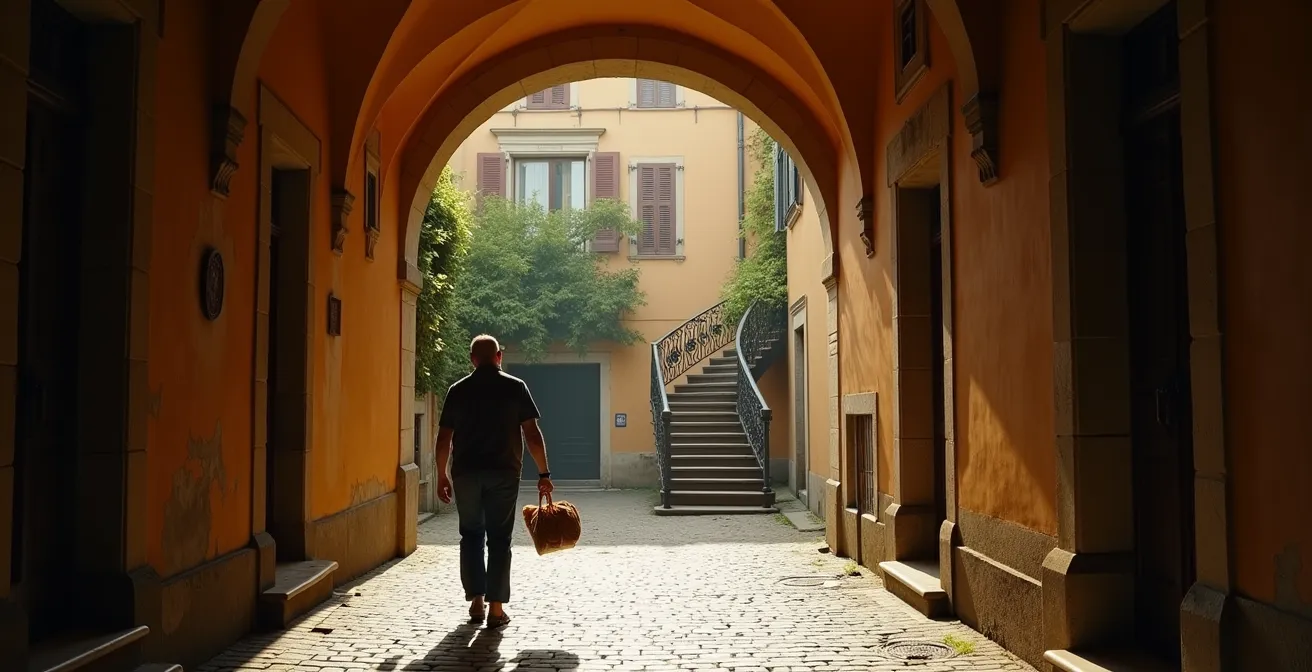
Second-city travel isn’t just a budget alternative to a capital; it’s a superior method for genuine cultural immersion and personal restoration.
- True authenticity comes from understanding your economic and social footprint, such as how your accommodation choice impacts local housing.
- Intentional discovery, like using geotags to find hidden passages instead of chasing viral photo spots, unlocks the real character of a city.
Recommendation: Swap generic travel habits for conscious choices. Prioritize locally-owned stays, meet residents through community events, and build a narrative of your journey that goes beyond the superficial.
The image of Paris is a powerful magnet: the Eiffel Tower glittering at dusk, the artistic prestige of the Louvre, the romantic strolls along the Seine. For many travelers, it’s the pinnacle of a French adventure. Yet, this dream often collides with a harsh reality of crushing crowds, inflated prices, and a tourist-centric economy that can feel detached from the city’s true soul. The common advice is to simply “go somewhere else,” but this misses the point. The antidote to overtourism isn’t just changing your destination; it’s changing your entire approach to travel.
What if the key to a genuinely authentic experience wasn’t found in seeking a smaller, cheaper version of the capital, but in mastering the art of intentional discovery? This is the promise of second-city travel, exemplified by a city like Lyon. It’s a mindset that shifts the focus from passively consuming sights to actively engaging with the fabric of a place. It’s about understanding why your choice of a rental matters, how to find beauty in overlooked details, and how to connect with people, not just monuments. This guide isn’t just a comparison between Lyon and Paris; it’s a roadmap for a more meaningful way to travel, one that revitalizes the traveler as much as it respects the destination.
To navigate this deeper form of travel, we’ll explore a series of strategies that transform a simple trip into a memorable narrative. The following sections will guide you through the practical and psychological shifts required to unlock the true potential of your next journey.
Summary: Second City Tourism: Why Visiting Lyon Is Better Than Paris For Authenticity?
- Why Does Your Airbnb Rental Push Locals Out Of The City Center?
- How To Use Geotags Instead Of Hashtags To Find Untouched Spots
- May Vs August: Which Month Offers The Best Balance Of Weather And Solitude?
- The Slum Tour Mistake: Why Gawking At Poverty Is Not Cultural Exchange
- How To Use ‘Couchsurfing’ Hangouts To Meet Locals Without Sleeping On Their Couch
- The Picture Menu Warning: 5 Signs A Restaurant Is Not For Locals
- How To Curate A Photo Series That Tells A Complete Story
- The Psychology Of Stays: Why Sleeping In A Treehouse Fixes Burnout?
Why Does Your Airbnb Rental Push Locals Out Of The City Center?
The conversation around tourism’s impact often singles out short-term rental platforms as the primary cause of urban displacement and gentrification. While the proliferation of vacation rentals does strain local housing markets, the narrative is more complex. It’s not just about one platform, but the entire tourism ecosystem. For instance, while rentals are a visible factor, new data reveals that in cities like Amsterdam and Barcelona, traditional hotels accounted for 76% to 93% of guest night increases between 2021 and 2024. The issue is less about a single company and more about the overwhelming demand that transforms residential neighborhoods into commercial zones.
This transformation erodes the very “authenticity” travelers seek. When long-term residents are replaced by a transient flow of visitors, local bakeries, bookshops, and community spaces lose their customer base and are often replaced by souvenir shops and tourist-focused businesses. The city’s soul—its living, breathing community—is hollowed out. However, some communities are actively resisting this trend. The “ethical footprint” of your stay becomes a crucial first step in intentional discovery.
Case Study: The Resilience of Croix-Rousse in Lyon
In Lyon, the historic Croix-Rousse district offers a powerful counter-narrative. Despite its growing popularity and rising property values, the neighborhood has managed to maintain a significant portion of its identity. Thanks to proactive community associations and municipal policy, it still contains around 25% social housing, ensuring a mixed population. Collectives like “La Croix-Rousse n’est pas à vendre” (The Croix-Rousse is not for sale) actively campaign to protect local heritage and promote neighborhood shops, preventing the complete touristification seen in areas like Le Marais in Paris. This demonstrates that with conscious effort from both residents and informed visitors, the unique character of a neighborhood can be preserved.
Choosing your accommodation, therefore, is not just a logistical decision; it’s an ethical one. By opting for stays that directly support the local community, you become part of the solution rather than the problem. This requires a more thoughtful approach to booking, looking beyond price and location to consider ownership and impact.
Action Plan: Choosing Ethical Accommodation
- Review Ownership: Investigate the host. Prioritize single-property owners who live on-site or nearby over large-scale commercial operators managing dozens of listings. This ensures your money directly supports a local.
- Explore Alternatives: Look for officially recognized “Chambres d’Hôtes” (French B&Bs) or “Gîtes Urbains.” These are often family-run and offer a more authentic cultural exchange than an anonymous apartment.
- Consider Location: Don’t just focus on the hyper-center. As seen in Rome, where listings outside the core district can be 40% cheaper, staying in a well-connected residential neighborhood lightens the load on over-touristed areas and reveals a different side of the city.
- Verify Community Fit: Does the accommodation seem integrated into the neighborhood, or is it a disruptive force? Reading reviews for mentions of noise or impact on neighbors can offer clues.
- Support Second-City Economies: By its very nature, choosing a city like Lyon over Paris already helps distribute tourism revenue more evenly. Your choice of stay within that city is the next critical step.
This mindful approach sets the stage for a journey rooted in respect and genuine connection, transforming you from a mere consumer into a conscious participant in the city’s life.
How To Use Geotags Instead Of Hashtags To Find Untouched Spots
In the age of social media, travel has become a performance. Popular hashtags like #EiffelTower or #Louvre create a feedback loop, funneling millions of visitors to the exact same spots to capture the exact same photos. This turns exploration into a checklist of pre-approved, crowded vistas. To break free and practice intentional discovery, you must abandon this broad-stroke approach. The secret lies in shifting from generic hashtags to specific geotags—the precise GPS coordinates embedded in photos shared by locals.
Instead of searching for a landmark, browse a map of a neighborhood you’re interested in on a platform like Instagram. Tap on photos pinned to specific streets or small squares. Here, you’ll find images posted not for global acclaim but as part of daily life: a quiet morning at a local café, a sun-drenched hidden courtyard, a unique piece of street art. This method offers an unfiltered glimpse into the city’s texture, revealing places that algorithms and guidebooks miss. In a city like Lyon, this technique is particularly rewarding, as it can lead you to the entrances of its most famous secrets: the traboules.
This paragraph introduces the concept of Lyon’s hidden passages. To truly grasp their secretive nature, it helps to visualize them. The illustration below captures the sense of mystery and discovery associated with finding a traboule entrance.
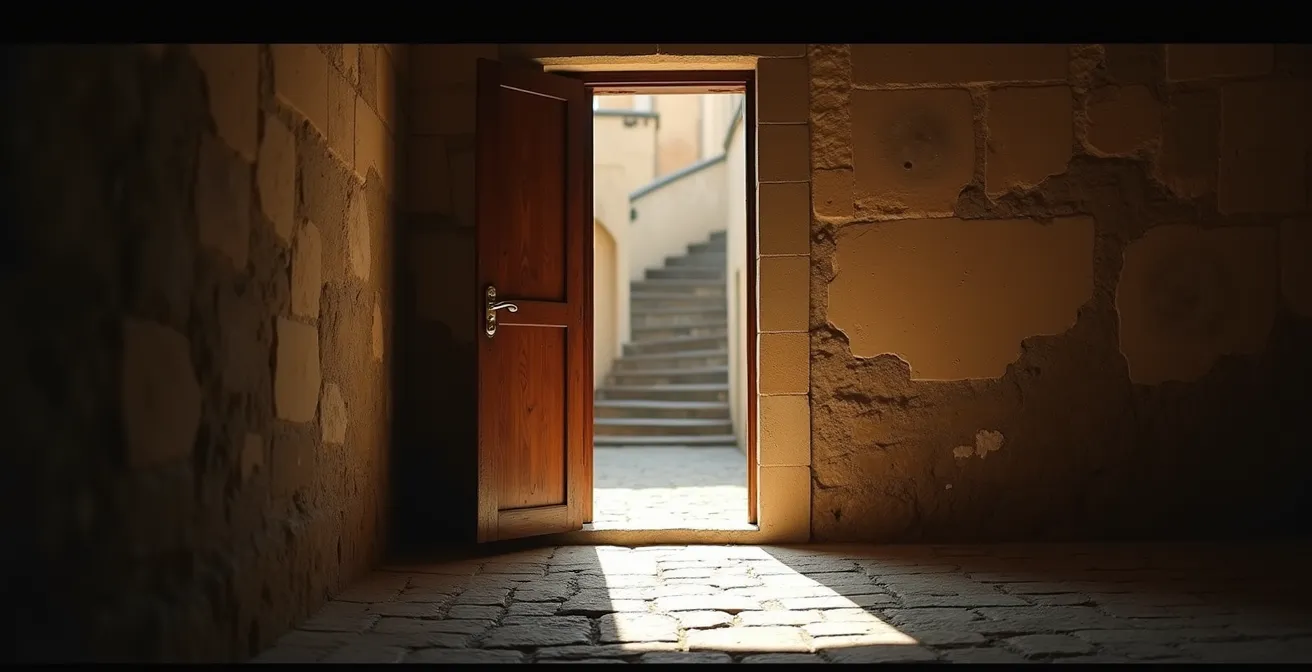
As this image suggests, traboules are not grand archways but discreet doors hidden in plain sight. Official data confirms their elusive nature: of the nearly 400 traboules in Lyon, only about 40 are officially open to the public. Using geotags from locals can help you discover the publicly accessible ones that are less frequented, offering a moment of quiet wonder away from the crowds. This is the essence of spatial awareness in travel—understanding that the most rewarding paths are often the ones you have to actively look for.
Traboules, from the Latin ‘trans ambulare’ (pass through), are shortcuts linking streets through buildings. ‘Miraboules’ refers to Lyon’s inner courtyards, which lead nowhere but are often of great beauty.
– Félix Benoît, Lyon Tourist Office
By prioritizing specific locations over popular tags, you trade the curated for the candid, transforming your phone from a distraction into a powerful tool for authentic exploration.
May Vs August: Which Month Offers The Best Balance Of Weather And Solitude?
Timing is a critical, yet often overlooked, element of intentional travel. Choosing when to visit a second city like Lyon can have a more profound impact on your experience than your itinerary. The goal is to find the sweet spot between pleasant weather and manageable crowds, allowing for the kind of unhurried exploration that fosters a real connection with a place. The common wisdom is to travel in the “shoulder seasons” of spring and autumn, but even within these periods, nuances matter.
Let’s compare two popular months: May and August. August in France is the peak of the domestic and international holiday season. While Parisians famously flee their city, major destinations like Lyon still experience a significant influx of tourists. The weather is hot, prices for remaining accommodations can be high, and the atmosphere in popular areas like Vieux Lyon can feel just as congested as a Parisian hotspot. You’ll be sharing the city with countless other visitors, making spontaneous discovery and quiet contemplation difficult.
May, on the other hand, presents a far more compelling proposition. The weather is typically mild and sunny, perfect for long walks through the Parc de la Tête d’Or or along the Rhône. The city is alive with locals going about their daily lives, not yet in full holiday mode. University students are still in town, infusing the cafés and public spaces with vibrant energy. Most importantly, the tourist crowds have not yet reached their summer peak. This creates a sense of solitude and space, allowing you to experience the city at a more natural pace. You can linger in a bouchon without a reservation, explore the traboules without a tour group at your heels, and simply sit on a bench and watch the city breathe.
This strategic timing is not about avoiding people entirely; it’s about seeking a more balanced ratio of locals to visitors. This balance is where authenticity thrives. When you are not just one of a thousand tourists, your interactions with shopkeepers, waiters, and residents become more personal and meaningful. Your presence is less of an intrusion and more of a welcome addition. Choosing May over August is a conscious decision to prioritize quality of experience over the convenience of a summer holiday, a key tenet of the second-city travel mindset.
Ultimately, this choice shapes your entire journey, enabling the psychological space needed for genuine connection and the restoration that comes from unhurried, mindful travel.
The Slum Tour Mistake: Why Gawking At Poverty Is Not Cultural Exchange
A core motivation for seeking “authenticity” in travel is the desire for genuine cultural exchange. However, this noble intention can easily curdle into something far more problematic. The rise of “slum tours” or “poverty tourism” in various parts of the world is a stark example of this pitfall. Marketed as a way to see the “real” city and understand social issues, these tours often do the opposite. They turn human struggle into a spectacle, reducing residents to props in a tourist’s narrative of gritty realism. This is not exchange; it’s exploitation.
Gawking at poverty from the air-conditioned bubble of a tour bus creates a harmful “us vs. them” dynamic. It reinforces stereotypes and objectifies people, stripping them of their dignity for the sake of a traveler’s brief, shocking experience. A true cultural exchange is built on a foundation of reciprocity and respect, not voyeurism. It requires you to engage with people on an equal footing, sharing something of yourself in return for their time and perspective. The goal should be to understand a community’s culture, creativity, and resilience, not to simply witness its economic challenges.
The “slum tour mistake” is a mindset that can appear in more subtle forms even in a developed city like Lyon. It might manifest as taking intrusive photos of people in a working-class market without their permission, or treating a diverse, historically immigrant neighborhood as a mere backdrop for “edgy” travel photos. The underlying error is the same: seeing a community as a thing to be consumed rather than a group of people to be respectfully engaged with. Avoiding this mistake means actively seeking out interactions that are mutually beneficial and dignifying.
Instead of a passive tour, consider participating in a local workshop, taking a cooking class from a resident, or attending a community event or festival. These activities foster genuine interaction around a shared interest. You learn a skill or share an experience, and the host earns a fair wage for their expertise. This creates a connection based on shared humanity and mutual benefit, which is the heart of real cultural exchange. It requires more effort than simply booking a tour, but the reward is an experience that is both more authentic and more ethical.
By choosing participation over observation, you move beyond the role of a spectator and become a temporary, respectful part of the community you are visiting.
How To Use ‘Couchsurfing’ Hangouts To Meet Locals Without Sleeping On Their Couch
One of the greatest rewards of second-city travel is connecting with the people who live there. Yet, striking up a conversation with a stranger can be intimidating. While the platform Couchsurfing is famous for offering free accommodation, its most underutilized feature is a powerful tool for bridging this gap without the commitment of staying in someone’s home: the “Hangouts” function.
The Hangouts feature on the Couchsurfing app allows you to see other members nearby—both locals and other travelers—who are available to meet up in real-time. You can simply set your status to “available” and propose an activity, like “grabbing a coffee in Croix-Rousse” or “walking through Parc de la Tête d’Or.” Other users can then join your hangout, creating a small, spontaneous group. This brilliantly bypasses the awkwardness of a cold approach by establishing a pre-vetted context for interaction: everyone who joins is explicitly open to meeting new people.
This method is far superior to trying to meet people in a tourist bar. The self-selecting nature of the Couchsurfing community means you are likely to connect with open-minded, curious individuals who have a genuine interest in cultural exchange. It provides a structured but informal way to get local recommendations that you would never find in a guidebook. A Lyonnais student you meet might tell you about their favorite under-the-radar music venue, a hidden viewpoint, or the best place to get a praline tart that isn’t a tourist trap.
Furthermore, this approach respects personal boundaries. Unlike staying in someone’s home, a Hangout is a low-commitment, public interaction. You can chat for an hour and then part ways, or you might end up spending the afternoon exploring together. It puts you in control and fosters a more equitable dynamic. You are not a guest seeking a free bed; you are an equal participant in a social gathering. This is a modern, practical application of the principle of reciprocal engagement, creating a space for authentic conversation and shared discovery without the implicit obligations of traditional hosting.
By embracing this simple tool, you can effortlessly weave genuine human connection into your travel narrative, turning a trip to a new city into an encounter with its people.
The Picture Menu Warning: 5 Signs A Restaurant Is Not For Locals
Food is a gateway to culture, but in heavily touristed areas, it can also be a minefield of inauthentic, overpriced traps. A meal in a genuine Lyonnais *bouchon* can be a highlight of your trip, while an experience in a tourist-focused restaurant can leave you feeling disappointed and cheated. Learning to distinguish between the two is a crucial skill for the intentional traveler. The most infamous red flag is the glossy, multi-language picture menu, but the signs of a tourist trap are often more subtle.
Locals rarely need a photograph to know what *quenelle de brochet* looks like. A picture menu is a clear signal that the establishment primarily caters to foreigners who are unfamiliar with the cuisine. It suggests a focus on accessibility over quality. While this is the most obvious warning, other clues can help you make a more discerning choice. Developing an eye for these details allows you to apply the principle of local-first thinking to your dining experiences, ensuring you taste the real flavor of the city.
Here are five key signs that a restaurant is likely a tourist trap and not a favorite among locals:
- The Aggressive Host: A restaurant that needs a host standing on the street, actively trying to usher people in, is often a sign of desperation. A truly good, local-favorite spot relies on its reputation and regular clientele, not on pressuring passersby.
- The Overly Extensive Menu: A menu that is pages long and offers a huge variety of cuisines (e.g., French classics alongside pizza and curry) is a major red flag. A great local restaurant, especially a *bouchon*, will have a small, focused menu, often handwritten on a chalkboard. This indicates that the ingredients are fresh, seasonal, and that the chef specializes in doing a few things exceptionally well.
- Continuous Service All Day: In France, traditional restaurants have strict service times—typically noon to 2 PM for lunch and 7:30 PM to 10 PM for dinner. An establishment that serves full meals non-stop from 11 AM to 11 PM is almost certainly catering to tourist schedules, not local dining culture.
- Prime Location, Generic Decor: A restaurant located on the most famous, picturesque square of the city, with a generic, uninspired interior, is likely paying for its prime real estate with high prices and mediocre food. Authentic spots are often found on quieter side streets, with decor that feels personal and lived-in.
- Lack of Local Language: If you walk past and only hear English, German, or Spanish being spoken by the patrons, it’s a clear sign. Listen for the sound of French. A healthy mix of languages is fine, but a complete absence of locals is a definitive warning.
By training your eye to spot these signs, you can bypass the traps and ensure that every meal becomes a delicious and authentic part of your travel story.
How To Curate A Photo Series That Tells A Complete Story
In the era of fleeting social media stories, travel photography often becomes a disjointed collection of “best-of” moments: a landmark, a meal, a sunset. While beautiful, these individual images rarely capture the full narrative of a journey. An intentional traveler thinks like a curator, not just a collector. The goal is to move beyond single snapshots and create a photo series—a cohesive set of images that tells a complete story with a beginning, middle, and end. This practice transforms your photography from a simple record of what you saw into a meaningful expression of how you experienced a place.
A compelling photo series is built around a central theme or concept. Before you even start shooting, consider what story you want to tell about Lyon. Is it a story about the “hidden and revealed” nature of the traboules? A study of the city’s vibrant street art? Or perhaps a narrative about the contrast between its ancient Roman past and its modern architectural present? This theme becomes your creative guide, helping you decide what to photograph and, more importantly, what to ignore. This is the essence of narrative curation.
To build your series, think in terms of a story arc:
- The Establishing Shot (The Beginning): Start with a wide shot that sets the scene. This could be a panoramic view of Lyon from the Fourvière hill, establishing the city’s geography and atmosphere. This image answers the question: “Where are we?”
- The Details and Characters (The Middle): This is the core of your story. Capture a series of medium shots and close-ups that explore your chosen theme. If your theme is “artisans of Lyon,” this would include portraits of a baker at work, close-ups of a silk weaver’s hands, or shots of a cheesemonger’s stall at Les Halles Paul Bocuse. These images bring the story to life and introduce the “characters.”
- The Concluding Image (The End): End your series with a photo that provides a sense of closure or a lasting impression. It could be a quiet, reflective shot, like a view of the city lights over the Saône river at dusk, or an image that summarizes your theme. This photo should leave the viewer with a feeling or a final thought about your journey.
By thinking in terms of a series, you also pay more attention to visual consistency. You might decide to shoot everything in the early morning light for a soft, cohesive feel, or use a specific focal length to maintain a consistent perspective. This disciplined approach forces you to see more deeply and shoot more deliberately, resulting in a body of work that is far more personal and evocative than a random album of vacation snaps.
Your collection of images becomes a testament not just to where you’ve been, but to the unique story you discovered there.
Key Takeaways
- Second-city travel is a mindset, not just a destination change; it prioritizes conscious choices over passive consumption.
- Authenticity is found by actively engaging with local life, from choosing ethical accommodations to meeting residents and dining at non-tourist spots.
- The ultimate goal of this travel style is not just exploration, but psychological restoration and creating a meaningful personal narrative.
The Psychology Of Stays: Why Sleeping In A Treehouse Fixes Burnout?
At its core, the appeal of second-city travel and the search for authenticity is a quest for restoration. In our hyper-connected, productivity-obsessed lives, burnout has become a chronic condition. A standard vacation—rushing through a checklist of sights in a crowded capital—can often feel like an extension of this frenetic pace, leaving us just as drained as when we left. The antidote lies not just in taking a break, but in fundamentally changing the nature of our environment and our experiences. This is where the psychology of our stays becomes paramount.
Consider the powerful metaphor of sleeping in a treehouse. While you may not find a literal treehouse in the center of Lyon, the concept represents a profound shift in perspective. A treehouse is a space that removes you from the ground-level noise and complexity of daily life. It offers elevation, simplicity, and a direct connection to a natural, calming environment. It forces a slower pace; you can’t rush up a ladder. It’s a self-contained world that encourages quiet contemplation and a focus on the essential. This is the essence of psychological restoration.
The principles of this “treehouse effect” can be applied to any second-city stay. By choosing an accommodation in a quiet residential neighborhood instead of a bustling tourist hub, you create a sanctuary. By curating a simple itinerary focused on one or two deep experiences per day instead of a frantic list of ten, you allow your mind to decompress. By spending an afternoon reading in a park instead of standing in a museum queue, you embrace the restorative power of unstructured time. These choices are the urban equivalent of climbing into a treehouse. They create a psychological distance from the pressures of your normal life, allowing your nervous system to recalibrate.
This is why Lyon is a better choice than Paris for a restorative trip. Its more manageable scale, its accessible green spaces like the Parc de la Tête d’Or, and its less frantic pace of life naturally facilitate this kind of experience. The city invites you to slow down. The very act of choosing this path—of intentionally seeking out the quiet, the local, and the meaningful—is an act of self-care. It’s an acknowledgement that the purpose of travel is not to collect experiences to show others, but to find the space to reconnect with oneself.
Ultimately, the most authentic journey is the one that leads you back to a more rested, centered, and revitalized version of yourself. This is the ultimate promise of second-city travel.