
The key insight into mRNA technology is this: it’s not a drug, but a programmable set of instructions that turns your own cells into medicine factories.
- mRNA acts like temporary software, telling cells what protein to build (e.g., a viral antigen) to train the immune system.
- This digital, cell-free approach allows for vaccine development in days, not years, and is physically incapable of altering your DNA.
Recommendation: To understand its potential for treating cancer and autoimmune disease, shift your thinking from “vaccines” to “programmable therapeutic platforms.”
The COVID-19 pandemic thrust messenger RNA, or mRNA, from the quiet corridors of scientific research into the global spotlight. For many, it seemed like a medical miracle that appeared overnight. Yet, this technology is the result of decades of persistent, often under-the-radar, scientific inquiry. The common understanding is that mRNA is a new way to make vaccines, a powerful tool against infectious diseases. While true, this view only scratches the surface of its revolutionary potential.
The real story of mRNA is not just about fighting viruses. It’s about a fundamental shift in how we approach medicine itself, with profound implications for some of humanity’s most challenging diseases, including cancer and autoimmune disorders. The common narrative often misses the core principle that makes this technology so powerful. But to truly grasp its potential to create personalized cancer treatments or re-educate a faulty immune system, we must look beyond the headlines and see it for what it is: a form of biological software.
Thinking of mRNA as a programmable platform is the key to unlocking its future. It’s not a chemical compound we discover; it’s a code we design. This article will decode this “biological software,” explaining how it works, why it’s so fast to develop, and how it safely instructs our bodies without permanent changes. We will then explore the tangible roadmap for its next great challenges, moving from public health to personalized medicine.
To fully explore this groundbreaking science, this guide will walk you through the core principles of mRNA technology, from its fundamental mechanism to its future applications. The following sections break down each key aspect, providing a clear and structured understanding of this medical revolution.
Summary: mRNA Technology: How Will It Treat Cancer And Autoimmune Diseases?
- Why Is mRNA Like A Software Code For Your Immune System?
- How To Debunk The Myth That Vaccines Alter Your DNA
- Eggs Vs Code: Why mRNA Vaccines Can Be Developed In Days, Not Years?
- The Distribution Challenge: Why Ultra-Cold Storage Limits Global Access
- When To Expect Results: The Roadmap For Personalized Cancer Vaccines
- How To Spot Real Graphene Products Vs Marketing Hype
- When To Stop Taking Echinacea: Cycling Immune Boosters For Best Results
- Longevity Science: Can Caloric Restriction Really Extend Your Lifespan?
Why Is mRNA Like A Software Code For Your Immune System?
The most powerful analogy for understanding mRNA technology is to think of it as software for your body’s cells. Your cells contain “hardware”—complex molecular machines called ribosomes—that read genetic instructions and build proteins. DNA is the permanent hard drive, holding the master blueprint for everything your body does. Messenger RNA, however, is like a temporary USB stick or a software command. It carries a specific, short-term instruction from the DNA in the cell’s nucleus out to the ribosomes in the cytoplasm.
An mRNA vaccine simply delivers a piece of code—a specific mRNA sequence—that tells your ribosomes to build one particular protein: an antigen. In the case of COVID-19 vaccines, this is the spike protein. Your cells produce this harmless piece of the virus, and the immune system’s antigen-presenting cells recognize it as foreign. This process acts as a training exercise, teaching your immune system to identify and neutralize the real virus without ever being exposed to it. The mRNA “software” itself is fragile and degrades within hours, its job complete. The speed of this “coding” is remarkable; for instance, reports show Moderna designed their COVID-19 vaccine’s mRNA sequence in just two days.
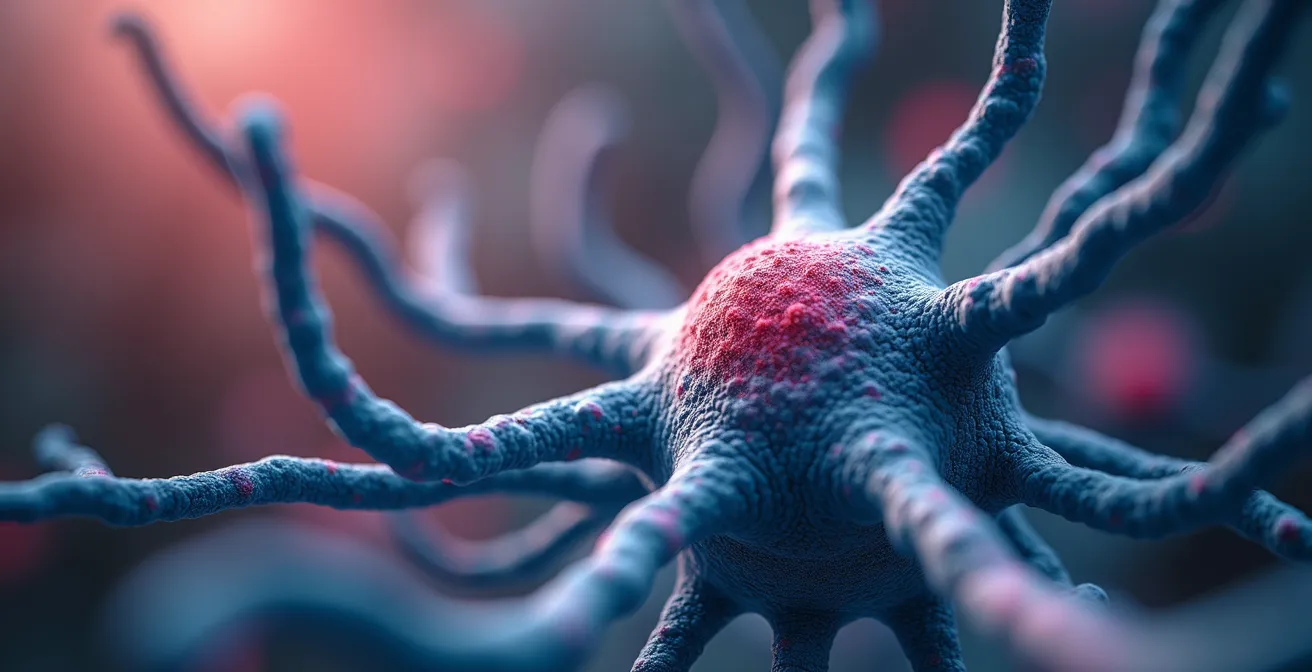
This image of dendritic cells showcases the biological “hardware” that executes the mRNA code. These cells are the sentinels of the immune system. After a cell produces the antigen based on the mRNA instructions, these dendritic cells capture it and present it to other immune cells (T-cells and B-cells), initiating the powerful and specific immune response. The mRNA provides the what (the code), and the cellular machinery provides the how (the manufacturing and presentation), creating a perfect synergy between information and biology.
How To Debunk The Myth That Vaccines Alter Your DNA
One of the most persistent pieces of misinformation about mRNA vaccines is the claim that they can alter a person’s DNA. This is biologically impossible, and understanding the “software” analogy helps explain why. Your DNA, your genetic blueprint, is safely stored within a protected, membrane-bound compartment in the cell called the nucleus. It’s the secure data center of the cell.
mRNA, on the other hand, operates exclusively in the cytoplasm, the main body of the cell outside the nucleus. It delivers its instructions to the ribosomes there and never enters the nucleus. There is a strict physical and chemical barrier between the two. Furthermore, for mRNA to integrate into DNA, it would need a specific enzyme called reverse transcriptase to convert its RNA code back into DNA, and another enzyme called integrase to insert that DNA into the genome. Human cells do not possess these enzymes. Therefore, there is no pathway for the mRNA message to become a permanent part of your genetic hard drive.
This fundamental separation is a core principle of molecular biology, ensuring the integrity of the genome. As a result, studies confirm that mRNA vaccines cannot integrate into the genome, posing no risk of altering your DNA. This inherent safety feature is not an accident; it’s a foundational aspect of how our cells are built. The temporary nature of the mRNA molecule is a key advantage, as it performs its function and then disappears.
This biological reality is confirmed by experts across the globe. As the Global Vaccine Data Network states in their analysis:
mRNA does not contain live virus or long-lived genetic material capable of altering cellular DNA. Thus, there is no plausible mechanism by which mRNA vaccines could cause cancer.
– Global Vaccine Data Network, Analysis of mRNA vaccine mechanisms
Eggs Vs Code: Why mRNA Vaccines Can Be Developed In Days, Not Years?
The unprecedented speed of the COVID-19 vaccine development was not a corner-cutting exercise but a direct result of the technology’s “plug-and-play” nature. Traditional vaccines, particularly for influenza, are often grown in chicken eggs or large vats of cells. This is a slow, cumbersome, and resource-intensive biological process. It involves adapting the virus to grow in eggs, harvesting it, and then inactivating or weakening it—a process that can introduce mutations and takes many months.
In stark contrast, mRNA vaccine production is a cell-free chemical synthesis process. It doesn’t require growing any virus at all. Once scientists have the genetic sequence of a pathogen’s antigen (like the spike protein), that digital information is “plugged into” an established manufacturing platform. The core manufacturing process—known as in vitro transcription (IVT)—remains identical regardless of the vaccine being made. The only thing that changes is the DNA template used to create the specific mRNA strand. This is the difference between building a whole new car factory for each new model versus simply loading new design software into the existing robotic assembly line.
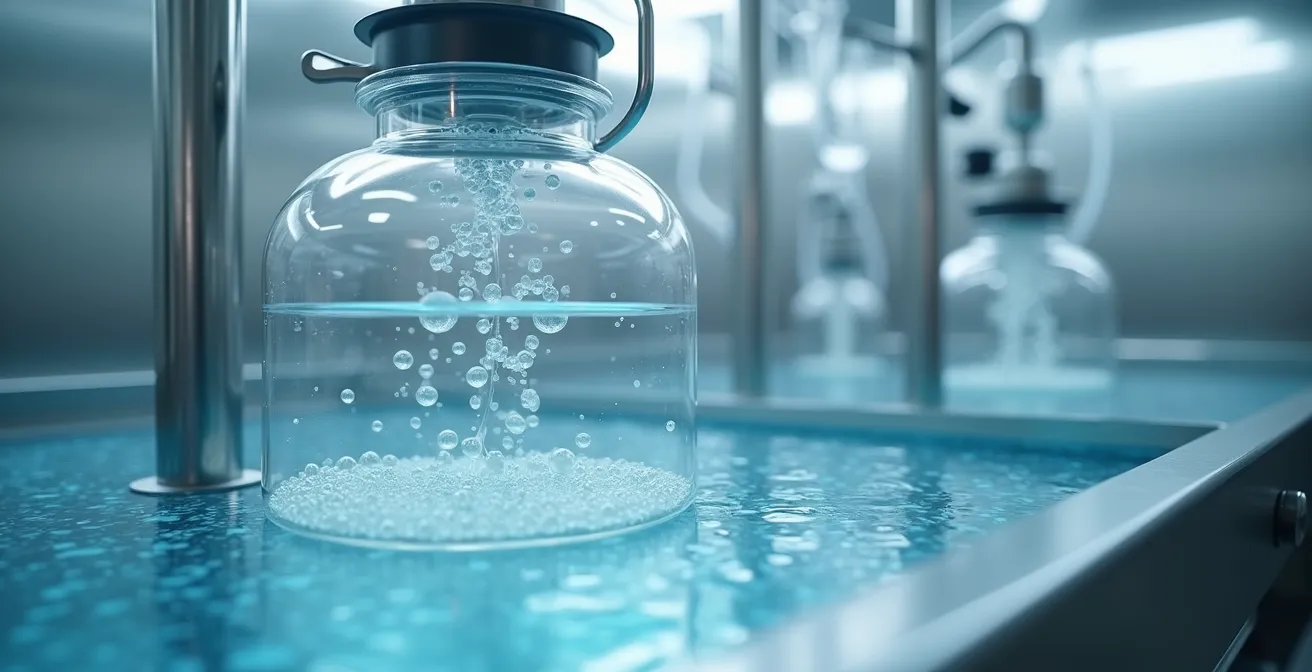
This clean, industrial process, seen here conceptually, allows for massive scalability and speed. There is no biological contamination to filter out, and the process can be standardized and deployed globally. This is why it was possible to go from the SARS-CoV-2 genetic sequence to a vaccine ready for clinical trials in a matter of weeks. The contrast is dramatic: while traditional vaccines require an average development timeline of 10.71 years, the mRNA platform collapses that initial design and production phase into days or weeks.
The Distribution Challenge: Why Ultra-Cold Storage Limits Global Access
For all its advantages in design and production, mRNA technology faces a significant logistical hurdle: its fragility. RNA is an inherently unstable molecule. Our bodies are filled with enzymes that rapidly break it down, which is a key safety feature ensuring the “software” instructions are temporary. However, this same fragility makes it a challenge to transport and store outside the body. To prevent degradation, the first-generation mRNA vaccines needed to be kept at extremely low temperatures.
These vaccines are packaged in tiny protective bubbles made of fat, called lipid nanoparticles (LNPs), which shield the mRNA on its journey into our cells. But even with this protection, the molecule can break apart at room temperature. To maintain stability for long-term storage and shipping, an ultra-cold environment is necessary. For example, Pfizer-BioNTech’s mRNA vaccine requires storage between -80°C to -60°C (-112°F to -76°F), temperatures colder than a typical winter in Antarctica.
This requirement for an “ultra-cold chain” creates a major obstacle for global distribution, especially in low-income countries or remote regions that lack the specialized freezers and reliable electricity needed to maintain such temperatures. It is a major bottleneck limiting equitable access to this life-saving technology. While newer formulations are being developed that are more stable at standard refrigeration temperatures, the cold-chain issue highlighted a critical gap between scientific innovation and real-world implementation.
When To Expect Results: The Roadmap For Personalized Cancer Vaccines
The true promise of mRNA technology extends far beyond infectious diseases and into the realm of personalized medicine, with cancer treatment being the most exciting frontier. The “software” principle is perfectly suited for fighting cancer because every tumor is unique. A tumor develops specific mutations in its DNA, leading it to produce abnormal proteins called neoantigens. These neoantigens are flags that mark cancer cells as foreign, but the immune system often fails to mount a strong enough attack against them.
This is where personalized mRNA vaccines come in. The process begins by taking a biopsy of a patient’s tumor and a healthy blood sample. Scientists sequence the DNA of both to identify the unique mutations—the neoantigens—specific to that person’s cancer. This information is then used to design a custom mRNA vaccine that codes for those exact neoantigens. When injected, the vaccine instructs the patient’s own cells to produce these tumor-specific flags, training their immune system to recognize and viciously attack only the cancer cells, leaving healthy tissue unharmed.
This isn’t science fiction; it’s happening now in clinical trials. The process is becoming remarkably fast, as new research shows that AI-assisted manufacturing has reduced personalized vaccine production from nine weeks to under 4 weeks. This makes it a viable option for treating patients in a clinically relevant timeframe. The field is advancing rapidly, with promising results in treating melanoma, pancreatic cancer, and other solid tumors, often in combination with other immunotherapies.
The outlook is optimistic and concrete. As leading researchers in the field have projected, the progress is clear.
With over 60 treatments in development and first commercial approvals expected by 2029, RNA cancer vaccines represent a significant advancement in personalized cancer care.
– PMC Research Team, Current Progress and Future Perspectives of RNA-Based Cancer Vaccines
How To Spot Real Graphene Products Vs Marketing Hype
Just as with the initial rollout of mRNA technology, any truly groundbreaking scientific advance is inevitably followed by a wave of marketing hype and misleading claims. Graphene, a single layer of carbon atoms arranged in a honeycomb lattice, is another such “wonder material” praised for its incredible strength, lightness, and conductivity. Its potential applications range from electronics to batteries to construction materials. However, the word “graphene” is often used as a marketing buzzword on products that contain little to no actual high-quality graphene.
Learning to distinguish between genuine innovation and hype is a critical skill in our tech-saturated world, whether the subject is materials science or biotechnology. A healthy dose of skepticism and a structured approach to evaluation can help you see through the noise. The principles for assessing a “graphene-infused” product are surprisingly similar to those for assessing a new medical claim: look for evidence, understand the mechanism, and be wary of miraculous promises. This critical thinking is essential to appreciate true progress without falling for unsubstantiated marketing.
To navigate this landscape, it is useful to have a mental checklist to separate genuine technological applications from mere marketing jargon. This process can help you become a more discerning consumer of new technologies.
Action Plan: How to Vet a “Graphene” Product Claim
- Check for Specific Data: Does the manufacturer provide measurable data (e.g., “improves conductivity by 30%”) or just vague terms like “enhanced” or “graphene-powered”? Real technology is backed by quantifiable metrics.
- Identify the Form of Graphene: Ask if it’s single-layer graphene, few-layer graphene, or graphene oxide/powder. Most commercial products use cheaper, less effective graphene oxide, which is very different from the pristine material used in labs.
- Question the Concentration: A product might be “infused” with a minuscule, ineffective amount (e.g., 0.01%). If the company isn’t transparent about the percentage by weight, be skeptical.
- Verify the Benefit: Does the claimed benefit (e.g., “makes your tennis racket stronger”) logically connect to a known property of graphene? Or is the connection tenuous and scientifically implausible?
- Look for Third-Party Certification: Are there independent lab tests or certifications (like from The Graphene Council) that verify the material’s presence and quality? Self-made claims are less reliable.
When To Stop Taking Echinacea: Cycling Immune Boosters For Best Results
Understanding the precision of a targeted technology like mRNA also casts a new light on more traditional methods of immune support. While mRNA acts like a sniper rifle—training the immune system to attack a very specific target—herbal supplements like echinacea function more like a megaphone, broadly stimulating general immune activity. Both can be useful, but in entirely different contexts and with different rules of engagement.
Echinacea is a popular herb believed to boost the immune system and help fend off colds. Research suggests it may increase the number of white blood cells and enhance the activity of immune cells like phagocytes, which consume invading organisms. However, unlike the targeted memory created by a vaccine, this is a non-specific stimulation. The key to using such boosters effectively lies in understanding that constant stimulation can be counterproductive. The immune system is not designed to be on high alert indefinitely.
For this reason, most herbalists and many health practitioners recommend “cycling” echinacea. This means using it for a defined period—for example, during the onset of a cold or for a couple of weeks during flu season—and then stopping for a period to allow the immune system to return to its baseline. Continuous use may lead to diminished effectiveness as the body adapts to the constant stimulation, or in rare cases, could potentially over-stimulate the immune system, which is a concern for individuals with autoimmune conditions. This principle of strategic, intermittent use contrasts sharply with the “one-and-done” training provided by a vaccine.
Key Takeaways
- mRNA is a temporary biological instruction set; it acts like software and cannot permanently alter your DNA.
- The digital nature of mRNA technology allows for an unprecedented development speed, shifting from slow biological methods to rapid chemical synthesis.
- Beyond vaccines, mRNA is a versatile platform technology, with personalized cancer treatments already in advanced clinical trials and expected by the end of the decade.
Longevity Science: Can Caloric Restriction Really Extend Your Lifespan?
While high-tech interventions like mRNA therapy represent one cutting edge of health and longevity, another branch of longevity science explores more fundamental, systemic approaches. Among the most studied of these is caloric restriction (CR): the practice of reducing average daily caloric intake below what is typical, without malnutrition. This concept has moved from laboratory experiments with yeast and mice to human clinical trials, representing a different pillar in the quest for a longer, healthier life.
The theory behind CR is that it induces a mild, beneficial stress state in the body. This state activates powerful cellular repair and maintenance pathways, such as autophagy (the process of cleaning out damaged cells) and reducing inflammation. In animal models, from worms to primates, consistent caloric restriction has been shown to extend both average and maximum lifespan, as well as “healthspan”—the period of life free from chronic disease. The question is whether these benefits fully translate to humans, who have much longer lifespans and more complex environmental factors.
Human studies, like the comprehensive CALERIE trial, have shown that even moderate caloric restriction (a 15-25% reduction) can significantly improve metabolic and cardiovascular health markers, reducing risk factors for age-related diseases like diabetes and heart disease. While definitively proving an extension of maximum human lifespan is difficult, the evidence strongly suggests that CR can significantly enhance healthspan. This approach is not about a specific “code” for a single disease, but about tuning the entire biological operating system to run more efficiently and resist the damages of aging.
Staying informed about the rapid pace of scientific discovery is the first step toward benefiting from it. As these technologies mature, understanding their core principles will empower you to make better health decisions and to distinguish between transformative potential and fleeting hype.