

True burnout recovery isn’t found in passive luxury, but in environments that actively recalibrate your brain.
- Novel experiences stretch your perception of time, making breaks feel longer and more meaningful.
- Immersive nature (canvas over concrete) reduces stress by providing restorative sensory input that modern life lacks.
Recommendation: Seek accommodations that challenge your routine and offer authentic disconnection, not just aesthetic perfection.
The feeling is all too familiar: a deep, soul-level exhaustion that a standard week-long vacation can’t seem to touch. You return from the five-star hotel or beach resort feeling just as drained, if not more so, than when you left. The common wisdom tells us to “get away from it all,” to seek comfort and disconnect. We chase luxury, infinity pools, and thread counts, believing that passive relaxation is the antidote to our chronic stress and burnout.
But what if this approach is fundamentally flawed? What if the key to true restoration isn’t about shutting down in a pristine, controlled environment, but about waking up our brains in a novel, slightly unpredictable one? The emerging psychology of travel suggests that the most profound recovery comes from experiences that challenge our cognitive and sensory routines. It’s not about escaping life, but about re-engaging with it on a more primal, attentive level. This is the principle of cognitive recalibration.
This guide explores the science behind why sleeping in a treehouse, a rustic cabin, or even under a simple tarp can be more effective at healing burnout than the most opulent hotel suite. We will delve into how unique environments alter our perception of time, why true disconnection requires more than just willpower, and how to discern a genuinely restorative stay from a mere Instagram-worthy facade. It’s time to trade passive comfort for active restoration.
To navigate this exploration into the heart of restorative travel, this article is structured to guide you from the underlying science to practical, actionable advice. The following sections break down the essential components of choosing and experiencing a trip that truly heals.
Summary: The Psychology of Stays: A Guide to Curing Burnout
- Why Does A Unique Environment Make Your Weekend Feel Longer?
- How To Choose A ‘Digital Detox’ Cabin That Actually Has No Signal
- Canvas Vs Concrete: Which Luxury Experience Reconnects You To Nature?
- The Instagram Trap: Why That Bubble Hotel Might Be A Greenhouse Nightmare
- The 6-Month Rule For Securing The World’s Most Viral Airbnbs
- Where To Pitch Your Tarp: Avoiding Cold Sinks And Wind Tunnels
- How To Disconnect For 24 Hours Without Panicking About Missed Emails
- Luxury Wellness Retreats In Switzerland: Are They Worth The $5,000 Price Tag?
Why Does a Unique Environment Make Your Weekend Feel Longer?
One of the most unsettling symptoms of burnout is the feeling of time slipping away. Weeks blur into a monotonous loop, and even weekends feel compressed and fleeting. A standard vacation often fails to break this cycle. However, placing yourself in a novel environment, like a treehouse, does something remarkable to your brain’s internal clock. This phenomenon is rooted in how our minds process new information.
When our days are routine, the brain operates on autopilot, encoding very little new data. It has seen it all before. But when confronted with a flood of novel stimuli—the sound of wind in the leaves, the scent of pine, the unfamiliar layout of a spherical tent—your brain is forced to pay attention. It starts recording vast amounts of new sensory data. According to neuroscience, this density of new memories is what expands our subjective perception of time. A weekend packed with new experiences literally feels longer and more substantial in retrospect because your brain has more “footage” to play back.
This isn’t just a feeling; it’s a measurable cognitive effect. Studies on time perception demonstrate that our brains are wired to stretch the duration of novel events. For instance, research on the “oddball paradigm” shows that new or unexpected stimuli are perceived as lasting longer than familiar ones. That two-day stay in a unique setting creates more distinct mental markers than a week in a predictable hotel room, offering a powerful antidote to the time compression of modern life. This novelty-driven time perception is the first step in cognitive recalibration.
How To Choose a ‘Digital Detox’ Cabin That Actually Has No Signal
The concept of a “digital detox” has become so popular that it’s now a major market segment. In fact, the global digital detox tourism market reached $52.32 billion in 2024, a testament to our collective desire to unplug. However, many so-called detox retreats rely on your willpower alone, offering Wi-Fi “just in case.” True, restorative disconnection—the kind that forces your brain to recalibrate—often requires an environment where temptation is physically removed. Finding a cabin with genuinely no signal is the gold standard.
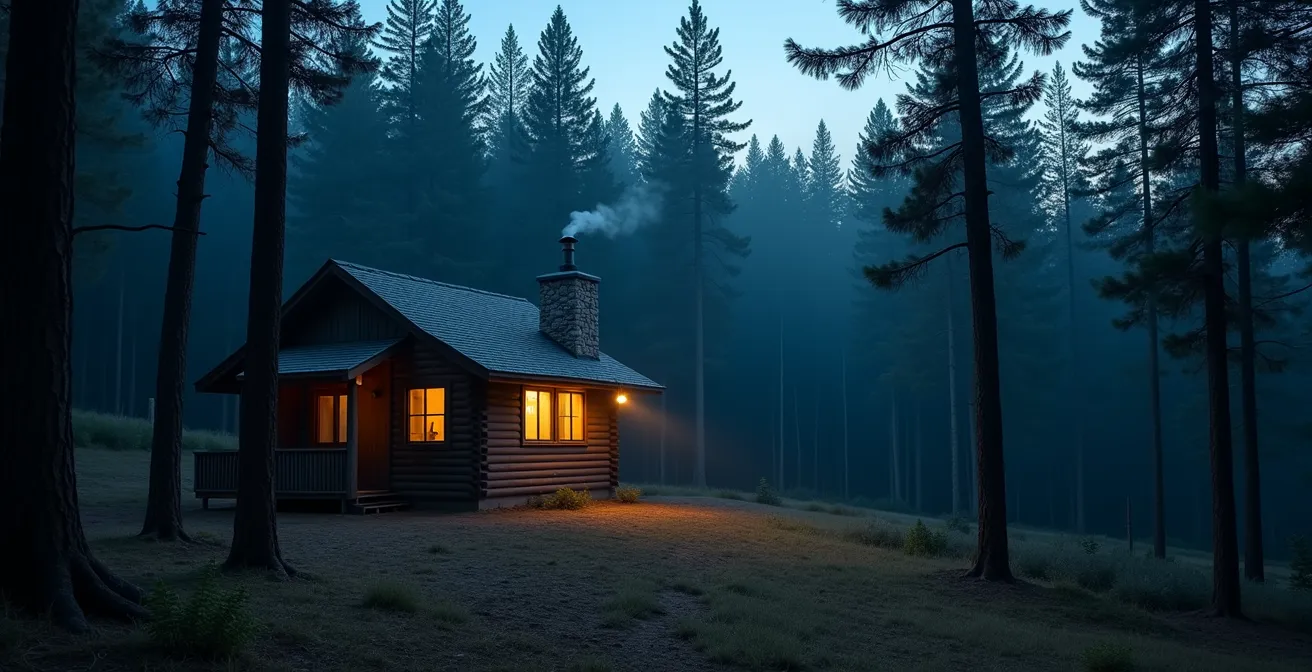
Choosing a location for an authentic disconnection is an act of deliberate strategy, not hopeful chance. It’s about engineering your environment for success. Willpower is a finite resource, especially when you’re burned out. By selecting a place where checking your phone isn’t an option, you remove the decision-making burden and allow your nervous system to fully stand down. This isn’t about punishment; it’s about liberation. Without the constant hum of notifications, your brain can finally turn its attention outward to the natural world or inward to your own thoughts.
Action Plan: Finding Your Off-Grid Sanctuary
- Geographic Reconnaissance: Start by researching regions or national parks known for low internet penetration rates. Destinations like parts of Costa Rica or Indonesia are often cited, but even domestic wilderness areas can have significant dead zones.
- Map Cross-Reference: Once you have a potential cabin, use its GPS coordinates (or a nearby landmark) and cross-reference them with carrier-specific coverage maps (e.g., Verizon, AT&T). Look for areas marked as “No Service” or “Roaming.”
- Review Scrutiny: Scour verified guest reviews for keywords like “no signal,” “off-grid,” “no Wi-Fi,” or “spotty service.” These are your most reliable field reports. Ignore the host’s primary description and focus on what past visitors have experienced.
- Direct Interrogation: Contact the host directly before booking. Ask pointed questions: “Is there any cell reception for [your carrier] at the cabin or on the property?” and “Is there a landline for emergencies?” An honest host will give you a straight answer.
- Embrace the Analog: Before you go, prepare by downloading maps for offline use, printing out key information, and packing non-digital entertainment like books, journals, or a deck of cards.
Canvas Vs Concrete: Which Luxury Experience Reconnects You To Nature?
The term “luxury” in travel has long been synonymous with concrete structures: solid walls, triple-paned windows, and powerful climate control systems that seal you off from the outside world. This model provides comfort by creating a predictable, insulated bubble. Yet, for someone suffering from burnout, this very insulation can be a barrier to recovery. A more profound form of luxury is emerging, one based on connection rather than isolation. This is where “canvas” structures—like yurts, safari tents, and geodesic domes—offer a superior restorative experience.
The difference lies in the concept of sensory disruption. A concrete hotel room mutes the environment. You don’t hear the rain, feel the morning chill, or see the light change except through a rectangular frame. A canvas structure, by contrast, acts as a permeable membrane. It immerses you in the natural world’s rhythms. The sound of wind, the pitter-patter of rain, and the gradual brightening of dawn become part of your stay. This constant, gentle stream of natural sensory input is a core tenet of biophilic design and is proven to lower cortisol and calm the nervous system.
This isn’t about sacrificing comfort, but redefining it. Modern luxury canvas structures offer plush beds and amenities, but their true value is the unfiltered connection to the environment. They provide shelter while preserving the sensory richness of the outdoors, offering the best of both worlds.
| Feature | Canvas Structures | Concrete Buildings |
|---|---|---|
| Natural Light | Dynamic, diffuse throughout day | Fixed through windows |
| Sound Connection | Constant nature sounds | Insulated from environment |
| Temperature | Follows natural rhythms | Climate controlled |
| Biophilic Design | High integration | Limited to views |
| Sensory Experience | Full immersion | Selective exposure |
The Instagram Trap: Why That Bubble Hotel Might Be a Greenhouse Nightmare
In an age dominated by visual social media, a new kind of accommodation has gone viral: the “Instagrammable” stay. Bubble hotels, glass cubes, and mirror cabins promise breathtaking photos and a sense of immersion in nature. Yet, this is often a carefully constructed illusion—the “Instagram Trap.” The relentless pursuit of aesthetics can directly conflict with the principles of a restorative experience, leaving you more exhausted than when you arrived. This is particularly true for transparent “bubble” hotels.
The reality of living in a clear plastic sphere is often far from the dreamy images. On a sunny day, they can become sweltering greenhouses, with inadequate ventilation making sleep impossible. At night, condensation can obscure the starry view you came for, leaving you in a damp, chilly bubble. Privacy is another major concern, with many of these stays clustered in a way that feels more like a human terrarium than a private retreat. You spend your time worrying about being seen, managing extreme temperatures, and trying to capture the “perfect shot” rather than actually relaxing.
This highlights a critical disconnect in our travel choices, driven by a desire for external validation. A recent report notes that upwards of 60% of people admit to digital addiction and try to limit their social media use, yet the allure of a viral photo often overrides our better judgment. To avoid the trap, you must learn to look beyond the influencer photos and investigate the practical realities of a stay.
- Look for unfiltered guest photos on sites like TripAdvisor or in Google reviews, not just the curated images on Instagram.
- Search reviews for practical keywords: “sleep quality,” “heat,” “AC,” “cold,” “privacy,” and “condensation.”
- Read reviews from different seasons to understand how the structure handles both heat and cold.
- Ask hosts direct questions about climate control, ventilation, and UV protection measures before you book.
The 6-Month Rule For Securing The World’s Most Viral Airbnbs
Once you’ve identified a truly restorative and unique stay, you’ll likely discover you’re not the only one. The world’s most incredible treehouses, A-frames, and off-grid cabins are in high demand, often booked solid for a year or more. The spontaneity of a last-minute getaway rarely works for these properties. Securing a spot requires a strategic, forward-thinking approach. The most important guideline to remember is the 6-Month Rule.

Most unique Airbnb hosts and boutique properties open their booking calendars in 3 to 6-month blocks. The exact date they release new availability often becomes a mini-event for those in the know. Your task is to become one of them. Start by following your dream properties on social media and signing up for their newsletters. This is often where they’ll announce when the next block of dates will go live. Set a calendar reminder for that day and time, and be ready to book the moment it opens.
Flexibility is your greatest asset. Instead of searching for a specific weekend, look for any 2-3 day opening in a month-long window. Weekday stays are far easier to secure than weekends. This proactive approach transforms the frustrating experience of seeing “No Availability” into a successful mission. It requires patience and planning, but the reward—a guaranteed stay in a space designed for profound restoration—is well worth the effort. For instance, top digital detox destinations like Indonesia, known for their beautiful and remote villas, require this level of advance planning to secure the best spots during peak seasons.
Where To Pitch Your Tarp: Avoiding Cold Sinks and Wind Tunnels
While a unique cabin provides a curated nature experience, the ultimate form of cognitive recalibration can come from something far more elemental: sleeping under a simple tarp. This act of self-reliance strips away all but the essential, forcing a level of environmental awareness that is profoundly restorative. It’s a form of effortful restoration, where the act of creating your own comfort becomes the therapy itself. However, success depends entirely on your ability to read the landscape and choose your site wisely.
The two biggest enemies of a comfortable night under a tarp are wind and cold air. A “wind tunnel” is typically found in narrow gaps between hills or along ridgelines, where wind accelerates. Avoid these spots at all costs. Instead, look for natural windbreaks like a dense stand of trees or the leeward side of a small hill. A “cold sink” occurs in the lowest point of a valley or depression. Since cold air is denser than warm air, it flows downhill at night and pools in these low spots. Pitching your tarp even 15-20 feet higher up the slope can make a significant difference in overnight temperature.
This process of actively engaging with your environment is the essence of practices like “forest bathing.” It’s not just about being in nature; it’s about mindfully interacting with it. As experts in the field of nature therapy note:
Forest bathing – the practice of mindfully spending time among trees – has been scientifically shown to reduce cortisol levels and boost immune function.
– Intensive Therapy Retreat Research Team, Burnout Recovery Retreat Guide 2025
Choosing where to pitch your shelter isn’t a chore; it’s a meditative practice that reconnects you to ancient survival instincts, silencing the noise of modern life.
How To Disconnect For 24 Hours Without Panicking About Missed Emails
The decision to go off-grid is made, the remote cabin is booked. But as the day approaches, a new anxiety surfaces: the fear of what you’re missing. What if there’s an emergency? What if your boss needs you? This panic is a conditioned response. A 2023 survey found that the average American checks their phone 144 times per day—a relentless cycle of micro-validations and anxieties. Breaking this cycle, even for 24 hours, requires a deliberate ritual to soothe your hyper-vigilant mind.
The key is to replace ambiguity with structure. Your brain’s panic stems from the unknown. By creating clear boundaries and a contingency plan, you give your mind permission to stand down. This is not about being irresponsible; it’s about being strategically unavailable so you can return fully recharged. The process involves delegating, documenting, and creating a physical barrier between you and your digital life. It’s a structured shutdown that makes true disconnection feel safe and achievable.
A successful 24-hour disconnection follows a clear protocol:
- Craft a Strategic Out-of-Office Message: Don’t just say you’re away. State your exact return date and time, and clarify that you will not be checking emails until then. This manages others’ expectations.
- Delegate a Single Point of Contact: Inform your team and family that in a *true* emergency, they can contact one specific person who knows how to reach you (e.g., via a landline at the property, if available). This funnels all potential crises through one trusted filter.
- Perform a ‘Brain Dump’: The evening before you disconnect, take 15 minutes to write down every single work or personal anxiety on a piece of paper. Getting it out of your head and onto the page externalizes the worry.
- Create a Physical Barrier: Once you arrive, switch your phone to airplane mode and place it in a drawer, your car’s glove compartment, or a bag zipped in your luggage. Out of sight, out of mind.
- Prepare Analog Alternatives: Have your books, journal, hiking maps, or art supplies laid out and ready. When the impulse to check your phone arises, you’ll have an inviting alternative at your fingertips.
Key Takeaways
- True burnout recovery stems from cognitive recalibration, not just passive comfort.
- Novel and immersive environments stretch your perception of time and lower stress more effectively than insulated luxury.
- Authentic disconnection is an engineered outcome, not a test of willpower; choose locations that remove the temptation.
Luxury Wellness Retreats In Switzerland: Are They Worth the $5,000 Price Tag?
At the highest end of the restorative travel spectrum are the world-renowned luxury wellness retreats, particularly those in Switzerland, which can command prices of $5,000 or more per week. This price tag naturally raises the question: is it worth it? When a rustic cabin can offer profound benefits, what does this level of investment actually buy you? The answer lies in the depth and personalization of the cognitive recalibration offered.
Unlike a self-guided stay, these elite retreats are highly structured, medically supervised programs designed for profound, long-term behavioral change. They are not simply vacations; they are intensive therapeutic interventions. The value isn’t in the thread count or the gourmet food alone, but in the integrated, data-driven approach to your well-being. You are paying for access to world-class doctors, psychologists, nutritionists, and technology that provide a comprehensive diagnostic and a hyper-personalized recovery plan.
This is the ultimate expression of “effortful restoration,” where the effort is guided by a team of experts. While a week in a treehouse can reset your nervous system, a week at a Swiss clinic aims to rebuild your entire operating system—your habits, your stress responses, and your mindset. For high-achievers on the verge of complete collapse, this intensive, guided approach can provide a return on investment that far exceeds its cost by preventing long-term health crises and professional burnout.
This table outlines the tangible return on investment from such a retreat.
| Investment Component | Value Proposition | Long-term Impact |
|---|---|---|
| Medical Diagnostics | Comprehensive health screening | Early detection & prevention |
| Personalized Nutrition | PhD-designed meal plans | Sustainable eating habits |
| One-on-One Therapy | Intensive psychological support | Lasting behavioral change |
| Post-Retreat Support | Integration tools & follow-up | Maintained wellness practices |
| Peer Community | High-achieving network | Ongoing accountability |
Your next trip isn’t just a destination; it’s an opportunity for profound cognitive recalibration. Start planning your restorative escape not by looking for comfort, but by seeking transformation.