
The secret to youthful “glass skin” isn’t adding more products; it’s strategically removing harsh textures and inflammatory habits that create the illusion of age.
- Heavy matte makeup, like powders and full-coverage foundations, creates “micro-shadows” in fine lines, making them more prominent.
- True luminosity comes from a healthy, hydrated skin barrier, not just surface-level highlighters.
Recommendation: Start by swapping your powder blush for a cream formula. It’s a simple change that instantly creates a more seamless, youthful, and dewy finish that melts into your skin.
For years, the beauty world was dominated by the art of heavy contouring—sharp lines, chiseled features, and a distinctly matte finish. It was a trend built on architectural precision. But for women over 30, this technique often has an unintended side effect: it can accentuate the very things we’d rather soften, like fine lines and texture. Matte powders settle into creases, and stark contour lines can create a harsh, aged appearance rather than a youthful lift. The collective desire for a simpler, more authentic look has officially shifted the goalposts.
Now, the most coveted look is “glass skin”—a complexion so luminous, smooth, and translucent that it seems to glow from within. The initial buzz around this K-beauty trend often involved intimidating 10 or 12-step routines, making it seem unattainable for anyone with a busy schedule. This complexity created a barrier, suggesting that achieving such a radiant glow was a full-time job.
But what if the real path to glass skin isn’t about adding more, but about strategic subtraction? The core philosophy has been misunderstood. It’s not about piling on endless products. It’s about rebuilding your skin’s foundational health and removing the elements—both in skincare and makeup—that detract from its natural luminosity. This guide reframes the approach, focusing on the crucial “why” behind the techniques that deliver that youthful, dewy finish without a complex, time-consuming regimen.
This article will guide you through the essential shifts in technique and product choice. We’ll explore why hydration is more than just a buzzword, how to choose formulas that work with your skin’s texture instead of against it, and which powerhouse ingredients deliver genuine, long-term results. Prepare to unlearn the habits that are secretly aging your look and embrace a modern, effective path to your most radiant skin yet.
Summary: The Modern Way to Achieve Luminous Glass Skin
- Why Does Dehydrated Skin Look 5 Years Older Than It Actually Is?
- How To Repair A Damaged Skin Barrier Within 21 Days Without Steroids?
- Cream Blush Vs Powder: Which Formula Mimics A Natural Flush On Mature Skin?
- The Matte Foundation Mistake That Highlights Every Wrinkle
- In Which Order To Apply Essence, Serum, And Oil For The ‘Glazed Donut’ Effect
- Why Does Retinol Cause Peeling Before It Reveals Better Skin?
- Why Do Vegetable Oils Cause Sluggishness At The Cellular Level?
- Retinol Or Hyaluronic Acid: Which Ingredient Actually Reverses Signs Of Aging?
Why Does Dehydrated Skin Look 5 Years Older Than It Actually Is?
The term “dehydration” is often used loosely, but its visual impact on aging is a direct result of a measurable biological process: Transepidermal Water Loss (TEWL). When your skin’s protective barrier is compromised, it can no longer effectively hold onto moisture, allowing water to evaporate from its deeper layers. This water loss is what causes the immediate signs of premature aging. Fine lines, which might otherwise be invisible, suddenly become etched and prominent as the skin loses its plumpness and suppleness.
Think of a grape versus a raisin. Both are the same fruit, but the lack of water in the raisin creates a web of fine wrinkles across its surface. The same principle applies to your skin. A dehydrated complexion has a dull, papery texture because it lacks the water content needed to reflect light evenly, resulting in a flat, tired appearance. This is not just a surface-level issue. In fact, research on skin barrier function shows that TEWL rates can vary drastically across the body, proving that barrier integrity is the single most important factor in maintaining a hydrated, youthful look.
Ultimately, dehydrated skin looks older because it mimics the structural changes of genuinely aged skin. The loss of volume, increase in surface texture, and lack of luminosity are all hallmarks of both conditions. However, the good news is that dehydration is a temporary state. By focusing on repairing the skin barrier to prevent water loss, you can restore that plump, smooth, and radiant look far more effectively than by simply trying to cover the lines with makeup.
How To Repair A Damaged Skin Barrier Within 21 Days Without Steroids?
A damaged skin barrier—often caused by over-exfoliation, harsh cleansers, or environmental stress—is the root cause of issues like redness, sensitivity, and chronic dehydration. Repairing it doesn’t require drastic medical intervention; it requires a conscious commitment to a gentle, supportive routine for a minimum of 21 days, the average length of a skin cycle. The goal is to stop stripping the skin and start nurturing it with ingredients that replenish its natural defenses.
The philosophy behind the famous Korean skincare routines isn’t necessarily about using 10 different products, but about the principle of layering hydration. One beauty editor famously documented achieving a “glass skin” transformation by eliminating all harsh actives and focusing instead on multiple, thin layers of hydrating essences, serums, and ceramide-rich moisturizers. The key was consistency and gentle nourishment, proving that healing the barrier is about what you add back in—and what you take away.
This journey to a healthy barrier involves two key phases. First, an “elimination phase” where you stop all potentially irritating products, including aggressive exfoliants (like glycolic acid) and foaming cleansers with sulfates. Second, a “rebuilding phase” where you introduce products rich in ceramides, fatty acids, and niacinamide. These ingredients are the building blocks of your skin barrier, and applying them topically helps patch up the “holes” that lead to water loss and irritation.
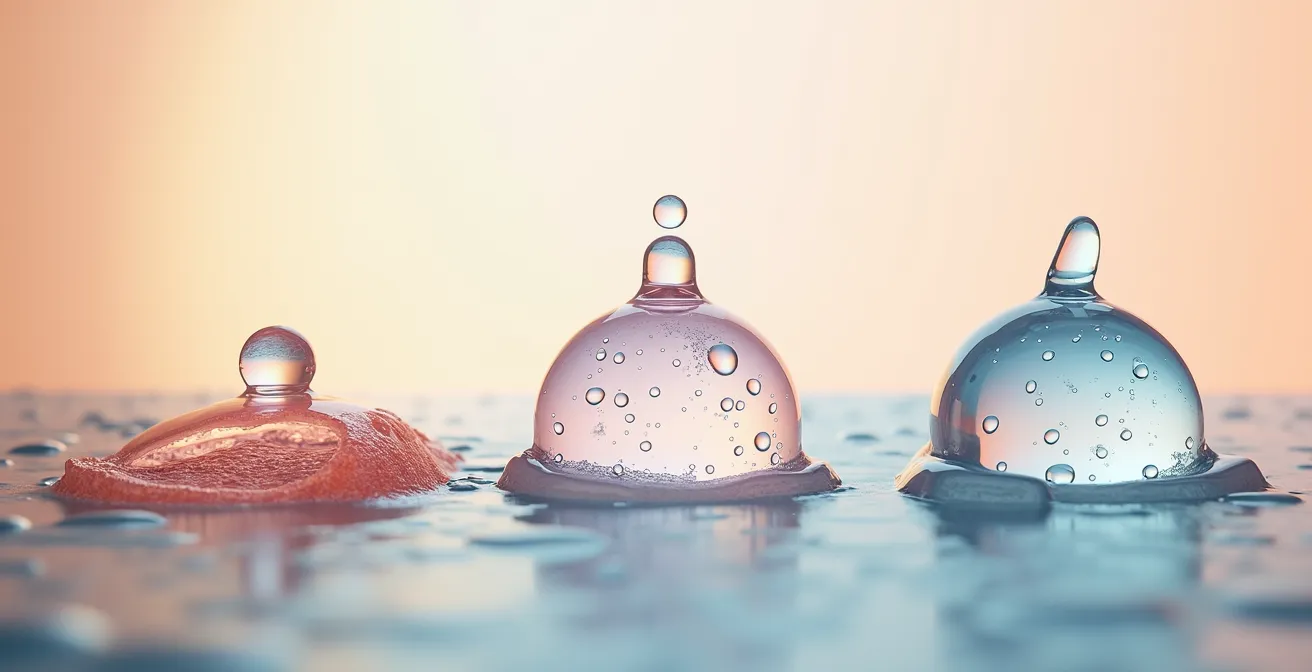
As the image above conceptualizes, the journey from a rough, compromised surface to a smooth, glass-like one is a process of steady restoration. By committing to a gentle, barrier-focused routine for three weeks, you give your skin the time and resources it needs to heal itself from within, resulting in a complexion that is visibly calmer, plumper, and more luminous.
Cream Blush Vs Powder: Which Formula Mimics A Natural Flush On Mature Skin?
For achieving a glass skin look, especially on skin that’s 30+, the choice between cream and powder blush is not just a matter of preference—it’s a strategic decision. Powder blush, with its dry, particulate nature, sits on top of the skin. On a dewy base, it can create unflattering matte patches that break the illusion of luminosity. Worse, it has a tendency to cling to and emphasize any areas of dryness or fine texture, working against the goal of a smooth, youthful finish.
Cream blush, on the other hand, is built for creating textural harmony. Its emollient formula doesn’t just sit on the skin; it fuses with it. This is crucial for mature skin, which naturally produces fewer oils. As one expert noted in a Glass Skin Makeup Tutorial Analysis, “Cream blush ‘melts’ into the dewy base, becoming one with the skin to preserve the luminous finish.” This melting effect ensures there are no harsh edges, just a believable, lit-from-within flush that looks like a natural part of your skin.
The difference in performance is stark when you compare their compatibility with the glass skin aesthetic.
| Feature | Cream Blush | Powder Blush |
|---|---|---|
| Glass Skin Compatibility | Excellent – melts into dewy base | Poor – creates matte patches |
| Mature Skin Performance | Blends with natural oils, no dry patches | Can emphasize texture and dry areas |
| Application Technique | Un-Contour method: apply high on cheekbones | Traditional contouring placement |
| Finish | Luminous, skin-like | Flat, can appear chalky |
Ultimately, the goal of glass skin makeup is to look like you’re not wearing makeup at all—just that you have exceptionally healthy skin. Cream blush is a key player in this deception, delivering color and dimension while maintaining that coveted seamless, hydrated glow. It’s a simple switch that can make a monumental difference in achieving a modern, youthful look.
The Matte Foundation Mistake That Highlights Every Wrinkle
The single biggest makeup mistake that ages women over 30 is using a traditional matte, full-coverage foundation. While the intention is to create a flawless canvas, the reality is that these formulas do the opposite. Matte textures absorb light, which is why they look flat. When this flat texture settles into fine lines or expression creases, it creates tiny, invisible “micro-shadows” that make those lines appear deeper and more defined than they actually are.
A heavy matte finish effectively works against the physics of a youthful glow. Young, healthy skin has a natural dimension and reflects light from its curved surfaces. By applying a flat, opaque layer, you erase this natural luminosity and replace it with a mask-like effect that can look dry, cakey, and tired. This is why the “glass skin” movement has championed dewy, light-reflective finishes that mimic healthy skin.
Case Study: The ‘Wet Effect’ Foundation Hack
A beauty blogger struggling with matte foundations documented a breakthrough technique. By following a Fenty Beauty tutorial, she began mixing a few drops of facial oil directly into her matte foundation before application. This simple act transformed the formula’s texture from flat and drying to dewy and luminous. The resulting “wet effect” allowed the foundation to glide over texture and fine lines instead of settling into them, eliminating the micro-shadows and creating a seamless, radiant finish that looked like real skin.
Moving away from heavy matte foundation doesn’t mean you have to give up on coverage or a polished look. It’s about adopting modern techniques and formulas that prioritize a skin-like finish. The focus shifts from hiding the skin to enhancing it, ensuring the makeup works in harmony with your skin’s texture, not against it.
Action Plan: Your Checklist for a Modern, Luminous Base
- Explore the underpainting technique: Apply your cream blush and bronzer *before* a sheer layer of foundation. This creates a natural-looking flush and contour that appears to come from within the skin.
- Master the foundation cocktail: Add 1-2 drops of a lightweight facial oil or a liquid illuminator to your foundation on the back of your hand. Mix it to create a custom dewy formula.
- Leverage an illuminating primer: Start with a primer that has a pearlescent or radiant finish. This creates a luminous base that shines through your foundation, preventing a flat look.
- Always use a damp beauty sponge: Apply your foundation by pressing and bouncing a damp sponge onto the skin. This sheers out the product for a seamless blend that won’t settle into lines.
- Set your makeup strategically: Use a minimal amount of translucent powder and apply it *only* to the T-zone (forehead, nose, and chin). Leave the high points, like your cheekbones, dewy and reflective.
In Which Order To Apply Essence, Serum, And Oil For The ‘Glazed Donut’ Effect
Achieving the coveted “glazed donut” effect—that plump, dewy, intensely hydrated finish—is an exercise in product layering. The order of application is not arbitrary; it’s dictated by the viscosity of each product. The cardinal rule of skincare layering is simple: apply products from thinnest to thickest consistency. This ensures that the lighter, water-based products can penetrate the skin effectively without being blocked by heavier, oil-based formulas.
Here’s the correct sequence and the ‘why’ behind it:
- Essence (or Toner): This is your first hydrating step after cleansing. Essences are watery liquids packed with humectants. Their primary job is to dampen the skin and prepare it to absorb the products that follow. Applying subsequent products to damp skin can increase their absorption and efficacy. For an intense hydration boost, you can even layer your essence 2-3 times, patting it in until absorbed between applications.
- Serum: Serums are more concentrated treatments with a slightly thicker, often gel-like texture. They contain active ingredients designed to target specific concerns, like hyaluronic acid for plumping, niacinamide for barrier support, or vitamin C for brightening. Applying the serum after the essence allows these powerful ingredients to penetrate deeply into the pre-hydrated skin.
- Oil: Facial oils are the final step in the hydration sequence. As the thickest product, oils are occlusive, meaning they create a protective seal on the skin’s surface. This seal does two things: it locks in all the watery hydration from the essence and serum, preventing it from evaporating, and it reinforces the skin’s natural lipid barrier.
Applying oil before your watery serum would be counterproductive, as the oil would form a barrier that the serum’s molecules couldn’t effectively penetrate. Following the thinnest-to-thickest rule ensures each product can perform its function optimally.
This layering method is the secret to creating that multi-dimensional, lasting glow. It’s not about just one product, but about creating a “hydration sandwich” that leaves the skin looking plump, juicy, and luminous, just like a perfectly glazed donut.
Why Does Retinol Cause Peeling Before It Reveals Better Skin?
The infamous peeling, redness, and irritation that can accompany the start of a retinol regimen—often called the “retinoid uglies”—is a sign that the ingredient is working. This process, known as retinization, is the period during which your skin adapts to the powerful effects of vitamin A. Retinol works by accelerating cellular turnover, essentially telling your skin cells to behave more like their younger, healthier versions. It pushes old, damaged, and sluggish cells to the surface to be shed more quickly, making way for the fresh, new cells underneath.
This rapid exfoliation from within can temporarily disrupt the skin’s moisture barrier, leading to the characteristic dryness and flaking. It’s not an allergic reaction, but rather an adjustment phase. While this process is normal, it can be uncomfortable and discouraging. Fortunately, dermatologists have developed techniques to mitigate the irritation without completely sacrificing the ingredient’s effectiveness, allowing users to get the age-reversing benefits with minimal downtime.
Case Study: Validating the “Retinol Sandwich” Method
To help patients tolerate retinoids, dermatologists began recommending the “sandwich method.” This involves applying a layer of moisturizer, waiting a few minutes, applying the retinol, and then sealing it with another layer of moisturizer. This technique was clinically validated in a 2025 study presented at the American Academy of Dermatology. The results, published in sources like Dermatology Times, showed that while the full sandwich method did slightly reduce the retinoid’s bioactivity, it dramatically decreased irritation, making it an ideal strategy for sensitive skin or first-time users. The “open sandwich” (moisturizer before retinol) maintained full efficacy while still reducing dryness.
The peeling phase is temporary. Once your skin has acclimated—a process that can take anywhere from a few weeks to three months—the irritation subsides. What’s left is the reason retinol is considered the gold standard in anti-aging: smoother texture, reduced fine lines, more even skin tone, and a visible increase in firmness as collagen production is stimulated. Understanding that the peeling is a productive, not destructive, process is key to sticking with it long enough to see the remarkable results.
Why Do Vegetable Oils Cause Sluggishness At The Cellular Level?
The pursuit of glass skin isn’t just about what you put on your face; it’s profoundly influenced by what you put in your body. One of the biggest hidden culprits behind dull, puffy, and reactive skin is a diet high in certain vegetable oils, like soybean, corn, and sunflower oil. The problem lies in their high concentration of Omega-6 fatty acids. While Omega-6 is an essential nutrient, modern Western diets often have a massively imbalanced ratio of Omega-6 to Omega-3 fatty acids, sometimes as high as 20:1 instead of the ideal 1:1 or 2:1.
This imbalance promotes a state of chronic, low-grade inflammation throughout the body, and the skin is one of the first places it becomes visible. At a cellular level, this inflammation creates “sluggishness.” It impairs healthy cell function, slows down repair processes, and can trigger conditions like acne, eczema, and rosacea. Visually, this translates to puffiness, blotchy redness, and a lack of clarity and glow—the exact opposite of the glass skin ideal.
As a leading nutritional dermatology expert from a respected health publication stated, this internal factor cannot be ignored:
No amount of expensive serum can fully counteract the skin-dulling effects of a highly inflammatory diet.
– Nutritional Dermatology Expert, Diet and Glass Skin Connection
To combat this cellular sluggishness, the solution is to consciously shift your dietary fat intake. This means reducing consumption of processed foods cooked in high Omega-6 oils and increasing your intake of anti-inflammatory Omega-3s. Sources like fatty fish (salmon, mackerel), flaxseeds, chia seeds, and walnuts help restore a healthier balance. This dietary shift works from the inside out to calm inflammation, leading to skin that is clearer, less reactive, and naturally more luminous.
Key Takeaways
- Youthful skin reflects light; matte textures absorb it. Ditching heavy powders is the first step to looking more radiant.
- True “glass skin” is a sign of a healthy, repaired skin barrier, not just a temporary glow from a highlighter.
- What you eat directly impacts skin clarity. Reducing inflammatory oils is as important as any topical serum.
Retinol Or Hyaluronic Acid: Which Ingredient Actually Reverses Signs Of Aging?
In the quest for youthful skin, retinol and hyaluronic acid are two of the most celebrated ingredients, but they play fundamentally different roles. Confusing them is common, yet understanding their distinct mechanisms is the key to leveraging both for maximum effect. One is a cosmetic enhancer, while the other is a functional rebuilder. Both are essential for a modern anti-aging strategy, but only one truly reverses the signs of aging.
Hyaluronic Acid (HA) is a humectant, a moisture-binding superstar. Its primary role is hydration. As scientific studies confirm, a single molecule of hyaluronic acid can hold up to 1,000 times its weight in water. When applied topically, it draws moisture from the environment and the deeper layers of your skin to the surface. This results in an immediate plumping effect, making fine lines appear smoother and giving the skin that dewy, glass-like finish. However, this effect is temporary. HA provides a cosmetic improvement by filling the skin with water, but it does not change the skin’s underlying structure.
Retinol, on the other hand, is a cell-communicating ingredient that works at a much deeper level. It is a true age-reverser. Retinol doesn’t just plump the skin; it actively stimulates fibroblasts to produce more collagen and elastin, the proteins that give skin its firmness and structure. It also speeds up cell turnover, helping to fade hyperpigmentation and refine skin texture. This is a functional change. The results take longer to appear—typically 8-12 weeks—but they are structural and long-lasting.
So, which one is better? The question is flawed. They are not competitors; they are partners. Hyaluronic acid gives you the immediate glow and hydration that is characteristic of glass skin, while retinol works in the background to rebuild and repair the skin for genuine, long-term reversal of aging signs.
| Aspect | Retinol | Hyaluronic Acid |
|---|---|---|
| Primary Action | Stimulates collagen production | Attracts and binds moisture |
| Timeframe | 8-12 weeks for visible results | Immediate plumping effect |
| Aging Reversal | Functional – rebuilds collagen | Cosmetic – temporary hydration |
| Glass Skin Role | Long-term texture refiner | Instant glow provider |
| Best Used | Night routine only | Morning and night |
The most effective anti-aging strategy doesn’t force you to choose between them. Instead, it uses hyaluronic acid in the morning for an immediate dewy look and protection, and retinol at night to do the deep, structural repair work. By combining the instant gratification of HA with the long-term benefits of retinol, you can achieve both the immediate look of glass skin and the genuine, lasting results of truly healthier, younger-acting skin.