
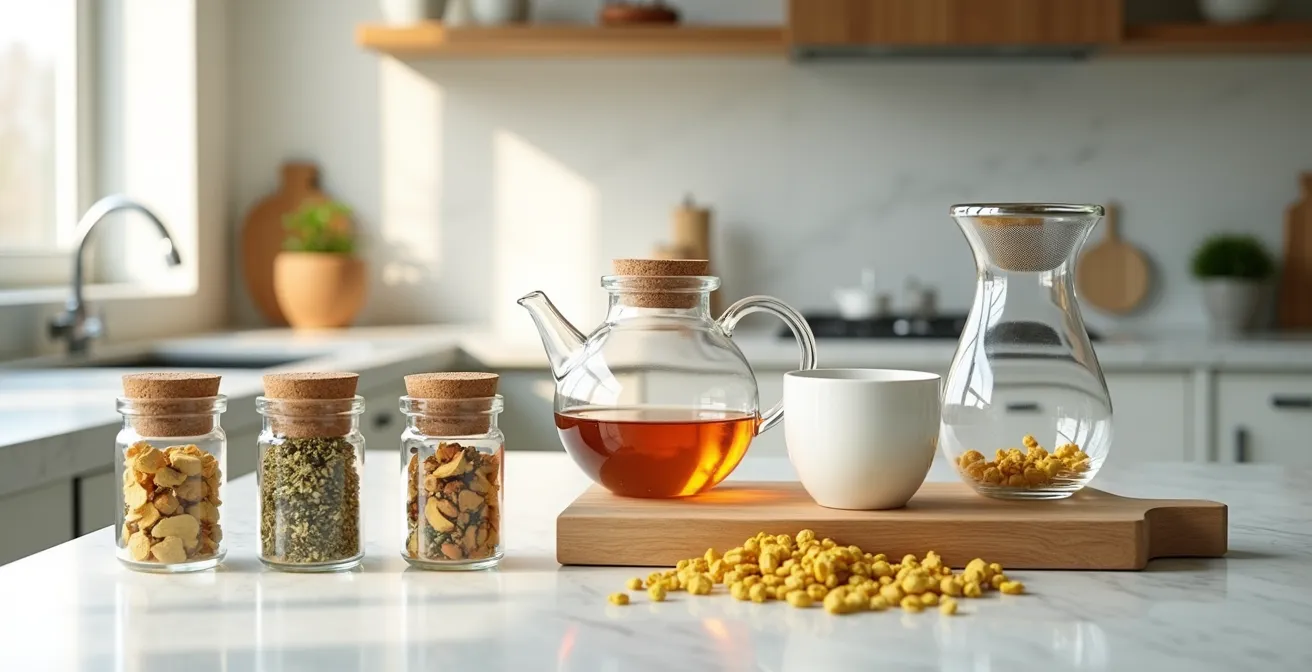
Brewing potent medicinal tea isn’t about one-size-fits-all rules; it’s about matching your method to the specific herb’s chemistry.
- Tough roots and barks (like Valerian or Ginger) require a decoction (simmering) to release their deep-seated medicinal compounds.
- Delicate flowers and leaves (like Chamomile or Lavender) need a gentle infusion at lower temperatures to preserve their fragile volatile oils.
Recommendation: Ditch the generic 3-minute steep and start brewing by plant part to truly unlock your tea’s healing power.
You choose your herbal tea with intention, seeking the calming embrace of chamomile or the digestive relief of peppermint. You follow the standard advice: use hot-but-not-boiling water, steep for a few minutes, and enjoy. But as you sip, a question lingers: is this cup of tea truly delivering the potent, medicinal benefits you’re hoping for? Or is it just a cup of pleasantly flavored water? For health-conscious individuals who turn to tea for tangible results, this uncertainty can be frustrating.
The world of herbal tea is filled with well-meaning but overly simplistic rules. We’re told to avoid boiling water to protect delicate compounds, or to steep everything for a standard 3-5 minutes. While not entirely wrong, these platitudes miss the most crucial element of medicinal brewing: the plant itself. The secret to unlocking nature’s pharmacy isn’t found on a clock, but in understanding the plant’s structure and chemistry. The true key lies in knowing when to use a gentle, quick infusion versus a long, rolling decoction.
What if the real reason your ginger tea feels weak or your valerian tea doesn’t help you sleep has nothing to do with the quality of the herb, but everything to do with how you’re preparing it? This guide moves beyond generic advice to give you the herbalist’s perspective. We will explore the science of extraction, showing you how to tailor your brewing method to the specific part of the plant you’re using—be it a delicate flower, a fragrant leaf, a tough root, or a woody bark. By mastering these techniques, you can transform your daily cup from a simple comfort into a potent, effective, and reliable therapeutic tool.
This article will guide you through the specific needs of popular medicinal herbs, explain the science behind their preparation, and empower you to brew with confidence and purpose. Explore the sections below to start your journey.
Summary: Beyond Flavor: How to Brew Loose Leaf Tea for Maximum Medicinal Potency
- Chamomile vs Valerian Root: Which Herb Actually Treats Chronic Insomnia?
- The Common Herbal Supplement That Blocks Birth Control Effectiveness
- Why Your Supermarket Tea Bags Contain 30% Plastic Dust?
- Placebo or Science: Does Ginger Tea Really Stop Nausea?
- When to Drink Peppermint Tea: Before or After Meals for IBS Relief?
- Lavender vs Rosemary: Which Scent Reduces Blood Pressure Faster?
- Kefir vs Kombucha: Which Drink Has More Viable Probiotics for Skin Health?
- How to Start a Therapy Garden on a Small Balcony?
Chamomile vs Valerian Root: Which Herb Actually Treats Chronic Insomnia?
When sleep feels elusive, many turn to a warm cup of herbal tea. Chamomile and Valerian are the two most common choices, but they are not interchangeable. Their effectiveness depends entirely on their chemical makeup and, crucially, on how they are brewed. Chamomile, with its delicate flowers, is best for mild restlessness and pre-sleep anxiety. It works its magic through a gentle infusion. Using water just off the boil for 3-5 minutes preserves its fragile volatile oils, like chamazulene, which have a soothing, carminative effect on the body and mind. It calms the system but may not be potent enough for chronic insomnia.
Valerian, on the other hand, is a true powerhouse for sleep disorders, but only if prepared correctly. The medicine is in its tough, fibrous root, which requires a decoction to unlock. A simple infusion will not work. A 2024 study demonstrated that 300 mg/kg of valerian extract significantly reduced sleep latency in subjects. This potent effect is achieved by simmering the root to break down its cell walls and extract valerenic acids and other sedative compounds.
The science confirms valerian’s direct action on the brain’s sleep mechanisms. The same study notes that the extract works by increasing the expression of GABA, a crucial inhibitory neurotransmitter for sleep regulation. According to Harshith Chandra Shekhar et al. in their “Impact of a Novel Valerian Extract on Sleep Quality” study, valerian also effectively “countered the sleep-disruptive effects of caffeine by blocking the adenosine receptors.” For those with chronic insomnia, choosing valerian and preparing it as a strong decoction is the science-backed path to a more restful night.
The Common Herbal Supplement That Blocks Birth Control Effectiveness
The belief that “natural” means “harmless” is a dangerous misconception in herbal medicine. While herbs offer profound healing benefits, they are also complex chemical compounds that can interact with pharmaceutical drugs in serious ways. One of the most critical interactions for many individuals is the one between a popular herbal supplement and oral contraceptives. The herb in question is St. John’s Wort (Hypericum perforatum), widely used for symptoms of mild to moderate depression.
This paragraph introduces the concept of herb-drug interactions. For a clear visual metaphor of this process, the illustration below depicts the complexity of how different herbal compounds can interfere with synthetic medications.
The interaction is not a simple cancellation effect; it’s a metabolic one. St. John’s Wort is a potent inducer of an enzyme in the liver called cytochrome P450 3A4 (CYP3A4). This enzyme is responsible for breaking down and clearing many substances from the body, including the hormones in most birth control pills. By revving up this enzyme, St. John’s Wort causes the body to metabolize the contraceptive hormones much faster than intended, drastically lowering their levels in the bloodstream. This can reduce the effectiveness of the birth control to the point where it fails, leading to unplanned pregnancy. This is not a theoretical risk; it is a well-documented and clinically significant interaction that every person using hormonal contraception must be aware of.
Why Your Supermarket Tea Bags Contain 30% Plastic Dust?
The convenience of the teabag often comes at a hidden cost to both our health and the potency of our tea. While many assume tea bags are made of simple paper, a significant portion, especially the “silken” pyramid-shaped bags, are made from plastics like nylon or polyethylene terephthalate (PET). When steeped in hot water, these bags can shed billions of micro-and nanoplastic particles into your cup. This not only introduces unwanted chemicals into your body but also speaks to a larger issue: the compromise of quality for convenience.
These plastic-mesh bags are often used for lower-grade “dust” and “fannings”—tiny broken pieces of tea leaves that have lost most of their volatile oils and medicinal compounds. You’re not only getting a dose of plastic but also a far less potent brew. The real path to medicinal tea is through high-quality, whole loose leaf herbs, which give you full control over the material and preparation. To ensure your current brew is clean, a few simple checks can reveal the nature of your teabag.
Your Action Plan for Plastic-Free Tea
- Check the texture: Plastic tea bags often feel slick and synthetic to the touch, unlike the matte feel of natural paper.
- Test the tear: Safe, unbleached paper bags will tear easily, whereas plastic-mesh bags will stretch and resist tearing.
- Look for certification: Seek out bags explicitly labeled as unbleached paper, biodegradable, or made from materials like soilon (a cornstarch-based PLA).
- Choose loose leaf: The guaranteed way to avoid plastics is to use whole, loose herbs with a glass, stainless steel, or ceramic infuser.
- Store properly: Preserve the potency of your loose leaf tea by keeping it in an airtight, non-plastic container away from direct light and moisture.
By making the switch to loose leaf tea, you eliminate the risk of plastic consumption and simultaneously take a significant step toward brewing a more medicinally effective cup. Whole herbs retain their essential compounds far better than the pre-ground material found in most bags.
Placebo or Science: Does Ginger Tea Really Stop Nausea?
For centuries, ginger has been the go-to remedy for an upset stomach, but is its effect purely psychological, or is there real science at play? The answer is a resounding yes to science, but its effectiveness is almost entirely dependent on the brewing method. The primary anti-nausea compounds in ginger are gingerols (in fresh ginger) and shogaols (which form when ginger is dried or heated). These compounds are non-volatile and deeply embedded in the root’s tough, fibrous structure.
Simply infusing a few thin slices of ginger or, worse, a teabag of ginger dust, in hot water for a few minutes is not enough to extract a therapeutic dose. This is where the herbalist’s method of decoction becomes essential. To truly unlock ginger’s power, you must simmer fresh or dried ginger root in water for an extended period. This process uses sustained heat and time to break down the plant’s cell walls and draw out the maximum amount of bioactive compounds.
This paragraph introduces a table comparing different preparation methods. The data, based on insights from herbalist brewing principles, clearly shows why decoction is superior for potent extraction.
| Preparation Method | Temperature | Time | Compound Extraction |
|---|---|---|---|
| Fresh Ginger Decoction | 100°C (simmering) | 15-20 minutes | Maximum gingerol and shogaol extraction |
| Dried Ginger Infusion | 90-95°C | 5-10 minutes | Moderate shogaol, lower gingerol |
| Ginger Tea Bag | 100°C | 3-5 minutes | Minimal active compounds |
As the table illustrates, a simmering decoction is the only way to achieve a medicinally potent cup of ginger tea. The next time you feel a wave of nausea, don’t just reach for a teabag. Take the time to grate or slice fresh ginger, simmer it for 15-20 minutes, and experience the true, science-backed power of this incredible root.
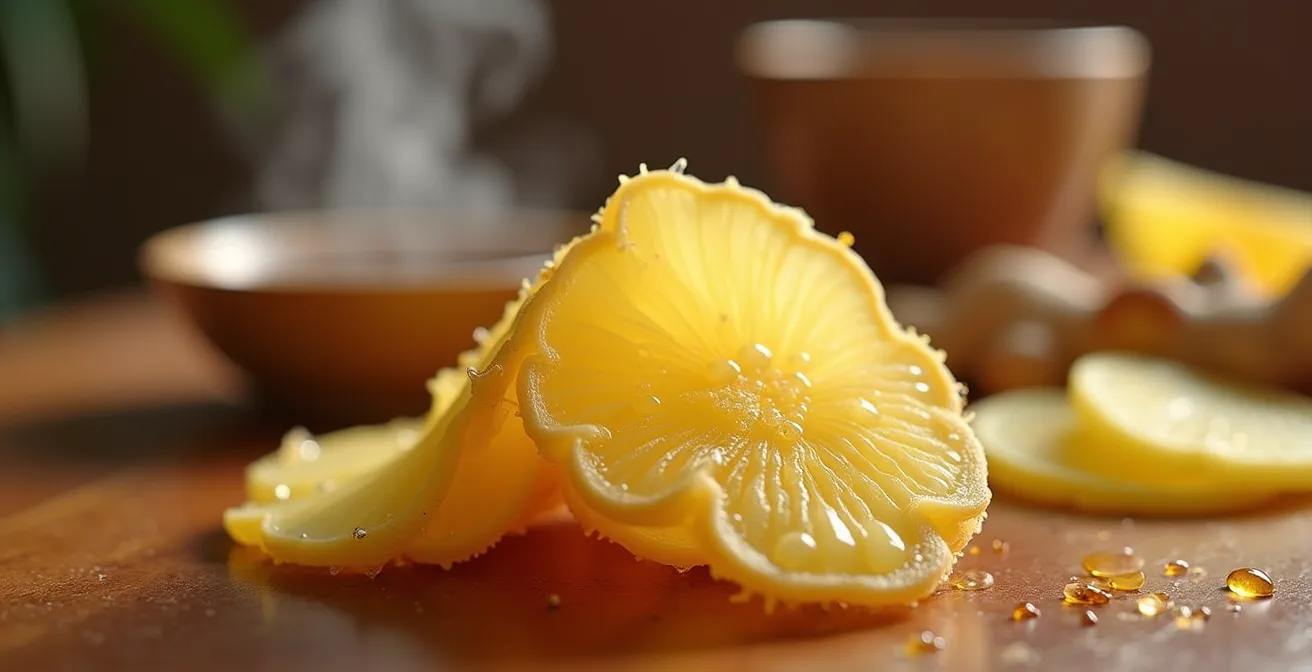
The visible fibers and oils on the surface of freshly cut ginger are a testament to the potent compounds held within. Proper brewing ensures these benefits end up in your cup, not left in the root.
When to Drink Peppermint Tea: Before or After Meals for IBS Relief?
Peppermint tea is a staple for those seeking digestive comfort, particularly for symptoms associated with Irritable Bowel Syndrome (IBS). Its effectiveness, however, can be enhanced by strategic timing. The primary medicinal component in peppermint is menthol, which has an antispasmodic effect on the smooth muscles of the digestive tract. The question of whether to drink it before or after a meal depends on the specific symptoms you want to address.
For preventing intestinal spasms, pain, and cramping, drinking a cup of peppermint tea about 30 minutes before a meal can be highly effective. The menthol helps to relax the gut muscles ahead of time, preventing the painful contractions that can be triggered by eating. Conversely, if your main issues are bloating and gas that build up after eating, drinking peppermint tea after a meal is more beneficial. In this case, its muscle-relaxing properties facilitate the passage of gas and ease feelings of fullness and pressure. It’s a gentle yet effective way to manage these common IBS symptoms.
Case Study: The Importance of Temperature and Time
The principle of specific brewing extends to all herbs. For instance, insights from herbal brewing research show that the delicate flowers of chamomile should be steeped at lower temperatures (around 185°F or 85°C) for just 3 minutes to preserve their fragile volatile oils. In stark contrast, tough materials like chaga mushroom, a woody fungus, require simmering for a minimum of 90 minutes to break down its tough chitin walls and extract its medicinal polysaccharides. As noted in studies on herbal brewing methods, this demonstrates how temperature and time are not arbitrary factors; they are precise tools used to target specific compounds based on the plant’s unique structure and desired therapeutic outcome.
This case study highlights that, just like with peppermint’s timing, the physical preparation of any herb is key. Applying the right temperature and steeping time is what separates a flavorful drink from a truly medicinal one.
Lavender vs Rosemary: Which Scent Reduces Blood Pressure Faster?
The therapeutic power of herbs extends beyond ingestion; their aromatic compounds, or volatile oils, can have profound physiological effects when inhaled. Lavender and Rosemary are two classic examples, both celebrated for their impact on the nervous system, but they work in slightly different ways. Lavender is widely recognized for its calming properties, primarily due to the compound linalool, which has a sedative effect that can help lower heart rate and blood pressure, promoting a state of relaxation.
Rosemary, while also aromatic, has a more stimulating and clarifying effect on the mind, often used to improve focus and memory. While it can reduce stress by lowering cortisol levels, its primary action isn’t sedation. Therefore, for the specific goal of rapidly reducing blood pressure associated with stress, lavender is the more direct and faster-acting choice. The beauty of these herbs is that their most fragrant—and medicinally active—oils are incredibly easy to extract.
As herbalist Organic Olivia explains in her guide on brewing potent tea, the process for aromatic herbs is gentle and swift. This is a perfect example of an infusion where the goal is to capture the essence without over-processing the delicate leaves and flowers.
It doesn’t take too much time or heat to get these beautiful aromatics (and thus, the essential oils within the leaves responsible for their smell and medicine) into your cup
– Organic Olivia, How to Brew the Most Potent Cup of Medicinal Herbal Tea
To benefit from lavender’s hypotensive effects, a simple infusion is all that’s needed. Pouring hot (not boiling) water over the flowers and covering the cup for 5 minutes is enough to release the linalool. The steam itself is part of the medicine, so inhaling the aroma as you wait is a key part of the therapeutic ritual.
Kefir vs Kombucha: Which Drink Has More Viable Probiotics for Skin Health?
While this guide focuses on brewed herbal teas, the quest for health often leads to another category of functional beverages: fermented drinks like Kefir and Kombucha. Both are praised for their probiotic content, which is crucial for gut health, and by extension, skin health. However, they are not created equal. Kefir, particularly milk kefir, is the undisputed champion in both the quantity and diversity of viable probiotic strains.
Kombucha is a fermented tea (usually black or green) that contains a symbiotic culture of bacteria and yeast (SCOBY). It offers beneficial acids and some probiotics, but its microbial diversity is generally lower. Its slight acidity and tea base also provide some antioxidant benefits. It can be a wonderful, fizzy addition to a healthy diet, but its probiotic punch is modest compared to kefir.
Milk kefir, on the other hand, is a fermented milk drink that can contain up to 61 different strains of bacteria and yeasts. This vast and diverse microbiome is more robust and more likely to have a significant impact on colonizing the gut, which is directly linked to reducing systemic inflammation that can manifest as skin issues like acne, eczema, and rosacea. While water kefir exists as a non-dairy option, it typically has a lower strain count than its dairy counterpart. For those seeking the most powerful probiotic source for skin health, milk kefir is the superior choice.
It is interesting to contrast this method of ingesting live cultures with the way herbal teas support gut health. Teas like peppermint, ginger, and chamomile don’t introduce new bacteria; instead, they work by soothing inflammation, reducing muscle spasms, and providing prebiotic fibers that feed the good bacteria already present in your gut. Both approaches—fermented and brewed—are valuable, but they work through entirely different, complementary mechanisms.
Key Takeaways
- The medicinal potency of tea depends on matching the brewing method (infusion vs. decoction) to the plant part (flower, leaf, root, or bark).
- Gentle infusions with hot, not boiling, water preserve the delicate volatile oils in flowers and leaves like chamomile and lavender.
- Tough roots and barks, like ginger and valerian, require a sustained simmer (decoction) to break down cell walls and extract their deep-seated medicinal compounds.
How to Start a Therapy Garden on a Small Balcony?
Bringing the practice of herbalism home is the final step in truly owning your health. Creating a small therapy garden, even on a tiny balcony, connects you to the entire life cycle of your medicine. It’s a deeply rewarding practice that provides you with the freshest, most vibrant herbs possible for your medicinal brews. You don’t need a large plot of land; a few well-chosen pots or a vertical planter can provide a surprising abundance of therapeutic plants.
The key is to select versatile, easy-to-grow herbs that thrive in containers. This allows you to have a living pharmacy right outside your door, ready to be harvested for a fresh, potent cup of tea. Growing your own also gives you complete control over the quality, ensuring your herbs are organic and grown with care.
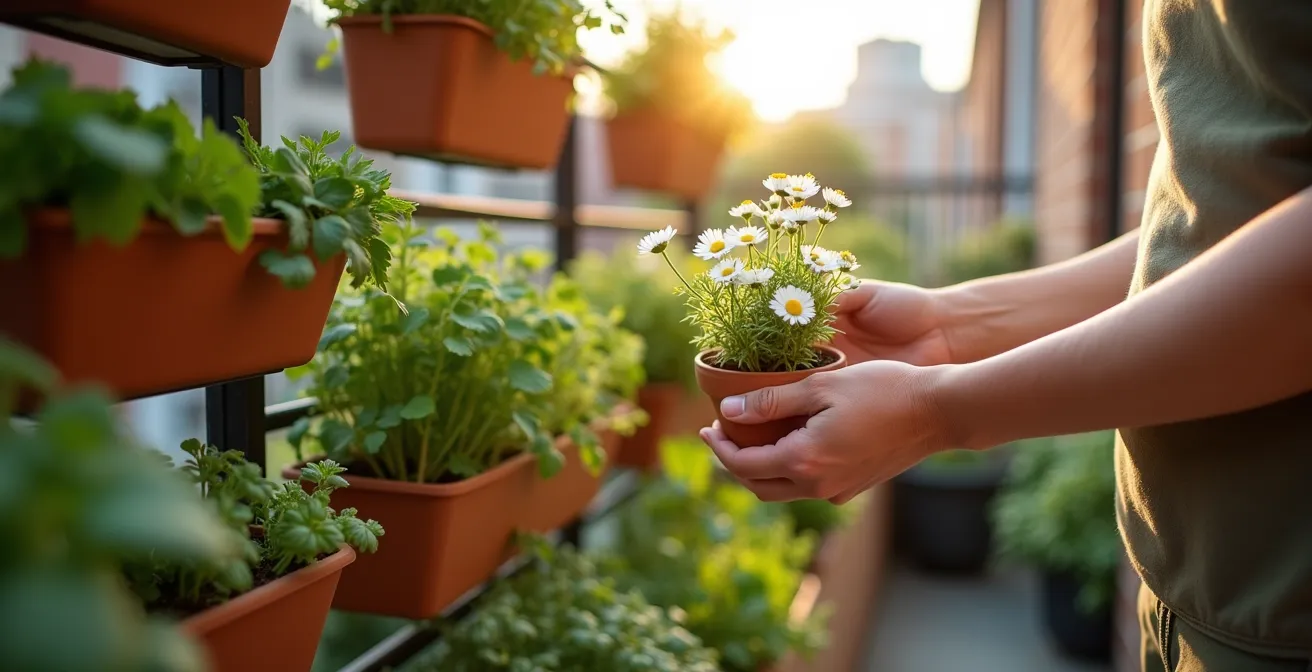
A simple setup with a few key plants can cover a wide range of therapeutic needs. Focus on herbs you will use regularly. A small collection might include:
- Chamomile and Peppermint: These are essential for digestive support and relaxation. They are easy to grow and produce abundantly.
- Lavender: Perfect for its aromatic, stress-reducing properties. Its flowers can be harvested and dried for year-round use.
- Lemon Balm: A member of the mint family, it has a delightful citrusy scent and is known for its calming, mood-lifting properties.
- Ginger: While a tropical plant, it can be successfully grown in a wide, shallow pot. You can harvest parts of the root as needed.
Harvesting at the right time—typically in the morning after the dew has dried but before the sun is too hot—ensures the highest concentration of essential oils. With your own small garden, you are no longer just a consumer of tea; you are a cultivator of your own well-being.
Begin today by choosing one or two herbs that resonate with your needs, and transform a small space into your personal source of healing and tranquility.
Frequently Asked Questions about How to Brew Loose Leaf Tea to Extract Maximum Medicinal Benefits?
Should I drink peppermint tea before or after meals for IBS?
For best results, you can time your peppermint tea based on your primary symptom. According to guidance from herbalists like Getty Stewart, drinking it before meals can help prevent intestinal spasms and cramping, while drinking it after meals is effective for relieving bloating and facilitating the passage of gas through muscle relaxation.
Who should avoid peppermint tea?
While excellent for many digestive issues, people who suffer from GERD (Gastroesophageal Reflux Disease) should avoid peppermint tea. It works by relaxing smooth muscles, including the lower esophageal sphincter, which can worsen symptoms of heartburn and acid reflux.
How does peppermint tea compare to enteric-coated capsules?
The delivery method determines the effect. Peppermint tea provides a milder, more diffuse soothing effect on the entire upper gastrointestinal tract, from the esophagus to the stomach. In contrast, enteric-coated capsules are designed to bypass the stomach and deliver a concentrated dose of peppermint oil directly to the intestines, providing a stronger, more targeted therapeutic effect for conditions like IBS.