
The secret to cooking amazing food from scraps isn’t magic intuition; it’s understanding the simple, scientific rules of flavor that recipes never teach you.
- Every bland or unbalanced dish can be fixed by adjusting the four pillars: Salt, Fat, Acid, and Heat.
- A cuisine’s entire identity is often defined by its starting “aromatic base” (e.g., French onion/celery vs. Asian ginger/garlic).
Recommendation: Stop buying ingredients for a recipe. Instead, start by taking a “food tour” of your own fridge and pantry to see what flavor potential you can unlock today.
That lonely carrot, the half-empty jar of pasta sauce, the wilting herbs… we all know the landscape of a fridge filled with “scraps.” For many home cooks, this sight triggers a familiar paralysis. Without a specific recipe that calls for exactly those items, they feel lost, and a sense of guilt creeps in as perfectly good food inches closer to the bin. The common advice is to “get creative” or “cook intuitively,” but what does that actually mean when you’re staring at a seemingly random collection of ingredients?
The truth is, true culinary freedom doesn’t come from a magical ability to improvise. It comes from liberation from the tyranny of the recipe card. A recipe is just one person’s idea, frozen in time. Your kitchen, your ingredients, and your palate are unique. Instead of trying to replicate someone else’s dish, what if you learned the universal language of food itself? What if you could think like a food chemist, understanding not just *what* to do, but *why* it works?
This is the heart of zero-waste, creative cooking. It’s about seeing that sad-looking celery not as a failure to follow a plan, but as an opportunity to build an aromatic foundation. It’s about tasting a bland sauce and knowing instantly whether it needs a pinch of salt to amplify, a knob of butter to carry flavor, or a squeeze of lemon to brighten. This is not a gift; it is a skill, and it’s built on a few core principles.
This guide will deconstruct the science of flavor into simple, actionable pillars. We will explore how to balance a dish, understand the chemical reactions that create texture and taste, and build a “flavor memory bank” that will become your most reliable guide. Forget the rules on the page; it’s time to learn the rules that govern flavor itself, and set your creativity free.
To help you navigate this new way of thinking, we’ve broken down the core concepts that will transform you from a recipe-follower into a flavor architect. Each section builds upon the last, giving you a complete toolkit for your culinary adventures.
Summary: How to Cook a Gourmet Meal from “Fridge Scraps” Without a Recipe?
- Salt, Fat, Acid, Heat: How to Fix a Bland Sauce Instantly?
- Baking Soda vs Powder: The Chemistry Mistake That Ruins Cakes
- Garlic/Onion vs Ginger/Scallion: Which Base Defines the Cuisine?
- High Heat vs Low and Slow: Which Method Tenderizes Cheap Meat?
- When to Salt: Why Salting Mushrooms Too Early Makes Them Soggy?
- Sweet vs Savory: In What Order Should You Visit Stops to Avoid Palate Fatigue?
- Why Your Supermarket Tea Bags Contain 30% Plastic Dust?
- How to Plan a “Food Tour” in Your Own City on a Budget?
Salt, Fat, Acid, Heat: How to Fix a Bland Sauce Instantly?
Every dish that has ever felt “flat” or “missing something” can almost certainly be diagnosed and fixed using four fundamental pillars: Salt, Fat, Acid, and Heat. This is the universal grammar of cooking. Instead of randomly adding more spices, thinking like a chef means identifying which of these core elements is out of balance. Professional chefs constantly taste and adjust, and their biggest critique of home cooking is chronic under-seasoning. Mastering this framework is the first step toward culinary independence.
Think of it this way: Salt is a flavor amplifier. If your sauce tastes watery or weak, it likely just needs more salt to make the tomato or vegetable flavors pop. Fat is a flavor vehicle; it carries the taste of spices and aromatics across your palate, adding richness and depth. If all the flavors feel separate and aren’t “coming through,” a bit of butter, cream, or oil can bring them together. Acid (like lemon juice, vinegar, or even tomatoes) provides brightness and cuts through richness. If a dish tastes good but not great, a splash of acid is often the secret ingredient that makes it sing. Finally, Heat (from chiles, hot sauce, or spices like cayenne) adds a layer of complexity and excitement.
When you’re experimenting with fridge scraps, this system is your compass. Start by building a base, and then taste at every stage. Is it bland? Add salt. Is it boring? Add acid or heat. By focusing on these four elements, you can confidently build a delicious sauce from almost anything, without ever looking at a recipe.
Baking Soda vs Powder: The Chemistry Mistake That Ruins Cakes
While savory cooking offers flexibility, baking is a science lab. A small mistake in chemistry can be the difference between a light, fluffy cake and a dense, rubbery puck. The most common point of confusion lies with chemical leaveners: baking soda and baking powder. They are not interchangeable, and understanding their distinct roles empowers you to rescue or adapt recipes when you’re missing one, or to simply understand why your baking works (or doesn’t).
Baking soda is pure sodium bicarbonate, an alkaline base. It only creates lift (carbon dioxide bubbles) when it reacts with an acid in your recipe, such as buttermilk, lemon juice, or brown sugar. Baking powder, on the other hand, is a complete package: it contains both a base (baking soda) and a powdered acid. It is designed to be self-activating, needing only liquid to start the reaction. This fundamental difference dictates which one you should use.
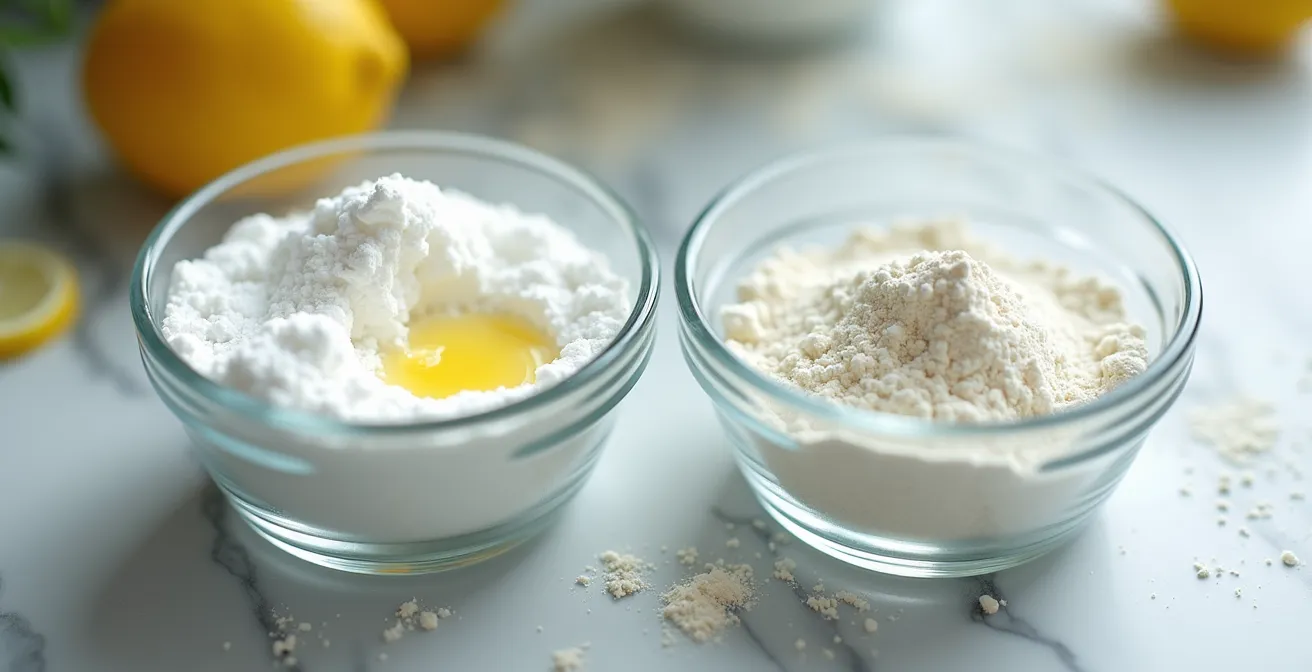
Beyond leavening, these chemicals have other uses. Baking soda’s alkalinity can help tenderize meat or speed up the caramelization of onions. However, there’s no flexibility in measurement. Adding too much baking soda without enough acid to neutralize it results in a soapy, metallic taste and a weirdly yellow crumb. Understanding this simple chemistry frees you from a specific recipe’s constraints and allows you to diagnose problems on the fly.
The following table breaks down the key differences, helping you make the right choice every time.
| Property | Baking Soda | Baking Powder |
|---|---|---|
| Chemical Nature | Pure alkaline (base) | Contains acid + base |
| Activation | Requires acid to activate | Self-activating with liquid |
| Non-Baking Uses | Meat tenderizing, faster caramelization | Limited to baking |
| Flexibility | None – precise measurement required | None – precise measurement required |
Garlic/Onion vs Ginger/Scallion: Which Base Defines the Cuisine?
Before any main ingredient hits the pan, a decision is made that defines the entire soul of the dish: the aromatic base. This is the combination of vegetables and fat that are gently cooked to build the first layer of flavor. While many home cooks default to onion and garlic, consciously choosing your aromatic base is like choosing the genre of music you’re about to play. It sets the stage for everything that follows.
The choice of fat is the first and most crucial step. As culinary expert Samin Nosrat explains in her book *Salt, Fat, Acid, Heat*:
Fat determines the particular flavors of regional cooking. You typically wouldn’t start a French dish with coconut oil, and you wouldn’t start making an Italian pasta dish with sesame oil. Fat drives flavor in a dish, so picking the right one makes a difference.
– Samin Nosrat, Salt, Fat, Acid, Heat
Once you’ve chosen your fat, the aromatics complete the identity. Sautéing onion, carrots, and celery in butter creates the classic French mirepoix, the foundation for countless stews and sauces. Swap the butter for olive oil, and you have Italian soffritto, the start of a perfect bolognese. The combination of ginger, garlic, and scallions in sesame oil immediately signals an Asian flavor profile. By mastering these foundational combinations, you can take the same set of core ingredients (like chicken and a few vegetables) and transport them to a completely different part of the world.
Here is a quick guide to some of the world’s most essential aromatic bases:
- French (Mirepoix): Onions, carrots, celery in butter
- Italian (Soffritto): Onions, celery, carrots in olive oil
- Asian: Ginger, garlic, scallions in sesame oil
- Cajun (Trinity): Onions, celery, bell peppers
- Indian: Onions, garlic, ginger in ghee
High Heat vs Low and Slow: Which Method Tenderizes Cheap Meat?
Controlling temperature is one of a cook’s greatest superpowers. It’s how you create crispy skin, juicy interiors, and transform tough, inexpensive cuts of meat into meltingly tender meals. The method you choose—a quick sear over high heat or a long, slow braise—depends entirely on the type of protein you’re working with. Getting this right is key to rescuing those forgotten cuts from the back of the freezer.
For tough, sinewy cuts rich in collagen and connective tissue (like chuck roast, pork shoulder, or brisket), low and slow is the only way. High heat would only make these cuts tougher and drier. A long, slow cook in liquid (braising) or with gentle ambient heat (slow-roasting) gives the collagen time to break down and melt into gelatin, resulting in that fall-apart texture. This is the magic that turns cheap scraps into a luxurious meal.
Conversely, for tender, lean cuts (like chicken breast, fish fillets, shrimp, or a good steak), high heat and speed are your friends. The goal here is to cook the protein quickly to retain moisture, creating a beautiful brown crust via the Maillard reaction without overcooking the interior. For these items, visual cues are often enough, but for larger pieces like a steak, an instant-read thermometer is your best tool for guaranteeing perfect doneness without guesswork.
Regardless of method, a crucial tip from cooking experts is to use medium heat or lower when sautéing aromatics like garlic at the beginning. This prevents them from burning and turning bitter, which would ruin the flavor foundation of your entire dish. Temperature control isn’t just for the main event; it’s for every step of the process.
When to Salt: Why Salting Mushrooms Too Early Makes Them Soggy?
We’ve established that salt is a flavor amplifier, but its power extends far beyond taste. Salt is a master of moisture, and *when* you add it can dramatically change the texture of your food. Understanding the science of osmosis—the process by which salt draws water out of cells—is the key to achieving perfectly crispy mushrooms instead of a soggy, grey mess, or a tender slaw instead of a tough, crunchy one.
The classic example is mushrooms. If you salt them at the beginning of cooking, the salt immediately begins to pull water out of their cell walls. They will steam in their own liquid, preventing them from browning. The secret is to cook them in a hot, dry pan until they are deeply golden brown and crispy, and only then add your salt. This allows the Maillard reaction to happen first, creating complex flavor and a desirable texture.
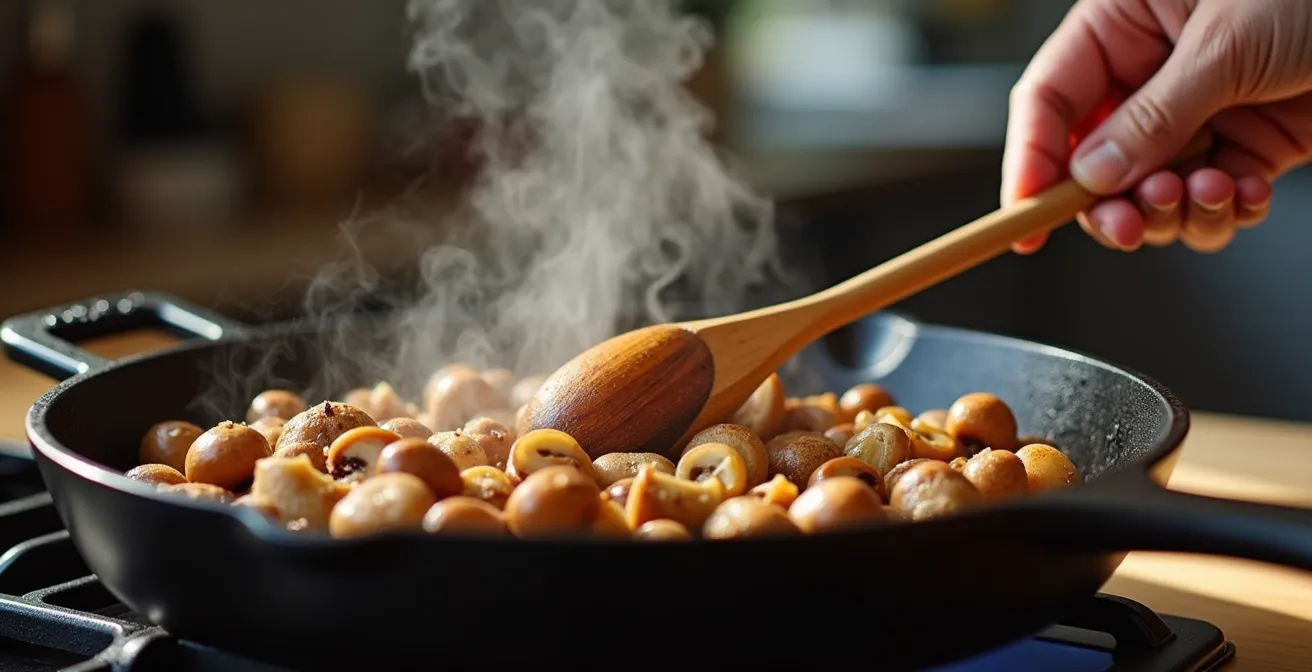
This principle works in reverse for other ingredients. Salting eggplant *before* cooking helps draw out bitter moisture, resulting in a creamier final product. Salting shredded cabbage for a slaw well in advance makes it tender and pliable. The strategic application of salt is a technique that separates novice cooks from seasoned chefs. It’s about thinking ahead and using an ingredient not just for flavor, but for its physical effect on the food.
To use salt like a pro, follow this strategic timeline:
- Salt mushrooms AFTER browning to maintain crispy texture.
- Salt eggplant BEFORE cooking to remove bitterness.
- Salt cabbage EARLY to make it pliable for slaws.
- Avoid salting potatoes before frying for maximum crispiness.
- Remember to season lightly at every step of cooking for a deeply balanced flavor.
Sweet vs Savory: In What Order Should You Visit Stops to Avoid Palate Fatigue?
When building a dish from scratch, it’s easy to focus on the main savory notes. But what truly elevates a good meal to a great one is the dance between all the elements of taste: sweet, savory, sour, and rich. Thinking about this balance is like planning a “food tour” for your palate. If every “stop” on the tour is intensely rich and savory, you’ll quickly experience “palate fatigue,” where flavors become muddled and overwhelming. The key is to introduce contrasting notes at the right moments.
This is where your senses become your most reliable guide, far more trustworthy than a written measurement. As the legendary chef Jacques Pépin wisely stated:
As legendary chef Jacques Pépin has said, a recipe is basically ‘a moment in time which can never be duplicated exactly again.’ Your senses are way more reliable than a number written on a page.
– Jacques Pépin, Quoted in Oprah Magazine on Intuitive Cooking
Your nose, in particular, is a powerful tool. You can easily smell when garlic is about to burn, but you can also learn what ingredients smell like as they transform. For example, as a resource from The Candid Cooks points out, you can learn to use your senses to guide your cooking. Properly caramelized sweet potatoes, for instance, release a powerfully sweet aroma, signaling that they have developed maximum flavor and it’s time to lower the heat before they burn. This sensory feedback is your cue to add a contrasting element, perhaps a dash of sour lime juice or a savory herb, to balance that intense sweetness.
Think of layering flavors in an order that keeps the palate engaged. Start with your savory aromatic base. As you add richer components, consider where you can introduce a “palate cleanser” within the dish itself—a sprinkle of fresh, acidic parsley; a sweet counterpoint from a caramelized onion; or a bitter note from charred greens. This prevents any single flavor from dominating and creates a more dynamic, exciting eating experience.
Key Takeaways
- True intuitive cooking comes from mastering the scientific pillars of flavor (Salt, Fat, Acid, Heat), not from guesswork.
- The identity of a dish is set by its aromatic base; changing the fat and aromatics can transport the same ingredients to a new cuisine.
- The timing of when you add an ingredient, especially salt, is as crucial as the ingredient itself for controlling texture.
Why Your Supermarket Tea Bags Contain 30% Plastic Dust?
The title of this section might seem jarringly specific, referencing a real concern about microplastics in our food chain. But let’s pivot from that single, startling fact to the much larger philosophy it represents: a disconnect from our food and a culture of waste. The zero-waste mindset isn’t just about saving money or being “eco-friendly”; it’s a powerful rebellion against a system that encourages us to throw away perfectly good resources. And the most shocking waste happens right in our own homes.
The statistics are staggering. According to a 2024 report from the UN Environment Programme, an estimated 1.05 billion tonnes of food went to waste in 2022. The most sobering detail? Households were responsible for 631 million tonnes of that, or a full 60% of all food wasted globally. This isn’t a problem caused by farms or supermarkets; it’s a problem happening in our own refrigerators.
This is the “why” behind learning to cook from scraps. Every wilted herb or leftover spoonful of rice you rescue is a small act of defiance. It’s a vote for resourcefulness over convenience. The paralysis we feel when faced with ingredients not listed in a recipe is a direct symptom of this wasteful culture. We’ve been taught to buy for the recipe, not to cook from what we have. By learning the fundamental principles of flavor, you are not just learning a new skill; you are adopting a more sustainable and rewarding relationship with food.
Breaking this cycle starts with seeing your fridge not as a graveyard for forgotten groceries, but as a treasure chest of possibilities. The ability to transform those “scraps” into a delicious meal is the most practical and impactful way any individual can combat global food waste.
How to Plan a “Food Tour” in Your Own City on a Budget?
Now that you understand the principles, it’s time to put them into practice. The best way to build culinary intuition is to actively create a “Flavor Memory Bank.” This means moving from passive eating to active tasting. We’ll re-frame the idea of a “food tour” away from expensive restaurants and into your own kitchen. Your city is your pantry, and your budget is whatever you have on hand. This is the final step in becoming a truly intuitive, zero-waste cook.
This “tour” is about deliberate practice. Instead of trying a new, complex recipe every night, pick a favorite dish and cook it repeatedly. Pay attention to the visual and aromatic cues. What does it look like just before it’s done? What does it smell like? Take notes, even if it’s just in the margins of a cookbook, about what worked. Did adding a little more acid at the end make a difference? This focused repetition is how you build deep, reliable knowledge that no recipe can teach you.
The goal is to stop relying on time and start relying on your senses. When you go to the store, buy produce that looks fresh and exciting, not just what’s on your list. This forces you to apply your new knowledge of flavor pillars and aromatic bases to what’s available. This is the playground where you solidify your skills.
Your Action Plan: Building a Flavor Memory Bank
- Repetition & Observation: Cook one of your favorite dishes repeatedly, focusing on memorizing the visual, aromatic, and textural cues at each stage.
- Active Note-Taking: When you successfully modify a dish (e.g., adding a new spice, a splash of vinegar), write down what you did and why it worked.
- Sensory Checkpoints: Practice tasting at every step of cooking—after adding salt, after adding acid, after simmering—to understand how each addition changes the overall profile.
- Market-Led Cooking: Challenge yourself to buy one vegetable you don’t normally use based on its appearance and build a simple dish around it using the flavor pillar framework.
- Deconstruct Your Meals: When you eat something delicious (at home or out), try to mentally identify the core components. Can you taste the fat used? The acid? The herbs in the aromatic base?
Your journey to becoming a creative, zero-waste chef starts now. Open your fridge, see the possibilities instead of the problems, and cook something delicious that only you could have made.