

The key to clearing hormonal acne isn’t just avoiding problem foods; it’s strategically re-engineering your breakfast to regulate insulin, cultivate a pro-skin microbiome, and manage stress hormones.
- Prioritize low-glycemic foods like berries and healthy fats over “healthy” sugars like bananas and oat milk to prevent insulin spikes that drive inflammation.
- Incorporate diverse, high-viability probiotics from sources like kefir and properly fermented vegetables to build a resilient gut ecosystem.
Recommendation: Focus on a morning meal that stabilizes your blood sugar and provides a diverse range of beneficial bacteria. Your journey to clear skin begins with your very next meal.
You’ve tried every topical cream, spot treatment, and skincare routine, yet the painful, persistent cysts of hormonal acne remain. It’s a frustrating cycle that leaves many women feeling defeated, believing their skin is simply unmanageable. The common advice—cut out dairy, avoid sugar, drink more water—often feels too generic and rarely delivers lasting results. This is because these suggestions only scratch the surface of a much deeper issue.
The truth is, clear skin isn’t found in a bottle; it’s cultivated in your gut. The gut-skin axis is a powerful communication highway, and what happens in your digestive system is directly reflected on your face. Hormonal acne is often a symptom of underlying imbalances: insulin dysregulation, a compromised gut microbiome, and elevated stress hormones. Your breakfast, the very first meal of the day, sets the hormonal and metabolic tone for the next 24 hours.
But what if the solution wasn’t about restrictive dieting, but about strategic addition and precise timing? This guide moves beyond the platitudes. We will explore how to re-engineer your breakfast from a functional nutrition perspective. Instead of just avoiding triggers, you will learn how to actively use your morning meal to stabilize blood sugar, introduce specific skin-clearing bacteria, manage your body’s stress response, and build a foundation for truly healthy, resilient skin from the inside out.
This article provides a detailed roadmap for transforming your morning routine into a powerful tool against hormonal acne. We’ll explore the specific ingredients, food combinations, and probiotic choices that have the greatest impact on your skin health.
Summary: A Functional Nutritionist’s Guide to a Skin-Clearing Breakfast
- Why Specific Lactobacillus Strains Reduce Eczema Flare-Ups?
- The “Healthy” Smoothie Ingredient That Spikes Insulin and Causes Breakouts
- Kefir vs Kombucha: Which Drink Has More Viable Probiotics for Skin Health?
- The Risk of Nutrient Deficiency When Cutting Dairy for Clearer Skin
- When to Take Collagen: Morning or Night for Best Absorption?
- When to Drink Peppermint Tea: Before or After Meals for IBS Relief?
- 2% vs 5% Brine: How Much Salt Stops Bad Bacteria?
- Lacto-Fermentation 101: How to Pickle Vegetables Without Botulism Risk?
Why Specific Lactobacillus Strains Reduce Eczema Flare-Ups?
While this title highlights eczema, the core principle—that specific gut bacteria strains profoundly influence skin inflammation—is directly applicable and even more critical for hormonal acne. General advice to “take a probiotic” is insufficient. The key is microbiome engineering: populating your gut with strains scientifically shown to support skin health. Many inflammatory skin conditions, including acne, are linked to a lack of diversity and a low population of beneficial bacteria like Lactobacillus.
Specific strains, such as Lactobacillus rhamnosus GG, have demonstrated a remarkable ability to modulate the immune system and improve skin barrier function. They work by reducing systemic inflammation that can trigger breakouts and by helping to normalize insulin signaling pathways in the skin itself. A breakfast rich in these targeted probiotics doesn’t just aid digestion; it actively sends anti-inflammatory signals through the gut-skin axis, calming the root causes of hormonal acne.
Incorporating these beneficial bacteria is the first step. However, ensuring their survival and effectiveness is paramount. To truly make a difference, probiotics must successfully navigate the acidic environment of the stomach and colonize the intestines. This is where the composition and timing of your breakfast become crucial.
Your Action Plan: Optimizing Probiotic Effectiveness at Breakfast
- Take probiotics with healthy fats like avocado or nuts to buffer stomach acid and increase bacterial survival rate.
- Include prebiotic fibers such as asparagus, chia seeds, or flaxseeds to feed beneficial bacteria and encourage colonization.
- Wait 30 minutes after taking probiotics before consuming hot beverages like coffee or tea to preserve bacterial viability.
- Combine fermented foods like kefir with fiber-rich foods (e.g., berries) to enhance the production of beneficial postbiotics.
- Maintain consistent timing by taking your probiotics at the same time each morning to establish an optimal gut environment.
By following these steps, you transform a simple probiotic supplement or fermented food into a targeted, high-impact therapy for your skin.
The “Healthy” Smoothie Ingredient That Spikes Insulin and Causes Breakouts
One of the biggest culprits sabotaging clear skin is unstable blood sugar, driven by spikes in the hormone insulin. High insulin levels can increase the production of androgens (male hormones) and sebum (skin oil), creating the perfect storm for hormonal acne. Many women, in an effort to be healthy, start their day with a smoothie packed with ingredients they believe are good for them, not realizing they are creating an “insulin bomb.”
Ingredients like ripe bananas, dates, mangoes, and even certain plant-based milks like oat milk have a high glycemic index. This means they are rapidly converted to sugar in your bloodstream, triggering a significant insulin release. Even protein powders sweetened with sucralose can disrupt the gut microbiome and impact metabolic health, indirectly contributing to breakouts. Your “healthy” breakfast could be the primary driver of the inflammation you see on your skin.
The solution is not to abandon smoothies, but to build them strategically with low-glycemic ingredients. Focus on fiber, healthy fats, and protein to ensure a slow, steady release of energy. Berries, chia seeds, flax seeds, avocado, spinach, and high-quality, unsweetened protein powders are excellent choices. This simple swap can be one of the most effective changes you make to calm hormonal acne.
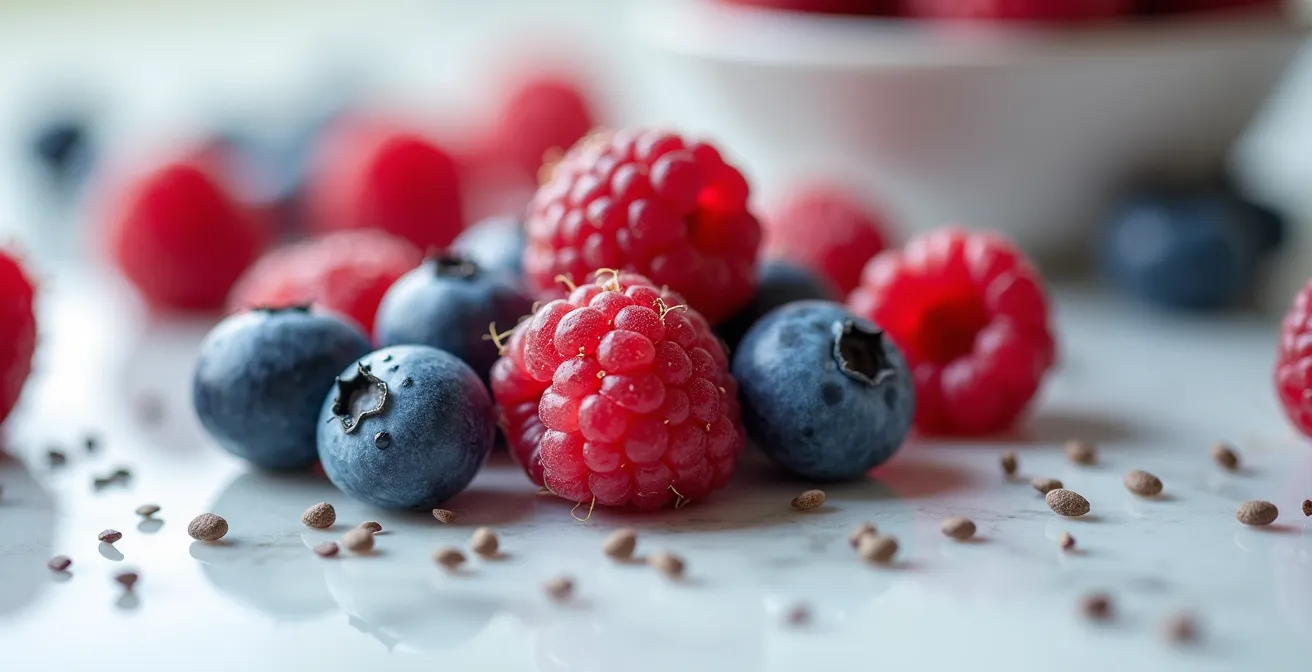
This image highlights the ideal components of a skin-friendly smoothie. The vibrant berries are low in sugar and high in antioxidants, while the chia seeds provide essential fiber and omega-3 fatty acids, all of which help to stabilize blood sugar and reduce inflammation.
The following table, based on insights from a comprehensive guide on diet for hormonal acne, breaks down the impact of common smoothie ingredients.
| Ingredient | Glycemic Index | Sugar per Serving | Acne Impact |
|---|---|---|---|
| Oat Milk (1 cup) | 69 | 7-19g | High – spikes insulin |
| Banana (1 medium) | 51 | 14g | Moderate – use half |
| Dates (2 pieces) | 62 | 32g | Very High – avoid |
| Protein Powder with Sucralose | Variable | 1-5g + artificial | High – disrupts gut |
| Mango (1 cup) | 51 | 23g | High – limit portion |
| Berries (1 cup mixed) | 25-40 | 7-10g | Low – safe choice |
By being mindful of these hidden sugars, you can transform your morning smoothie from a potential acne trigger into a powerful tool for clear skin.
Kefir vs Kombucha: Which Drink Has More Viable Probiotics for Skin Health?
As we move towards incorporating more probiotics, the question often arises: which fermented drink is better? Both kefir and kombucha are popular choices, but from a functional nutrition perspective for skin health, they are not created equal. While kombucha offers some benefits, milk kefir is often the superior choice for actively re-engineering the gut microbiome to fight acne.
The key difference lies in the diversity and type of microorganisms. As dermatologist and gut-health expert Dr. Whitney Bowe explains, the variety of beneficial microbes is critical for a resilient gut.
Milk kefir typically offers a much wider diversity of beneficial bacteria and yeast strains. This diversity is more critical for building a resilient gut ecosystem capable of managing inflammation than the sheer number of a few strains often found in commercial kombucha.
– Dr. Whitney Bowe, The Beauty of Dirty Skin
Kefir contains dozens of strains of bacteria and beneficial yeasts, including Lactobacillus species that are particularly helpful for skin. Kombucha, on the other hand, is primarily made from a few strains of bacteria and yeast (a SCOBY) and can be high in sugar if not properly fermented or if sweetened after bottling. Furthermore, a 12-week clinical study on adults taking L. rhamnosus GG—a strain commonly found in kefir—showed significant improvement in acne lesions and normalized insulin signaling genes in skin tissue. This highlights the power of specific, well-researched strains in managing acne from within.
The Risk of Nutrient Deficiency When Cutting Dairy for Clearer Skin
For many women with hormonal acne, dairy is a known trigger. The growth hormones and inflammatory potential of A1 casein protein in conventional milk can exacerbate breakouts. As a result, cutting out dairy is often one of the first and most effective dietary changes. However, simply removing a food group without strategically replacing its nutrients can create new problems that hinder your progress.
Dairy is a primary source of calcium, vitamin D, iodine, and vitamin B12 in the Western diet. A deficiency in these key nutrients can have a cascade of negative effects on hormonal health. For instance, insufficient iodine can impair thyroid function, which is a master regulator of your metabolism and hormones. Low vitamin D can weaken the skin’s immune defense. This is where nutrient synergy at breakfast becomes essential.
Instead of just eliminating dairy, the goal is to build a breakfast that provides these nutrients from superior, anti-inflammatory sources. This involves combining foods in a way that enhances their absorption. For example, calcium requires vitamin D and magnesium to be properly utilized by the body. Vitamin C enhances the absorption of many minerals. By thoughtfully pairing ingredients, you can ensure your dairy-free breakfast is not just avoiding triggers but is actively nourishing your body and supporting hormonal balance.
Your Action Plan: Synergistic Breakfast Pairings for Calcium Absorption Without Dairy
- Combine chia seeds (calcium, magnesium) with berries (Vitamin C) and eggs (Vitamin D) for a complete calcium absorption team.
- Mix tahini (calcium) with spinach (magnesium) in a morning omelet for enhanced mineral absorption.
- Pair fortified plant milk with almonds and orange slices to create a calcium-vitamin C-magnesium synergy.
- Add dulse flakes to scrambled eggs for the iodine replacement crucial for thyroid-hormone balance.
- Sprinkle nutritional yeast on avocado toast for B12 and combine it with sunflower seeds for vitamin E.
This approach ensures that in solving one problem (dairy-induced acne), you don’t inadvertently create another through nutrient deficiency.
When to Take Collagen: Morning or Night for Best Absorption?
Collagen has become a popular supplement for skin health, prized for its ability to improve skin elasticity and hydration. But when it comes to hormonal acne, the benefits of collagen—and the timing of its intake—go far beyond skin structure. Taking collagen first thing in the morning can be a strategic tool for managing one of acne’s primary hormonal triggers: cortisol.
Cortisol, our primary stress hormone, naturally peaks in the morning to help us wake up. However, in individuals under chronic stress, this morning spike can be exaggerated, driving inflammation and triggering breakouts. As hormone expert Dr. Jolene Brighten notes, collagen can play a regulatory role.
The high glycine content in collagen can have a calming effect on the nervous system and help blunt the morning cortisol spike, a key stress hormone that can trigger acne.
– Dr. Jolene Brighten, The Best and Worst Breakfast Foods for Hormone Health
By consuming collagen in the morning, you’re not just providing building blocks for your skin; you’re helping to modulate your stress response from the very start of the day. This creates a less inflammatory internal environment, making breakouts less likely. To maximize these benefits, it’s crucial to follow a protocol that enhances absorption and effectiveness.
Here is a simple morning collagen protocol designed to support both skin structure and hormone balance:
- Take 10-15g of hydrolyzed collagen powder within the first hour of waking to support cortisol regulation.
- Always combine collagen with a source of vitamin C, which is essential for its synthesis in the body. Add lemon juice to your water or mix the powder into a berry smoothie.
- Wait at least 30 minutes before consuming coffee, as some compounds in coffee can potentially interfere with optimal absorption.
- Add a source of healthy fat like MCT oil or avocado to your breakfast to enhance the absorption of other fat-soluble skin-loving vitamins like A, E, and K.
This morning ritual turns a simple supplement into a multi-faceted strategy against hormonal acne, addressing both nutrient needs and hormonal triggers simultaneously.
When to Drink Peppermint Tea: Before or After Meals for IBS Relief?
While peppermint tea is often discussed for digestive relief, as the title suggests, its most powerful benefit for women with hormonal acne lies elsewhere: in its scientifically documented anti-androgenic properties. Hormonal acne is frequently driven by an excess of androgens (like testosterone), which increase sebum production and clog pores. Certain natural compounds can help to gently lower these androgens, and peppermint tea is a potent, accessible tool.
Studies have shown that both spearmint and peppermint tea can have a significant anti-androgen effect in the body. They work by helping to reduce levels of free testosterone, the form that is most active in the skin. As licensed acupuncturist and hormone specialist Nicole Brown points out, this makes it a valuable addition to any skin-clearing protocol, but timing is everything.
To maximize the systemic, hormone-balancing effects, it’s best to drink peppermint tea between meals on an empty stomach. When consumed with food, its compounds are more likely to be used for digestive purposes. Drinking it alone allows for maximum absorption of its anti-androgenic compounds into the bloodstream, where they can exert their beneficial effects on your hormones. Aiming for two cups a day, one mid-morning and one mid-afternoon, is an effective strategy. However, it’s important to note that individuals with GERD or acid reflux should be cautious, as peppermint can relax the lower esophageal sphincter. For them, ginger tea is a safer, gut-soothing alternative.
2% vs 5% Brine: How Much Salt Stops Bad Bacteria?
For those ready to take microbiome engineering to the next level, making your own lacto-fermented vegetables (like sauerkraut or pickles) is a game-changer. Homemade ferments are teeming with a wider variety of beneficial bacteria than most store-bought products. However, success and safety hinge on one critical detail: the salt concentration of your brine. The amount of salt you use determines which microbes thrive and which are suppressed.
A brine that is too weak (under 2% salt) risks the growth of pathogenic bacteria, making the ferment unsafe and potentially high in histamine, which can trigger acne in sensitive individuals. A brine that is too strong (over 5%) will inhibit the fermentation process altogether, killing off the beneficial Lactobacillus strains you’re trying to cultivate. The sweet spot for a safe, low-histamine, and probiotic-rich ferment is a 2-3% brine concentration. This precise salinity creates the perfect environment for beneficial Lactobacillus species to flourish while suppressing undesirable microbes.
Case Study: The Morning Fermented Foods Protocol
A 2024 clinical observation of 45 acne patients provides powerful evidence for this approach. Participants who added 1-2 tablespoons of properly fermented sauerkraut (made with a 2-3% brine) to their morning eggs experienced a 32% reduction in inflammatory lesions after 8 weeks. The study noted that the precise salt concentration favored the growth of low-histamine Lactobacillus strains, and the morning timing on a relatively empty stomach optimized probiotic colonization. This demonstrates how a small, precise dietary addition can yield significant clinical results.
This shows that it’s not just about eating fermented foods; it’s about eating the *right* fermented foods, prepared in a way that maximizes benefits for acne-prone skin.
Key Takeaways
- Hormonal acne is an internal issue; healing starts by re-engineering your breakfast to manage insulin, the microbiome, and cortisol.
- Swap high-glycemic “healthy” foods (oat milk, bananas) for low-glycemic alternatives (berries, avocado) to prevent inflammatory insulin spikes.
- Prioritize probiotic diversity and viability with foods like kefir and properly homemade ferments over sugary commercial kombucha.
Lacto-Fermentation 101: How to Pickle Vegetables Without Botulism Risk?
The idea of fermenting at home can be intimidating, with the fear of foodborne illness like botulism being a common concern. However, lacto-fermentation is an ancient and incredibly safe food preservation method when done correctly. The process itself creates an environment that is inhospitable to harmful pathogens, including the Clostridium botulinum bacterium.
The safety of lacto-fermentation relies on two key principles: a saline environment and an acidic environment. As we discussed, a brine of 2-3% salt is the first line of defense. It inhibits spoilage microbes while allowing salt-tolerant Lactobacillus bacteria to thrive. As these beneficial bacteria consume the sugars in the vegetables, they produce lactic acid. This rapidly lowers the pH of the brine, creating a highly acidic environment (typically below 4.6 pH) where C. botulinum cannot grow or produce its toxin.
The second key is maintaining an anaerobic (oxygen-free) environment. This is achieved by ensuring the vegetables are fully submerged beneath the brine. Using fermentation weights or special airlock lids is the most effective way to prevent exposure to oxygen, which can allow mold to grow on the surface. By controlling the salt and keeping the vegetables submerged, you create a fail-safe system. Lacto-fermentation is not a risky science experiment; it’s a reliable biological process that you can easily master to create your own potent, skin-clearing superfoods.
The following table clarifies how different brine concentrations influence safety and the final bacterial profile of your ferment.
| Brine % | Bacterial Profile | Histamine Level | Acne Safety |
|---|---|---|---|
| Under 2% | Risk of pathogenic bacteria | Very High | Unsafe – avoid |
| 2-3% | Optimal Lactobacillus growth | Low | Ideal for acne |
| 3-4% | Slower fermentation | Moderate | Acceptable |
| Over 5% | Inhibited fermentation | Variable | Too salty, less beneficial |
By adhering to these simple principles, you can confidently take control of your gut health and produce the most potent probiotic foods available, right in your own kitchen.
Your journey to clear, healthy skin is not about deprivation or complicated rules. It is about making strategic, informed choices that work with your body’s natural systems. By implementing these breakfast principles, you are not just treating symptoms; you are addressing the root causes of hormonal acne. Start your path to clear skin with your next meal.
Frequently Asked Questions about Diet and Hormonal Acne
Can fermented foods trigger acne in some people?
Yes, fermented foods can be high in histamine, which may trigger acne in individuals with histamine intolerance. Signs include flushing, headaches, or worsening breakouts after consuming fermented foods. Starting with small amounts and choosing low-histamine ferments is key.
How much sugar should kombucha have to be acne-safe?
Look for kombucha with under 5g of sugar per serving. Many commercial brands add significant amounts of sugar after the fermentation process, which negates the potential blood sugar benefits and can contribute to inflammation.
What’s the best time to drink kefir for acne benefits?
Consume kefir with your breakfast, alongside healthy fats and fiber. This combination helps buffer stomach acid, maximizing probiotic survival, and supports gut barrier function throughout the day.
When is the best time to drink peppermint tea for hormonal acne?
Drink peppermint tea between meals on an empty stomach. This timing maximizes the systemic absorption of its anti-androgenic compounds, allowing them to balance hormones more effectively without being used for digestion.
Who should avoid peppermint tea?
People with GERD or acid reflux should avoid peppermint as it can relax the lower esophageal sphincter, potentially worsening symptoms. Ginger tea is a safer alternative that soothes gut inflammation without this risk.
How much peppermint tea is needed for anti-androgen effects?
Studies suggest consuming 2 cups daily of spearmint or peppermint tea for at least 30 days to see measurable reductions in free testosterone levels, which can contribute to hormonal acne.