
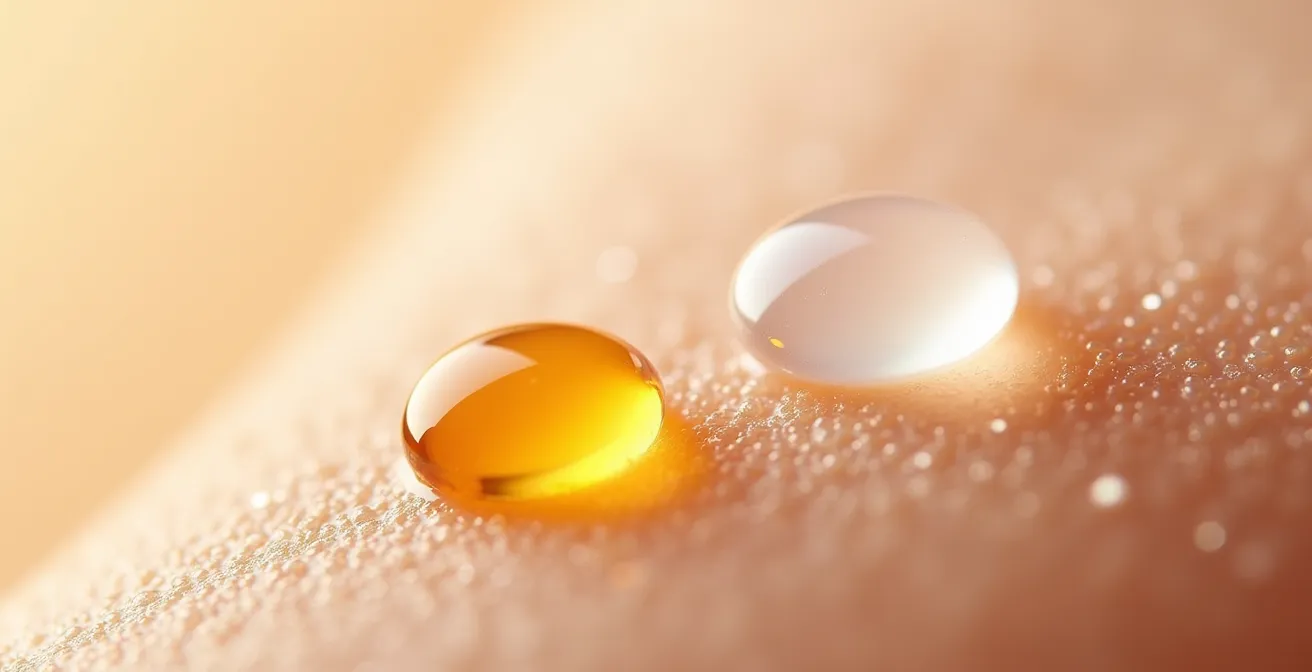
The common rule to separate Vitamin C and Retinol isn’t about conflict, but about optimizing their unique chemical environments for maximum effect and minimum irritation.
- Vitamin C (L-Ascorbic Acid) requires a low pH (acidic) environment to be stable and effective, making it ideal for morning use.
- Retinol works best at the skin’s natural, more neutral pH and its primary function aligns with the skin’s nighttime repair cycle.
Recommendation: Instead of layering them together, use your Vitamin C serum in the morning for antioxidant protection and your Retinol product in the evening to support cellular regeneration. This isn’t a rule of fear, but a strategy for potency.
For any skincare enthusiast, the question of how to combine the industry’s two most powerful actives—Vitamin C and Retinol—is a source of endless confusion. Online forums and beauty blogs are filled with conflicting advice, often boiling down to a simple, fear-based directive: “don’t mix them.” This leads many to either abandon one ingredient or use both with a constant fear of waking up with a red, sensitized, and damaged skin barrier. While caution is wise, this simplistic rule misses the bigger, more fascinating picture.
The conventional wisdom is to use Vitamin C in the morning and Retinol at night. This is excellent advice, but not for the reason most people think. It’s not that the two ingredients will cause a catastrophic reaction upon contact. Instead, the separation is a strategic play rooted in cosmetic chemistry. It’s about respecting the unique molecular needs of each active to ensure maximum bioavailability and stability. Thinking like a chemist means moving beyond rigid rules and understanding the principles of pH, formulation, and cellular pathways.
The real key to using both powerhouse ingredients is not just avoiding irritation, but unlocking their full synergistic potential. When you understand the “why” behind the separation—the pH differential, the distinct ways they communicate with your skin cells, and their roles in antioxidant defense versus cellular regeneration—you can build a routine that is not only safe but exponentially more effective. This is about preventing chemical “typos” at a cellular level and instead, writing a clear, coherent script for skin health.
This guide will deconstruct the science behind these interactions. We will explore why high concentrations of even “good” ingredients can backfire, how to manage the increased photosensitivity from exfoliation, and the precise protocol for healing a compromised barrier. By the end, you will have a chemist’s understanding of how to orchestrate these ingredients to achieve your goals, turning confusion into confident, strategic action.
Summary: The Chemist’s Guide to Layering Active Ingredients
- Why 20% Niacinamide Might Be Causing Your Redness and Irritation?
- Retinol vs Bakuchiol: Is the Plant Alternative Potent Enough for Wrinkles?
- The Exfoliation Error That Makes Dark Spots Darker in Summer
- How to Heal Red, Flaking Skin in 7 Days After an Acid Burn?
- When to Apply Hyaluronic Acid: Wet vs Dry Skin for Maximum Plumping
- When to Take Collagen: Morning or Night for Best Absorption?
- The “Typo” Risk: What Happens When CRISPR Cuts the Wrong DNA?
- How to Achieve a “Glass Skin” Look Using Only 3 Products?
Why 20% Niacinamide Might Be Causing Your Redness and Irritation?
Before diving into the complexities of Vitamin C and Retinol, it’s crucial to understand a core principle of cosmetic chemistry: more is not always better. Niacinamide (Vitamin B3) is a perfect case study. It’s celebrated as a universal crowd-pleaser for its ability to fortify the skin barrier, reduce sebum, and improve discoloration. Most clinical studies demonstrating these benefits use concentrations between 2% and 5%. However, the market has recently seen a surge in products boasting 10% and even 20% niacinamide.
For many users, these high-strength formulas can paradoxically trigger the very symptoms they aim to treat: redness, irritation, and flushing. From a chemical perspective, this isn’t surprising. At high concentrations, a small percentage of niacinamide can hydrolyze back into nicotinic acid, a known vasodilator that causes temporary flushing and a feeling of warmth in the skin. While not a true allergy, this effect is often misinterpreted as sensitivity or a damaged barrier.
Furthermore, an overabundance of any single active can disrupt the skin’s delicate homeostatic balance. A 20% concentration can be overly aggressive in down-regulating sebum production, leading to compensatory dryness and irritation for those who don’t have extremely oily skin. If you’re experiencing redness from a high-strength niacinamide product, the solution isn’t to abandon the ingredient entirely. Instead, dialing back to a 5% to 10% concentration is often all that’s needed to reap its benefits without the unwanted side effects, reinforcing the idea that formulation and dosage are paramount.
Retinol vs Bakuchiol: Is the Plant Alternative Potent Enough for Wrinkles?
Retinol is the undisputed gold standard for anti-aging, a member of the retinoid family that communicates directly with skin cells to accelerate turnover and boost collagen. However, its power comes with a well-known downside: the potential for significant irritation, peeling, and redness, especially during the initial “retinization” period. This has driven the search for gentler alternatives, with the plant-derived ingredient Bakuchiol emerging as the most promising contender.
But can a botanical extract truly compete with a synthetic powerhouse? The scientific evidence is surprisingly strong. As experts Dr. Chaudhuri and Bojanowski noted in the Journal of Integrative Dermatology, “Bakuchiol can function as a functional analogue of retinol through retinol-like regulation of gene expression, without bearing any structural similarity to retinoids.” This means it achieves similar results through similar cellular pathways, but with a different molecular key.

This functional similarity is not just theoretical; it’s backed by clinical data. One of the most-cited studies provides a direct comparison, highlighting Bakuchiol’s unique position in the skincare landscape.
Case Study: Head-to-Head Clinical Trial
A 12-week randomized, double-blind study published in the British Journal of Dermatology had 44 patients apply either a 0.5% bakuchiol cream twice daily or a 0.5% retinol cream once daily. The results were remarkable: both groups saw a significant decrease in wrinkle surface area and hyperpigmentation, with no statistical difference in efficacy between the two. Crucially, however, the retinol users reported significantly more skin scaling and stinging. This positions bakuchiol not as a weaker substitute, but as a true, better-tolerated alternative for those with sensitive skin or who wish to avoid the harsh side effects of traditional retinoids.
For those struggling with retinol’s aggressive nature, Bakuchiol offers a scientifically-validated path to similar anti-aging results without compromising skin barrier health. It’s a prime example of how modern cosmetic science is finding multiple ways to achieve a biological outcome.
The Exfoliation Error That Makes Dark Spots Darker in Summer
Both Vitamin C and Retinol contribute to exfoliation. Retinol does this by accelerating cell turnover from the bottom up, while many Vitamin C formulas are formulated at a low pH, providing a surface exfoliating effect. This continuous renewal is excellent for fading hyperpigmentation, but it creates a significant vulnerability: increased photosensitivity. The new, fresh skin cells are more susceptible to UV damage than older, hardened cells. Using these actives makes daily, high-SPF sunscreen non-negotiable.
The critical error many make, especially in summer, is failing to adjust their routine to account for increased UV exposure. Continuing an aggressive exfoliation schedule (e.g., using retinol nightly and a separate AHA/BHA exfoliant) during the sunniest months can backfire spectacularly. The skin becomes so photosensitive that even incidental sun exposure can trigger a powerful inflammatory response, leading to new post-inflammatory hyperpigmentation (PIH). In essence, your efforts to fade dark spots can end up creating new, even darker ones.
The solution is to practice “active cycling,” adjusting your routine seasonally. In summer, the focus should shift from aggressive resurfacing to protection and maintenance. This means reducing retinol frequency, pausing other direct acids, and doubling down on antioxidants and sunscreen. A proper seasonal adjustment is crucial for long-term success.
The following table outlines a sensible approach to cycling actives between seasons, prioritizing barrier health and sun safety when UV indexes are high.
| Season | Morning Routine | Evening Routine | Weekly Exfoliation |
|---|---|---|---|
| Summer | Vitamin C + SPF 50 | Retinol 3x/week alternating with barrier repair | 1x gentle enzyme peel |
| Winter | Vitamin C + SPF 30 | Retinol 5x/week | 2x AHA/BHA treatment |
This strategic shift prevents the over-exfoliation that leads to summer-induced dark spots, ensuring your progress continues year-round without setbacks.
How to Heal Red, Flaking Skin in 7 Days After an Acid Burn?
Despite our best intentions, over-exfoliation can happen. Whether from using a new retinol that’s too strong, leaving an acid peel on for too long, or layering improperly, the result is a compromised skin barrier: red, tight, flaking, and painful. At this point, the goal is not to push through; it’s to declare a “ceasefire” and initiate an emergency recovery protocol. Attempting to apply more actives, even Vitamin C, will only add fuel to the fire.
The first 48 hours are critical. You must stop all active ingredients immediately. This includes retinol, vitamin C, AHAs, BHAs, and even niacinamide. Your entire routine should be stripped back to the bare essentials: a gentle, pH-balanced cleanser (used with lukewarm water), a thick, ceramide-rich moisturizer, and at night, a layer of a simple occlusive like petrolatum to seal in moisture and protect the skin from trans-epidermal water loss (TEWL). The goal is to create a moist, protected environment where your skin can focus all its resources on healing.
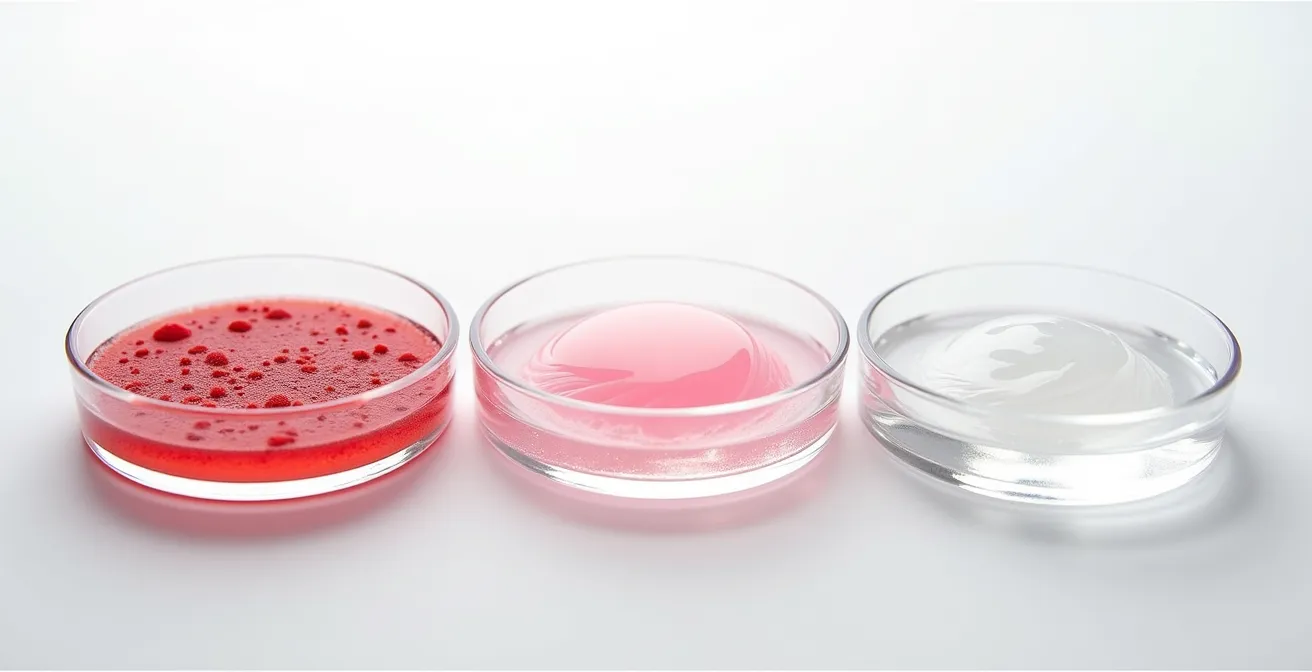
After the initial ceasefire, you can slowly reintroduce hydrating and soothing ingredients. Hyaluronic acid on damp skin and products containing Centella Asiatica (Cica) or oat extract can help calm inflammation and replenish hydration. Only after the skin feels comfortable and shows no signs of flaking (typically around day 6 or 7) should you even consider reintroducing a very gentle antioxidant. Full recovery, however, takes longer. Clinical experience shows that a truly compromised barrier needs 2-4 weeks for complete barrier restoration. Rushing back into a high-strength retinol routine is the fastest way to end up right back where you started.
A structured, patient approach is the only way to effectively heal an acid burn or retinol-induced irritation. This 7-day plan prioritizes calming, rebuilding, and fortifying the barrier before actives are even considered.
- Days 1-2 (Ceasefire): Use only gentle cleansers and ceramide-heavy balms. Avoid ALL actives, including vitamin C and retinol. Apply a petrolatum-based ointment at night to create a protective seal.
- Days 3-5 (Rebuild): Introduce a hyaluronic acid serum on damp skin to pull in moisture. Add a product with anti-inflammatory ingredients like Centella Asiatica (Cica) or Panthenol (Vitamin B5).
- Days 6-7 (Fortify): If skin feels calm, reintroduce a gentle, non-acidic Vitamin C derivative like Sodium Ascorbyl Phosphate (SAP) or Magnesium Ascorbyl Phosphate (MAP) for antioxidant defense.
- Post-Recovery: After the first week, wait at least one to two additional weeks before reintroducing retinol, and start at the lowest possible concentration and frequency (e.g., 0.25% once or twice a week).
When to Apply Hyaluronic Acid: Wet vs Dry Skin for Maximum Plumping
Hyaluronic Acid (HA) is often seen as a simple, universally beneficial hydrator. As a humectant, its job is to grab onto water and hold it in the skin, providing a plumping effect. However, the effectiveness and even safety of HA application depend entirely on the context of your routine—specifically, whether you’re pairing it with Vitamin C or Retinol. The “wet vs. dry skin” debate is not a matter of preference but of chemical strategy.
The general rule is to apply Hyaluronic Acid to damp skin. This gives the HA molecules an external source of water to grab onto, which they then pull into the top layers of your skin. Applying HA to dry skin, especially in a dry environment, can have the opposite effect. As dermatologist Dr. Julie Russak has pointed out, for those with a compromised barrier (common with retinol use), low molecular weight HA on dry skin can actually pull moisture from the deeper dermis, worsening dehydration over time.
For a compromised barrier common with retinol use, low molecular weight HA on dry skin can actually pull moisture from the deeper dermis, worsening dehydration.
– Dr. Julie Russak, Mount Sinai Hospital Dermatology
This principle becomes even more nuanced when layering with other actives. The sequence and method of application must be adjusted to optimize the primary active’s performance and minimize irritation.
Case Study: The AM/PM Hyaluronic Acid Switch
Clinical observations show a clear divergence in best practices. In the morning (AM), applying HA to damp skin *before* a Vitamin C serum acts as a hydrating buffer. It plumps the skin and can even help stabilize the notoriously unstable L-Ascorbic Acid. However, in the evening (PM) with retinol, this same technique can be a recipe for irritation. Applying HA to wet skin before retinol can cause “flash penetration,” dramatically increasing the speed and depth of retinol absorption. This sudden influx overwhelms the skin’s receptors, leading to a higher risk of irritation. The solution is to reverse the order: apply retinol to clean, *dry* skin first, wait for it to absorb, and then apply your HA serum (on skin that can be lightly misted again) to replenish moisture and lock in the active without accelerating its delivery.
Therefore, the rule is simple: HA on damp skin before Vitamin C in the AM. Retinol on dry skin first, followed by HA in the PM. This strategic switch turns a simple hydrator into a sophisticated tool for managing active delivery.
When to Take Collagen: Morning or Night for Best Absorption?
The conversation around Vitamin C and Retinol often focuses on what we put on our skin, but the synergy extends to what we ingest. Collagen supplements have become increasingly popular for their potential to support skin elasticity and hydration from within. A common question is when to take them for best results: morning or night? The answer, from a biochemical perspective, connects directly back to your topical routine.
The most important factor for collagen supplementation is not timing, but consistency and co-factors. Your body needs a steady supply of the specific amino acids found in collagen peptides—glycine, proline, and hydroxyproline—to build its own collagen. However, this synthesis process is impossible without a crucial co-factor: Vitamin C. For every gram of collagen you hope your body synthesizes, a certain amount of Vitamin C is required. In fact, biochemical studies demonstrate that about 8mg of Vitamin C is needed for every 1g of collagen peptides to be properly utilized. This makes your daily topical (and dietary) Vitamin C intake an essential partner to your oral collagen supplement.
So, does timing matter at all? There is a compelling theory for evening supplementation. Skin repair processes, including collagen synthesis, peak during our sleep cycle (the circadian rhythm). Topical retinol applied at night acts as a powerful stimulant for fibroblasts, the skin cells responsible for producing new collagen. Taking your collagen peptides in the evening provides these newly stimulated “cellular factories” with a fresh supply of the raw materials they need, precisely when they are most active. This creates a powerful synergistic effect: retinol gives the order to build, and the ingested collagen provides the bricks.
Ultimately, the most critical element is taking your supplement consistently every day to maintain that amino acid pool. But for those looking to optimize every aspect of their routine, timing your collagen intake to coincide with your nightly retinol application offers a logical, science-backed strategy to enhance results.
The “Typo” Risk: What Happens When CRISPR Cuts the Wrong DNA?
To truly understand the irritation caused by improperly layering actives, it’s helpful to use an analogy from genetics: the CRISPR gene-editing tool. CRISPR is designed to find a specific sequence of DNA and make a precise “cut” or edit. When it works, it’s revolutionary. But when it makes a mistake and cuts the wrong place, it creates an “off-target effect”—a genetic typo that can lead to unintended consequences. In skincare, retinol acts in a similar way.
As dermatologist Dr. Dendy Engelman explains, retinol’s function is to “edit” how your skin cells behave. It doesn’t just sit on the surface; it penetrates the cell and binds to nuclear receptors (RAR and RXR) to influence gene expression, telling cells to turn over faster and produce more collagen. This is a controlled, regenerative process. The “typo risk” in skincare occurs when this process becomes uncontrolled. Layering a low-pH Vitamin C serum directly with a neutral-pH retinol creates a volatile chemical environment. This can destabilize both molecules, leading to byproducts that trigger an inflammatory response. Instead of a precise “edit,” your skin gets a chaotic signal, resulting in a damaged barrier rather than regeneration.
Retinol works by binding to nuclear receptors (RAR, RXR) to ‘edit’ gene expression for skin functions – the ‘typo risk’ is an inflammatory response triggered by improper use, leading to a damaged barrier instead of controlled regeneration.
– Dr. Dendy Engelman, Mount Sinai Hospital
Preventing these “off-target effects” is the foundation of intelligent layering. It’s not about avoiding ingredients, but about creating the optimal conditions for each one to perform its edit flawlessly. This involves respecting pH levels, allowing time for ingredients to absorb and normalize, and maintaining a strong skin barrier, which acts as a “firewall” against unwanted interactions. Auditing your routine for these potential risk factors is the first step toward a typo-free complexion.
Action Plan: Auditing Your Active Ingredient Interactions
- Points of contact: List all areas where irritation appears (e.g., cheeks, around the nose) and the specific products you apply there (Vitamin C, Retinol, Niacinamide). This maps the effect to the cause.
- Collecte: Inventory your current actives. Write down the ingredient name, its concentration (e.g., 0.5% Retinol, 15% L-Ascorbic Acid), and its formulation type (e.g., water-based serum, oil, emulsion).
- Cohérence: Confront your layering order with barrier-first principles. Are you applying a low-pH Vitamin C serum immediately before a neutral-pH retinol? Are you using them daily without any “rest” days for barrier repair?
- Mémorabilité/émotion: Assess your skin’s feedback. Does it feel tight, stripped, and reactive (a generic inflammatory response), or does it feel calm, plump, and resilient (a sign of successful, controlled regeneration)?
- Plan d’intégration: Create a priority plan to fix the gaps. Implement a “skin cycling” schedule: use actives on different nights (e.g., Retinol Monday, Exfoliant Wednesday) and dedicate other nights purely to barrier-fortifying ingredients like ceramides and peptides.
Key Takeaways
- Respect the pH: Vitamin C (L-Ascorbic Acid) is effective in an acidic (low pH) environment, while Retinol prefers the skin’s natural, more neutral pH. Using them at different times of day honors their chemical needs.
- Timing Over Layering: The most effective strategy is separation. Use Vitamin C in the morning for its antioxidant properties to fight environmental damage, and use Retinol at night to align with the skin’s natural repair cycle.
- The Barrier is King: A healthy, intact skin barrier is your best defense against irritation from powerful actives. Prioritize ingredients like ceramides, peptides, and proper hydration to keep it strong.
How to Achieve a “Glass Skin” Look Using Only 3 Products?
The “glass skin” trend—skin so luminous and clear it appears poreless and reflective—often conjures images of complex, 10-step routines. However, a cosmetic chemist knows that achieving this look is not about the number of products, but the quality and strategic function of a select few. By leveraging the distinct and powerful actions of Vitamin C, Retinol, and a multi-functional SPF, you can build a minimalist routine that delivers maximalist results.
The entire philosophy hinges on a three-pronged strategy: environmental shielding (AM), cellular resurfacing (PM), and constant barrier fortification. Your morning routine is for defense, pairing a potent, stable Vitamin C serum with a high-protection, ceramide-infused SPF. The Vitamin C neutralizes free radicals while the SPF protects against UV-induced damage and photoaging. Your evening routine is dedicated to regeneration, using a well-formulated retinoid to accelerate cell turnover, refine texture, and smooth fine lines. This simple division of labor ensures each active works in its optimal environment without interference.
This minimalist approach is not only more sustainable but is also clinically effective. A recent case study demonstrated that a simplified, high-quality routine can outperform more complicated regimens.
Case Study: Minimalist Routine Clinical Results
Dermatologists report that patients following a strict 3-product archetype (Vitamin C + SPF in the morning, Retinol at night) achieve results comparable to, and sometimes better than, those using complex 10-step routines. The key is the consistent use of high-quality products targeting cellular resurfacing (retinol), environmental shielding (vitamin C), and barrier fortification (ceramides/niacinamide in the SPF). One observational study noted that 87% of participants showed visible improvement in skin texture and luminosity within 12 weeks on such a simplified regimen.
The power trio for achieving the glass skin look is a masterclass in efficiency, proving that understanding the function of each ingredient is far more important than the quantity of products on your shelf.
| Product Type | Active Ingredient | Function | Application Time |
|---|---|---|---|
| Multi-Antioxidant Serum | THD Ascorbate (Vitamin C) | Luminosity & Protection | Morning |
| Retinoid Emulsion | Encapsulated Retinol | Cell Turnover & Smoothness | Evening |
| SPF 50+ Moisturizer | Ceramides + Niacinamide | Barrier Protection & Plumpness | Morning |
Frequently Asked Questions about Layering Actives
Should I time collagen intake with my retinol application?
Yes, taking collagen peptides in the evening can be beneficial as it coincides with the skin’s peak nighttime repair cycle, which is being stimulated by the topical retinol you apply at the same time. This provides the “building blocks” when the “construction crew” is most active.
Is vitamin C necessary for collagen supplements to work?
Absolutely. Collagen synthesis is a vitamin C-dependent process. Your body requires sufficient Vitamin C as a co-factor to properly process and utilize the amino acids from collagen peptides. Your daily topical and dietary Vitamin C supports this vital function.
Does timing matter more than consistency?
Consistency always trumps perfect timing. The primary goal is to maintain a steady pool of amino acids (glycine, proline, hydroxyproline) in your system that the retinol-stimulated fibroblast cells can utilize for collagen production whenever they need it. Daily intake is key.
By applying these chemical principles, you can move past the confusion and fear, and start using skincare’s most powerful ingredients with the confidence and precision of a chemist. The next step is to audit your own shelf and build a routine that works for your skin, not against it.