
Technology innovation has become the invisible thread weaving through every aspect of modern existence. From the moment you adjust your smart thermostat in the morning to the collaborative tools enabling seamless remote work, high-tech solutions are quietly revolutionizing how we live, create, and connect. Yet for many people, the sheer breadth of available innovations can feel overwhelming rather than empowering.
This landscape spans far more than smartphones and social media. Today’s most transformative technologies address fundamental human needs: managing energy consumption efficiently, fostering creativity through accessible digital tools, optimizing health and wellness, and enabling meaningful collaboration across distances. Understanding these innovations doesn’t require a technical degree—it simply demands curiosity and a willingness to explore how different technologies solve real-world challenges.
This resource introduces the essential categories of modern innovation, from intelligent home systems and renewable energy solutions to creative production tools and cognitive gaming technologies. Each area represents not just technological advancement, but practical opportunities to enhance daily life, work more effectively, and engage with technology as a tool for personal growth rather than mere consumption.
The connected home represents one of the most tangible frontiers of everyday innovation. Unlike futuristic concepts that remain perpetually on the horizon, smart home technology delivers measurable benefits today—provided you understand which solutions address your actual needs rather than simply adding complexity.
At its core, smart home energy management transforms passive consumption into active optimization. Smart thermostats learn your schedule and preferences, automatically adjusting temperature settings to minimize waste without sacrificing comfort. Think of them as attentive household managers who remember that you prefer cooler temperatures while sleeping and warmer conditions during morning routines.
Smart plugs extend this intelligence to high-consumption appliances like water heaters, space heaters, and entertainment systems. By monitoring energy usage in real-time and enabling scheduled operation, these inexpensive devices often deliver the fastest return on investment in the smart home ecosystem. The key lies in strategic deployment: focus on appliances that draw significant power or run unnecessarily during off-hours.
When evaluating smart home investments, consider both immediate utility costs and long-term device longevity. A comprehensive approach includes:
Technology’s role in wellness extends beyond fitness trackers into environmental optimization. Quality sleep depends heavily on controllable factors: temperature regulation, light exposure, and acoustic conditions. Smart home systems excel at managing these variables with precision impossible through manual adjustment.
Blue light blocking technologies—whether through smart lighting that shifts to warmer color temperatures in evening hours or screen filters—help maintain natural circadian rhythms in our device-saturated world. Programmable thermostats can lower bedroom temperature during sleep cycles, aligning with the body’s natural thermal regulation patterns that favor cooler environments for deep rest.
Soundproofing remains primarily a physical intervention, but smart home integration enhances it through white noise systems, automated sound masking, and intelligent monitoring that adjusts to changing environmental conditions. Understanding sleep stages helps contextualize why these environmental factors matter: disruptions during REM or deep sleep carry different consequences than interruptions during lighter phases.
The expanded attack surface created by Internet of Things (IoT) devices represents smart home technology’s most significant vulnerability. Each connected device—from cameras to refrigerators—potentially serves as an entry point for external threats. Securing IoT devices requires moving beyond default passwords to comprehensive network segmentation, regular firmware maintenance, and thoughtful consideration of which devices genuinely need internet connectivity.
Device longevity depends almost entirely on manufacturer commitment to ongoing support. A smart device without firmware updates quickly becomes a security liability and functional dead-end. Before purchasing, research the manufacturer’s track record for supporting older devices and maintaining compatibility with evolving standards.
The shift toward distributed work has accelerated innovation in collaboration technology, transforming limitations into opportunities for teams willing to embrace new methodologies. Remote collaboration for creative teams presents unique challenges: capturing spontaneous ideation, maintaining cultural cohesion, and protecting intellectual property while fostering open innovation.
Modern collaboration platforms have evolved far beyond video conferencing. Digital brainstorming tools enable real-time visual collaboration, allowing teams to map concepts, iterate on designs, and build upon each other’s ideas with the immediacy once reserved for physical whiteboards. These platforms recognize that creative work rarely follows linear paths—they support branching conversations, parallel exploration, and asynchronous contribution.
Scheduling for asynchronous creativity acknowledges a fundamental truth: creative insight doesn’t respect time zones or scheduled meeting blocks. The most effective distributed teams build workflows that accommodate both synchronous collaboration sessions and independent deep work periods. This might mean:
When comparing collaboration platforms, evaluate them against your specific creative workflows rather than feature checklists. A tool optimized for software development may frustrate visual designers, while platforms built for marketing teams might lack the depth required for complex product development.
Organizational silos represent innovation’s silent killer. These invisible barriers between departments, teams, or expertise areas prevent the cross-pollination of ideas essential for breakthrough thinking. Technology alone cannot dismantle silos—that requires cultural commitment—but the right tools can significantly reduce friction in knowledge sharing and collaborative ideation.
The tension between open innovation and intellectual property protection challenges organizations pursuing collaborative approaches. How do you encourage boundary-spanning creativity while safeguarding proprietary developments? Effective strategies include tiered access controls, clear IP agreements established before collaboration begins, and technology platforms that enable controlled sharing rather than binary open-or-closed approaches.
Leading virtual teams demands different skills than managing co-located groups. The absence of casual hallway conversations and visible work patterns requires more intentional communication, clearer documentation of expectations, and conscious efforts to build psychological safety across digital channels.
Professional-grade creative tools have migrated from specialized studios into home environments, democratizing access to production capabilities once requiring significant capital investment. This shift empowers individual creators while introducing new complexities around tool selection and skill development.
Establishing a functional home music production setup begins with understanding the signal chain: how sound moves from creation through processing to final output. Modern digital audio workstations (DAWs) serve as the central hub, but selecting one involves matching software philosophy to creative workflow rather than simply choosing the most popular option.
Consider how you primarily create music. Loop-based composers might gravitate toward different DAWs than those who prefer linear multitrack recording. Live performers need different capabilities than studio producers. The learning curve for any DAW is substantial—invest time mastering one rather than perpetually switching platforms.
Common technical challenges in home production include:
Quality results depend less on expensive equipment than on acoustic treatment, careful gain staging, and developed listening skills. A modest setup in a well-treated room will outperform premium gear in a problematic acoustic environment.
Viewing coding as a creative hobby rather than purely utilitarian skill opens unexpected possibilities. Programming enables creation of generative art—systems that produce aesthetic outputs through algorithmic processes—and tools for automating repetitive tasks that consume time better spent on creative work.
The initial debugging frustration represents programming’s steepest psychological barrier. Unlike traditional creative pursuits where partial success is visible, code often fails completely until every syntax error is resolved. This binary nature—working or broken, no middle ground—can feel discouraging. Persistence through this phase reveals programming’s deeper creative potential.
Choosing an integrated development environment (IDE) matters less initially than establishing consistent practice schedules. Like learning an instrument, programming fluency develops through regular engagement rather than intensive sporadic sessions. Start with projects addressing personal needs: automate a boring task, visualize data that interests you, or build a tool solving a problem you actually face.
Gaming technology has evolved into a sophisticated medium offering more than entertainment—though dismissing entertainment value would be equally misguided. Modern games function as complex systems requiring strategic thinking, pattern recognition, spatial reasoning, and increasingly, collaborative leadership.
Research into cognitive benefits of gaming reveals measurable improvements in specific mental capabilities. Puzzle games enhance problem-solving approaches and spatial manipulation skills. Strategy games develop long-term planning and resource management thinking. Multiplayer experiences create opportunities for leading virtual teams, negotiating conflicts, and coordinating toward shared objectives under time pressure.
The narrative depth now achieved in certain games rivals other storytelling media, offering interactive experiences that respond to player choices in meaningful ways. Comparing immersion technologies—from traditional screens to virtual reality—reveals different strengths: VR excels at presence and spatial experiences, while traditional formats often provide superior visual fidelity and comfort for extended sessions.
Managing addiction risks requires honest self-assessment and boundary setting. Warning signs include gaming interfering with sleep, work, or relationships, and using games primarily for escape rather than engagement. The line between healthy hobby and problematic dependency varies individually but deserves regular examination.
Renewable energy innovation has progressed from environmental idealism to economic pragmatism. Home solar installations increasingly make financial sense independent of ecological motivations, though regional factors create significant variation in return on investment timelines.
Solar ROI and logistics depend on multiple variables: local electricity costs, available incentives, roof orientation and condition, shading patterns, and financing options. The most expensive clean energy is the system that never gets installed due to analysis paralysis—but rushing into poor-fit installations wastes resources. Begin with professional site assessment evaluating roof viability, including structural capacity, remaining lifespan, and optimal panel placement.
Battery storage systems transform solar from daytime-only generation to comprehensive energy independence. Comparing storage options involves balancing capacity, lifespan, depth of discharge capabilities, and integration with grid or off-grid configurations. Net metering policies—where available—allow the grid itself to function as virtual storage, feeding excess generation during peak production and drawing power during high-demand periods.
Practical implementation considerations include:
The payback period for solar installations typically ranges from several years to over a decade depending on local conditions. Unlike many purchases, solar systems become more economically attractive as energy prices rise—they represent a hedge against future cost increases rather than just current savings.
Technology innovation isn’t about adopting every new development, but rather understanding which advancements genuinely address your priorities. Whether optimizing home energy use, enhancing creative capabilities, or improving collaborative work, the most valuable innovations solve real problems rather than creating new dependencies. The journey begins with curiosity, continues through experimentation, and rewards those who maintain focus on human needs rather than technological novelty for its own sake.
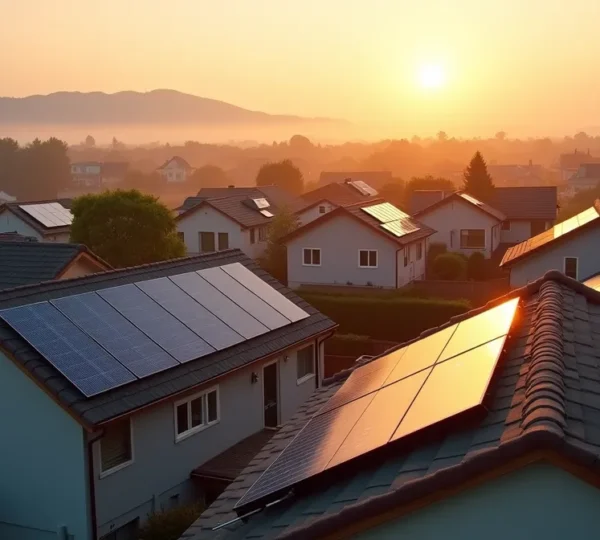
The question isn’t just “How long until I break even?”—it’s “How can I break even faster?” Your solar payback period is not a static number; it’s a dynamic target you…
Read more
Contrary to the belief that gaming is an unproductive escape, it functions as a high-fidelity simulator for developing critical executive functions. Game mechanics, from raid encounters to resource management, directly…
Read more
For hobbyists, the best first language isn’t about job markets; it’s about the ‘Time-to-Dopamine’—how quickly you get a rewarding result. Python excels at backend automation and data tasks, letting you…
Read more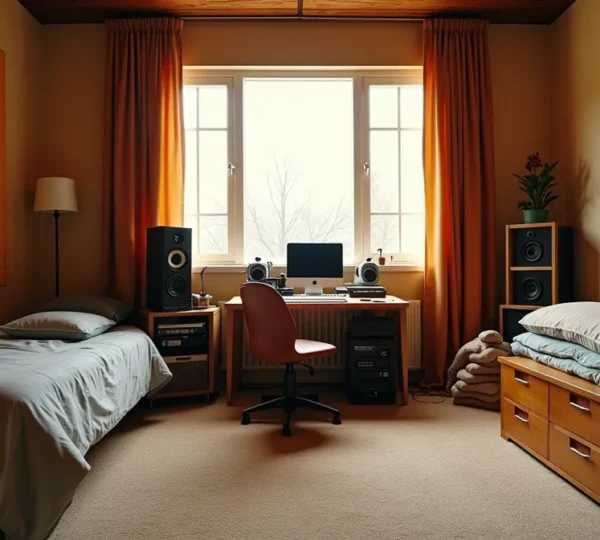
You think soundproofing is just about blankets and foam panels? The real secret to a professional-sounding bedroom studio isn’t just blocking external noise, but eliminating the invisible friction within your…
Read more
Engineering your bedroom for sleep isn’t about buying special bulbs; it’s about executing a “Circadian Shutdown Sequence” that systematically controls light intensity, color, and timing. Blue light suppression from screens…
Read more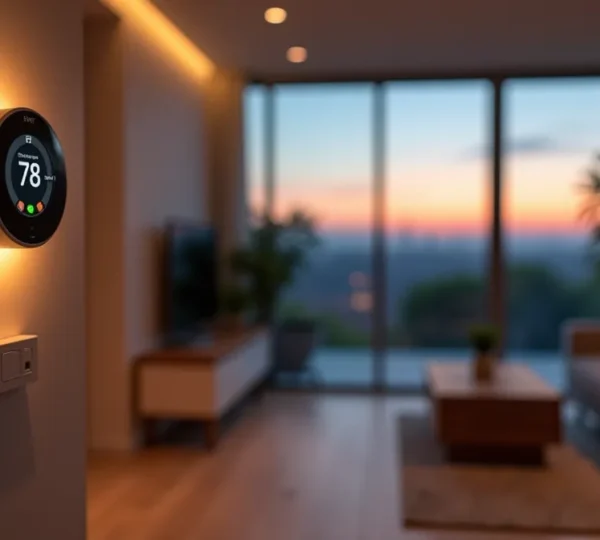
Saving significant money with a smart home isn’t about buying more devices; it’s about system-wide optimization and security. Focus on granular thermostat programming and ensuring smart plugs can safely handle…
Read more
Truly effective remote brainstorming is not about finding the perfect tool, but about implementing a holistic system that creates the conditions for innovation. Organizational silos are the primary barrier, silently…
Read more